Get Full Government Meeting Transcripts, Videos, & Alerts Forever!
Get email alerts on the Animal Welfare topic
No spam. Unsubscribe anytime.
Committee Hears Request to Accept $150,000 in Donations for City Animal Shelter Care
Summary
The Boston City Council committee reviewed Docket 0292, a message and order to accept and expend $150,000 for city animal shelter donations and medical care for sick or injured animals owned by Boston residents; committee members asked about fund use, recent spending and capital improvements.
Councilor Gabriela Colette Zapata, chair of the Boston City Council Committee on Environmental Justice, Resiliency, and Parks, opened a April 7 hearing on a city message and order (Docket 0292) asking the council to authorize the City of Boston to accept and expend $150,000 in donations to be administered by the Parks and Recreation Department.
The committee heard from Steve Bickerton, deputy commissioner of the Boston Parks and Recreation Department, who described the fund that allows the city animal shelter to accept donations and pay for medical care and basic supplies. "This is an annual accept-and-expend that we do every year," Bickerton said, adding that the city typically accepts about $50,000 in donations annually and that there are no administrative costs to the fund.
The matter would allow donations and the use of those donations to help cover medical care for sick or injured animals whose owners are Boston residents. Bickerton told the committee the fund has been used recently to pay for emergency care: three dogs with parvovirus were treated through the partnership supported by the fund, and all three survived; two have been adopted and one remains available for adoption.
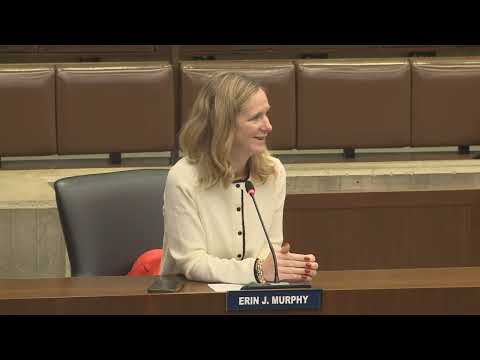
Councilors asked for operational details. Councilor Erin Murphy noted the new Treasury-managed donation vehicle and asked about shelter capital improvements; Bickerton said the department plans to replace the shelter's heating and conditioning system this summer and will phase work to minimize impact on staff and animals. Councilor Fitzgerald asked how much was raised last year and whether any surplus exists; Bickerton said the fund operates as a revolving account, that last year the shelter received a little over $40,000 against a $50,000 cap, and that the department spent the funds received.
Committee members also discussed program outreach and donor limits. Bickerton said most donations are small-dollar gifts (roughly $50–$300), supplemented by larger fundraising efforts such as auctioned charity marathon bibs that can bring in $5,000–$10,000 per runner. The docket text limits individual donations to an amount "not to exceed $50,000" and the overall acceptance authority in the message is $150,000; committee members asked staff to confirm whether the $50,000 figure is per donor and how public awareness about the fund is being raised.
The committee did not record a formal committee vote at the hearing. Chair Zapata said she would recommend the matter be forwarded to the full council for consideration.