Get Full Government Meeting Transcripts, Videos, & Alerts Forever!
Get email alerts on the Criminal Appeals Ineffective Assistance Rule 30b topic
No spam. Unsubscribe anytime.
Appeals court hears challenge to denial of Rule 30B motion in Freeman habitual-offender case
Summary
The Massachusetts Appeals Court heard oral argument in Commonwealth v. Freeman over whether a motion judge erred in denying a Rule 30B motion to vacate habitual-offender findings after the defendant declined a plea-linked sentencing recommendation.
The Massachusetts Appeals Court heard oral argument in Commonwealth v. Freeman on whether a motion judge erred in denying a Rule 30B motion to vacate habitual-offender findings after the defendant declined a plea-related sentencing recommendation.
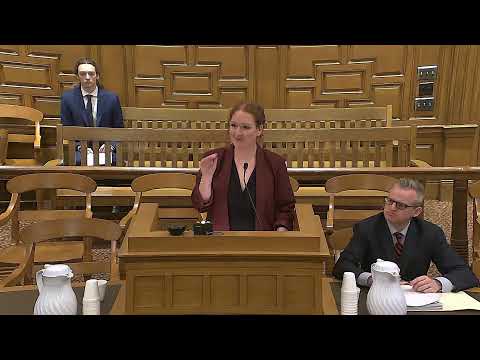
Michael Warrias, counsel for defendant Anthony Freeman, told the three-justice panel that the motion judge “made several findings that I feel were not supported by the record, and ignored findings that should have been made,” and argued that Freeman’s decision not to accept a plea-linked sentencing recommendation was influenced by ineffective assistance of trial counsel and by statements from the trial judge that gave Freeman “solace and confidence” in his choice. “I represent Mr. Freeman. And today we're on appeal from a rule 30 b motion out of Suffolk Superior Court,” Warrias said.
Mackenzie Simon, arguing for the Commonwealth, asked the court to affirm the denial of Freeman’s second motion for a new trial. “I disagree with my brother that, the court is not entitled to review affidavits from defendants and deem them to be, in their own self interest and biased,” Simon said, arguing that the defendant had not carried the burden to prove deficient performance or prejudice and that the record did not show a reasonable likelihood that a sentencing judge would have accepted the parties’ recommendation.
Why the case matters: The appeal centers on two linked legal questions often raised in postconviction practice — whether trial counsel provided constitutionally ineffective assistance in advising a defendant about a plea-linked waiver of appellate rights, and whether a defendant who says he would have taken a plea is entitled to a remedy when the record contains evidence the judge would not have accepted that deal.
At argument, Warrias pressed that the motion judge improperly labeled Freeman’s affidavit “self-serving” without tying that conclusion to record evidence and that predecessor counsel did not identify or convey appellate issues to Freeman. Warrias said the transcript of the plea colloquy corroborated Freeman’s account that he was confused about what a habitual-offender proceeding would entail and that the judge’s remarks increased Freeman’s reluctance to accept the Commonwealth’s offer. Warrias asked the panel to order the relief sought in the motion — which he described as specific performance of the plea offer — based on cases he cited in his brief.
Simon countered that even if trial counsel’s performance were deficient, Freeman had not shown prejudice — the second Strickland prong — because there was no reason to believe the sentencing judge would have accepted the parties’ recommended disposition. Simon noted the Commonwealth’s discretion over whether to dismiss or proceed on habitual-offender indictments and emphasized the length of time between the underlying proceedings and the postconviction filing. “The defendant has not shown that Judge Spurlock would have, sentenced him in this way,” Simon told the panel, adding that the judge’s sentencing discretion and the procedural posture weighed against the defendant’s requested remedy.
Justices’ questioning focused on the practical and doctrinal problems that arise when a defendant says he rejected a plea because counsel did not explain the strength of possible appeals or his appellate prospects. The panel reminded counsel that each side had 15 minutes for argument and that the court had read the briefs; Chief Justice Greg Massing opened the session by saying, “Each side gets 15 minutes. There's no rebuttal. We have read your briefs. We're familiar with the case.”
The parties and the panel discussed case law cited in briefs, including Strickland v. Washington and Commonwealth authorities addressing credibility of self-representing affidavits and the availability of postconviction relief. Counsel debated whether later doctrinal developments (referenced in argument as Lafler v. Cooper and other decisions) affected timeliness or the available vehicles for the claim.
Procedural and factual clarifications recorded during argument: counsel and the court noted the defendant filed the postconviction motion many years after conviction (Warrias and Simon referenced a multi-year delay; Simon said the lapse was about 16 years at one point), that Freeman had previously pursued direct appeal and earlier postconviction motions, and that Freeman is now on parole and participating in a reentry program.
No decision was issued from the bench. The panel adjourned after questioning and argument; the court will issue a written decision. The matter was heard in a public oral-argument session of the Appeals Court and involved advocates from the Commonwealth and counsel for the defendant.