Get Full Government Meeting Transcripts, Videos, & Alerts Forever!
Get email alerts on the Literacy topic
No spam. Unsubscribe anytime.
District ELA facilitators outline phonics, Panorama curriculum and LETRS training as reading priorities
Summary
Elementary and secondary English Language Arts facilitators reviewed district ELA goals centered on the science of reading: phonemic awareness (Heggerty), systematic phonics and fluency, Panorama science texts for building background knowledge, LETRS professional development cohorts, and secondary year‑long curriculum plans.
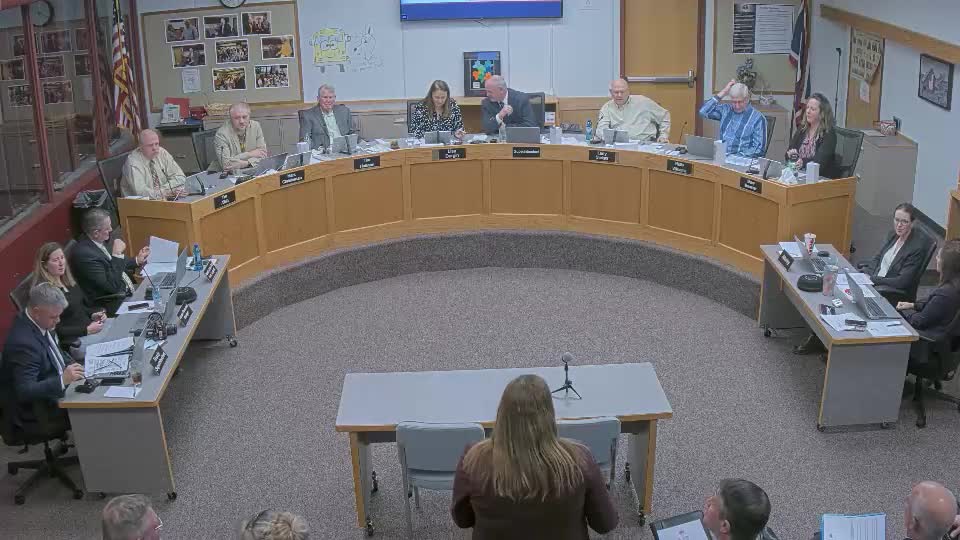
District ELA facilitators Patsy Bray (elementary) and Lisa Maffei (secondary) presented a curriculum and professional development update to the board.
Bray described three elementary goals: build foundational skills, build background knowledge and vocabulary, and build teacher expertise in literacy best practices. She said the district’s elementary resources include Heggerty (phonemic awareness for K–2), a phonics and fluency resource (named in the presentation as "Youth Life Foundations"), and Handwriting Without Tears for letter formation. Bray said the district purchased the National Geographic Panorama science units two years ago to provide nonfiction and fiction texts around grade‑level topics to build background knowledge.
Bray also described LETRS (letters/reading training) professional development: four district staff are certified to train LETRS; cohort 1 began this fall with about 25 teachers and will continue into the following year.
Lisa Maffei summarized the secondary goals: shift from “learning to read” to “reading to learn,” teach annotation, close reading and synthesis, and expand disciplinary literacy across content areas. She said secondary teams have developed year‑long curriculum guides with priority standards and non‑negotiable assessments and texts to ensure a guaranteed and viable curriculum.
Trustees asked about student love of reading, Orton‑Gillingham, and whether the selected texts would encourage lifelong reading. Presenters said teachers balance independent reading (student choice) with complex grade‑level texts; Orton‑Gillingham is used in special programs and targeted interventions; LETRS and other professional development are grounded in the research base commonly referred to as the science of reading.
Questions from trustees also touched on the state ELA standards review (a statewide process to reduce standards and assessment load). Presenters said the state work is ongoing and that the district will need to deconstruct and align any newly adopted standards once finalized.