Get Full Government Meeting Transcripts, Videos, & Alerts Forever!
Get email alerts on the Education Legislation topic
No spam. Unsubscribe anytime.
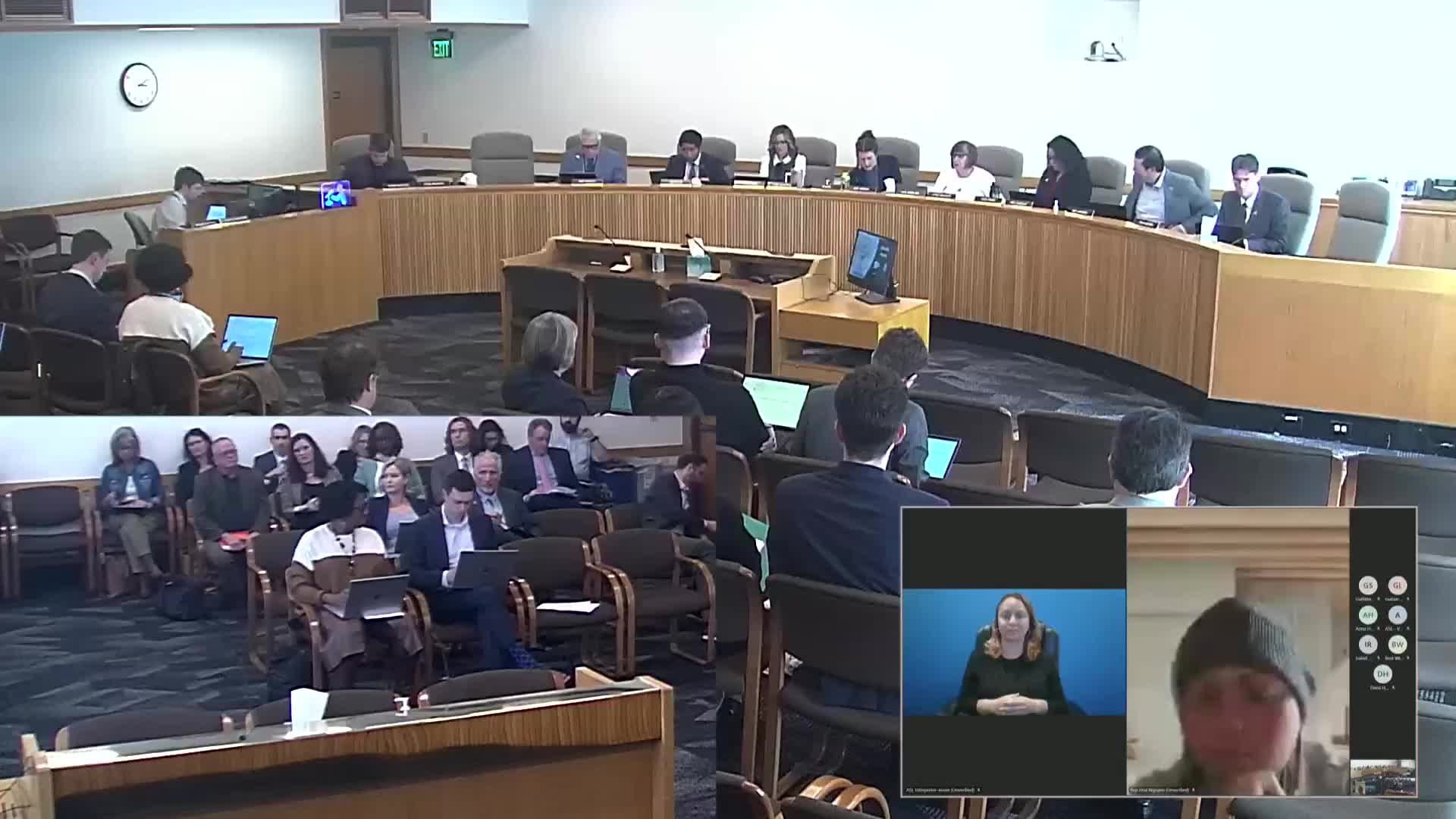
House Education Committee advances five education bills, including statewide restrictions on student personal electronic devices
Summary
The Oregon House Education Committee on April 7 adopted amendments and recommended that five bills move forward: HB 2251 (student device restrictions), HB 2588 (teacher apprenticeship funding), HB 2900 (probationary teacher rules), HB 2992 (vision program funding), and HB 3007 (concussion accommodations).
The Oregon House Education Committee on April 7 adopted amendments and recommended further consideration for five bills addressing student devices, teacher apprenticeship funding, teacher probationary periods, student vision services and concussion accommodations.
Committee members approved amendments and then recommended the bills for next steps: HB 2251 (use of personal electronic devices in schools) was amended and forwarded to the House floor; HB 2588 (Oregon registered teacher apprenticeship program funding) was amended and referred to the Joint Committee on Ways and Means; HB 2900 (modifications to contract and probationary teacher rules) was amended and advanced to the floor; HB 2992 (state program to provide eye exams and prescription eyeglasses) was amended and referred to Ways and Means with an $11,000,000 appropriation to the Oregon Health Authority; and HB 3007 (temporary accommodation plans for students diagnosed with concussion or other brain injury) was amended and recommended to the floor with a due-pass recommendation.
Why it matters: collectively, the measures change classroom practice (HB 2251), expand workforce pipelines (HB 2588), adjust hiring and probation routines for teachers (HB 2900), authorize a new statewide student health service (HB 2992), and require faster accommodations for students with brain injuries (HB 3007). Several bills include fiscal elements that will proceed to budget review or contain specific appropriations.
Key details and recorded actions
- HB 2251 (personal electronic devices) - Summary: Requires district school boards to adopt policies prohibiting use of students’ personal electronic devices during school or school activities, with exceptions for devices used consistent with an IEP or Section 504 plan; laptop computers are excluded in the dash-4 amendment; districts must provide policies and consequences and noncompliance can make a district nonstandard under Division 22. The dash-4 returned with a minimal fiscal impact. The committee adopted the dash-4 amendment and then moved the bill to the House floor with a due-pass recommendation. - Discussion: Several members emphasized concerns about local control and potential unintended consequences for students who struggle in school; others described the amendment as a "bold step" to reduce distraction and safety issues. - Outcome: Motion to adopt dash-4 amendment — passed; Motion to refer bill (as amended) to the floor with a due-pass recommendation — passed.
- HB 2588 (teacher apprenticeship funding) - Summary: Appropriates general fund dollars for an Oregon registered teacher apprenticeship program. The dash-1 amendment reduced the appropriation to $2,000,000 (from $3,000,000 in the introduced version), distributes funds to the Educator Advancement Council, and requires creation of an apprenticeship and training committee and a report to the legislature by September 15, 2026. The dash-1 takes effect 91 days after adjournment. - Outcome: Dash-1 amendment adopted by unanimous consent; HB 2588 as amended moved to the Joint Committee on Ways and Means by prior reference.
- HB 2900 (contract and probationary teachers) - Summary: Modifies definitions of contract teacher and probationary teacher and shortens required probationary periods for teachers who have previously served three years of probation in another Oregon district; adds notice and a 60-day improvement program for probationary teachers who meet certain conditions; removes some provisions relating to programs of assistance for improvement. A dash-2 amendment narrowed scope and is characterized as a compromise developed after the hearing. - Outcome: Dash-2 amendment adopted by the committee and the bill as amended was moved to the floor with a due-pass recommendation.
- HB 2992 (Vision to Learn: student eye exams and glasses) - Summary: Requires the Oregon Department of Education and Oregon Health Authority to establish a program providing free eye exams and prescription eyeglasses to qualifying K–12 students (Title I-qualifying or schools with >50% free or reduced-price meals). The dash-3 amendment clarified definitions, placed primary responsibility with the Oregon Health Authority, added follow-up services, directed rulemaking authority to OHA, and appropriated $11,000,000 for an Eye Examination and Correction Fund. The committee noted a fiscal report online and adopted dash-3 by unanimous consent. - Outcome: Dash-3 amendment adopted; HB 2992 as amended moved to the Joint Committee on Ways and Means by prior reference.
- HB 3007 (concussion and brain injury accommodation plans) - Summary: Requires a standard form and process for temporary accommodation plans for students diagnosed with concussion or other brain injury by a health care professional, requires accommodations within 10 days (as amended) and review within two months, requires referral to special education if accommodations are needed for six months or more, requires ODE technical assistance, and declares an emergency (effective on passage). The dash-3 amendment replaced section 1 and established ODE procedures and a sample form; the dash-3 carries a minimal fiscal impact. - Outcome: Dash-3 amendment adopted and HB 3007 as amended was moved to the House floor with a due-pass recommendation.
Votes at a glance (selected roll-call names shown as spoken on the record in committee): Representative Holbeck (Aye), Representative Hudson (Aye), Representative Winn (Aye), Representative Ruiz (Yes), Representative Wright (varied between amendment and final bill votes), Vice Chair Dobson (Aye), Vice Chair McIntyre (No on some items), Representative Alba (Aye), and others; committee clerks conducted roll calls for each motion. (The committee transcript records individual roll-call responses at the time of each action.)
Next steps: Bills with specific appropriations or fiscal considerations were referred to Ways and Means; others advanced to the House floor for further consideration.
Notes: This roundup covers formal committee actions taken during the April 7 work session. It does not attempt to summarize every comment made during debate; separate articles will cover substantive public hearings and extended policy discussions held the same day.