Get Full Government Meeting Transcripts, Videos, & Alerts Forever!
Get email alerts on the Towing topic
No spam. Unsubscribe anytime.
Senators press for clearer towing rules, say drivers and property owners should authorize tows
Summary
Lawmakers and industry witnesses told the Joint Committee on Transportation that Oregon’s towing statutes contain contradictory provisions and that Senate Bill 1036 would narrow who may authorize a tow and reduce disputes over private-property tows.
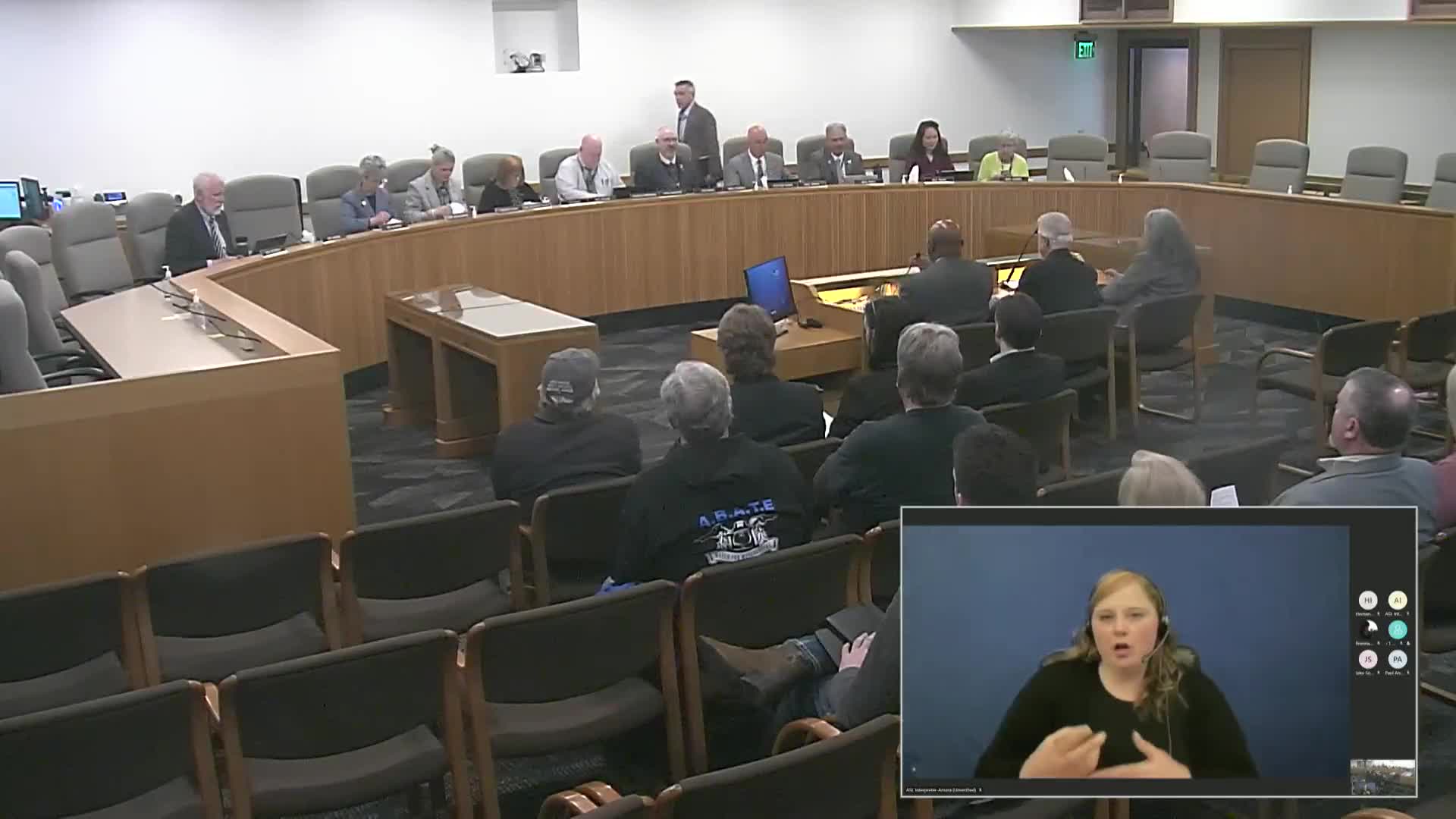
State Senator James Ivory Manning Jr., sponsor of Senate Bill 1036, told the Joint Committee on Transportation on April 7 that the measure is intended to clarify inconsistencies in Oregon’s towing law and reduce friction between tow operators, vehicle owners and property managers. "The bill is in itself very, simple," Manning said, adding that tow operators work in hazardous conditions and deserved statutory clarity and protections.
Former state Senator Chuck Riley, identified in testimony as chair of the towing board, told the committee the state’s towing statutes currently conflict in multiple places and that SB 1036 would make clear who may authorize a tow. "There are three people who should be able to make those determinations," Riley said, listing (1) the owner or operator of the vehicle, (2) the owner, renter or lessee of the space from which a vehicle is being towed, and (3) an officer or employee of state or local government. Riley said tow truck drivers are not sworn officers and should not be the party to decide whether a tow is authorized.
Tom Holt, testifying for the Oregon Tow Truck Association, supported the bill as a clarification of existing gray areas in statute. Holt said the association believes individualized requests for tow authorization should be required and that the bill will align statutes that now send mixed signals to drivers and property owners.
Lawmakers and witnesses discussed examples they said illustrated the problem: a vehicle blocking another vehicle in an assigned parking space being towed at the decision of the tow operator rather than the property owner, and broad statutory language that could allow a car to be towed from a driveway. Supporters said SB 1036 would narrow that authority and reduce improper tows.
No formal action was taken on SB 1036 during the April 7 hearing; the committee closed the public hearing after testimony and indicated staff would be available for follow-up questions.
Ending — Committee staff said they would accept follow-up questions; sponsors signaled interest in a broader interim work group to consolidate scattered towing statutes into a single division.