Get Full Government Meeting Transcripts, Videos, & Alerts Forever!
Senate Judiciary advances anti‑SLAPP, drone and retail‑theft measures; holds hearings on refugee services and discovery fees
Summary
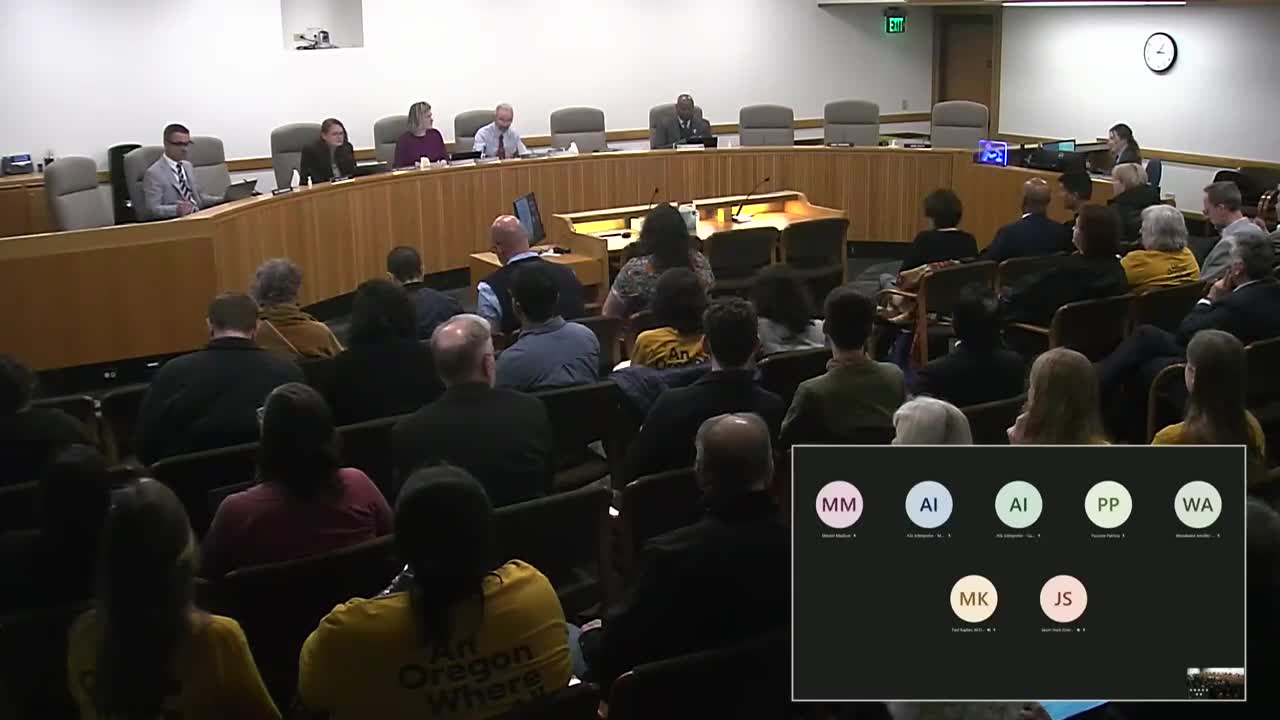
The Oregon Senate Committee on Judiciary met April 7 in Salem and took action on multiple bills, advancing some to the Senate floor, carrying others over for more work and hearing public testimony on proposals ranging from extended refugee case management to discovery fees charged by district attorneys.
The Oregon Senate Committee on Judiciary met April 7 in Salem and took action on multiple bills, advancing some to the Senate floor, carrying others over for more work and hearing public testimony on proposals ranging from extended refugee case management to discovery fees charged by district attorneys.
The committee adopted a compromise amendment to Senate Bill 180 that would add protections for people who communicate that they were victims of sexual assault by creating an anti‑SLAPP pathway tied to an objective “malice” standard and moved that bill to the Senate floor with a due‑pass recommendation. The committee also approved amended language for a bill on law enforcement use of unmanned aircraft systems (Senate Bill 238) and sent it to the floor, approved changes to an organized retail theft grant program (Senate Bill 275), and approved a measure allowing certain marijuana samples for workers (Senate Bill 558). The committee referred a proposal to fund an electronic filing system under the Death with Dignity Act (Senate Bill 424) to Joint Ways and Means for funding consideration.
Two public hearings drew extended testimony. On Senate Bill 149 — a proposal to modify Oregon’s extended case management program for newcomers — advocates and local providers urged the committee to expand eligibility and funding so culturally specific organizations can serve newcomers not covered by federal refugee resettlement definitions. Senator Casey Chama, appearing for the measure, said the amendment “expands the definition of eligible entities to include culturally responsible or specific organizations serving diverse populations and communities.” Witnesses described program successes and growing need: “Over 300 households were receiving this critical…
Already have an account? Log in
Subscribe to keep reading
Unlock the rest of this article — and every article on Citizen Portal.
- Unlimited articles
- AI-powered breakdowns of topics, speakers, decisions, and budgets
- Instant alerts when your location has a new meeting
- Follow topics and more locations
- 1,000 AI Insights / month, plus AI Chat