Get Full Government Meeting Transcripts, Videos, & Alerts Forever!
Get email alerts on the Judiciary Meeting Votes Roundup topic
No spam. Unsubscribe anytime.
Senate Judiciary advances anti‑SLAPP, drone and retail‑theft measures; holds hearings on refugee services and discovery fees
Summary
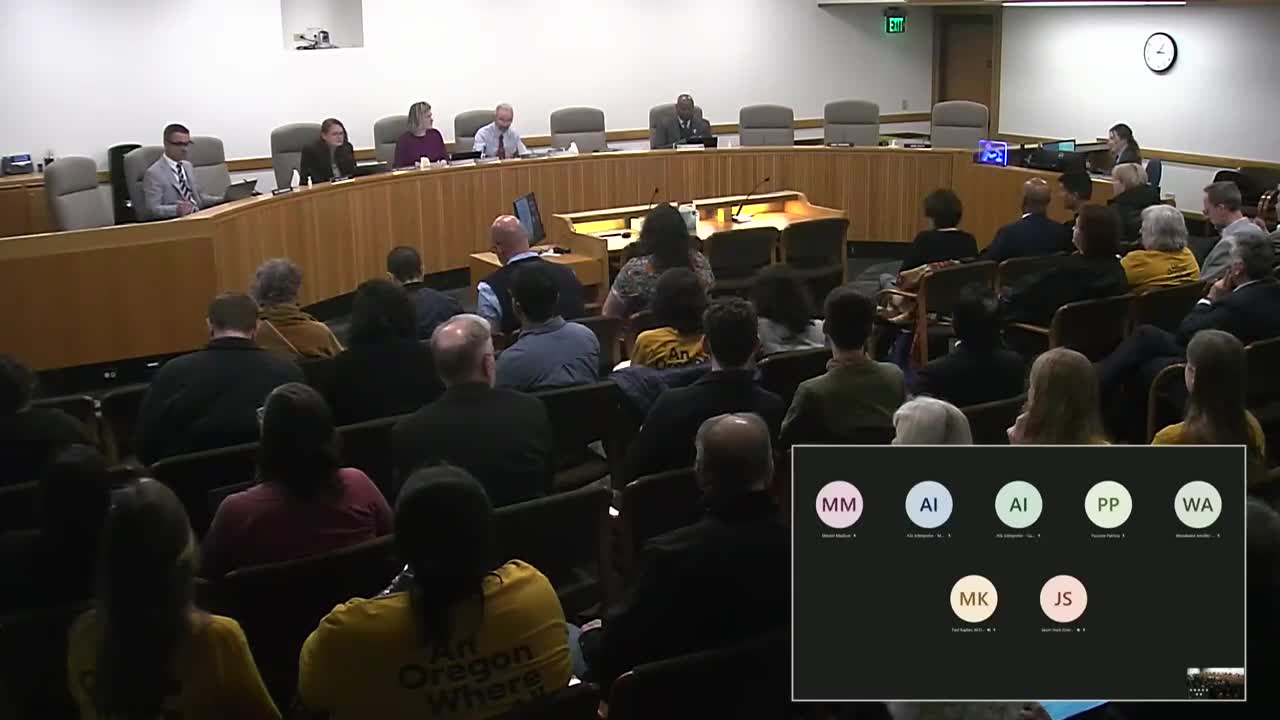
The Oregon Senate Committee on Judiciary met April 7 in Salem and took action on multiple bills, advancing some to the Senate floor, carrying others over for more work and hearing public testimony on proposals ranging from extended refugee case management to discovery fees charged by district attorneys.
The Oregon Senate Committee on Judiciary met April 7 in Salem and took action on multiple bills, advancing some to the Senate floor, carrying others over for more work and hearing public testimony on proposals ranging from extended refugee case management to discovery fees charged by district attorneys.
The committee adopted a compromise amendment to Senate Bill 180 that would add protections for people who communicate that they were victims of sexual assault by creating an anti‑SLAPP pathway tied to an objective “malice” standard and moved that bill to the Senate floor with a due‑pass recommendation. The committee also approved amended language for a bill on law enforcement use of unmanned aircraft systems (Senate Bill 238) and sent it to the floor, approved changes to an organized retail theft grant program (Senate Bill 275), and approved a measure allowing certain marijuana samples for workers (Senate Bill 558). The committee referred a proposal to fund an electronic filing system under the Death with Dignity Act (Senate Bill 424) to Joint Ways and Means for funding consideration.
Two public hearings drew extended testimony. On Senate Bill 149 — a proposal to modify Oregon’s extended case management program for newcomers — advocates and local providers urged the committee to expand eligibility and funding so culturally specific organizations can serve newcomers not covered by federal refugee resettlement definitions. Senator Casey Chama, appearing for the measure, said the amendment “expands the definition of eligible entities to include culturally responsible or specific organizations serving diverse populations and communities.” Witnesses described program successes and growing need: “Over 300 households were receiving this critical support,” one testimony noted, and a witness stated $1,200,000 was invested last year to shelter immigrant families.
At the hearing on Senate Bill 178, which would direct the Department of Justice to study a statewide uniform fee schedule for discovery costs, defense lawyers and private practitioners opposed charging defendants or private counsel for access to prosecution discovery. “This bill requires a discovery fee regardless of innocence, regardless of guilt,” attorney Marcus Gunn told the committee, recounting a case he said ended in dismissal after months and showing his objection to requiring payment by someone later found not guilty. The Oregon Criminal Defense Lawyers Association asked that any DOJ study explicitly consult defense stakeholders and national organizations and recommended that private counsel not be charged discovery fees.
Committee leadership repeatedly carried multiple bills over for follow‑up work or interim study, including gun‑safety bills and other measures for which fiscal paperwork or conversations remained incomplete. Several items were explicitly set for continuation at the committee’s April 8 session or for interim work groups rather than advancing during the current session.
Votes at a glance
- Senate Bill 180 (anti‑SLAPP for communications asserting sexual assault): Committee adopted the dash‑3 amendment tying relief to an objective malice showing and moved the bill to the Senate floor with a due‑pass recommendation. (Motion carried.)
- Senate Bill 238 (unmanned aircraft systems / law enforcement): Committee adopted the dash‑4 amendment narrowing uses and adding compliance language with ORS 181.250 and moved the bill to the floor with a due‑pass recommendation. (Motion carried; Senator McLean recorded a No on the floor motion vote for this bill.)
- Senate Bill 275 (organized retail theft grant program): Committee adopted a dash‑2 amendment to clarify grant distribution and uses and moved the bill to the floor with a due‑pass recommendation. (Motion carried.)
- Senate Bill 558 (marijuana samples for workers/licensees): Committee adopted dash‑3 clarifications and moved the bill to the floor with a due‑pass recommendation. (Motion carried.)
- Senate Bill 424 (electronic filing for Death with Dignity Act records): Committee voted to refer the bill to Joint Ways and Means by prior reference for funding consideration. (Motion carried.)
- Senate Bill 149 (extended case management for refugees and certain newcomers): Public hearing held; proponents described expansions in eligibility and organizational providers under the dash‑3 amendment. Work session was carried over to April 8 for fiscal paperwork; no committee vote on final adoption occurred on April 7.
- Senate Bill 178 (study of discovery fees): Public hearing held; committee recorded that the bill will not move forward this session and will be taken up in the interim with stakeholder work groups. (No floor referral this session.)
- Senate Bill 469, 181, 424, 169 and other items appearing on the agenda were carried over or rescheduled because fiscal or policy paperwork or stakeholder concerns remained outstanding; several will be reconsidered April 8 or in interim work groups. (Specific carryovers noted in committee record.)
Why it matters
The committee’s action advances legal protections and operational policies that affect litigation dynamics, police use of technology and service delivery to newcomers. The anti‑SLAPP change in SB 180 is intended to accelerate and limit burdensome discovery in defamation suits tied to sexual‑assault allegations by requiring plaintiffs to show malice in some cases, while SB 238 clarifies limits and procedures for law enforcement use of drones. The hearings on SB 149 and SB 178 spotlight two policy tensions: how to resource community organizations that help newcomers with housing, employment and trauma recovery, and who should bear the cost of growing volumes of digital discovery in criminal cases.
What to watch next
- April 8: The committee will resume work sessions and consider carried‑over bills and any outstanding fiscal worksheets. The SB 149 work session was explicitly rescheduled for April 8 to allow fiscal paperwork to be completed. Committee chairs indicated they will form interim work groups on discovery costs (SB 178) and other matters where consensus was not reached during this session.
Sources and quotes
Testimony, committee roll calls and bill language provided during the April 7 Senate Committee on Judiciary meeting. Selected direct quotes in this report come from witnesses and counsel during Wednesday’s public hearings: “This bill requires a discovery fee regardless of innocence, regardless of guilt,” Marcus Gunn, criminal defense attorney; “The amendment expands the definition of eligible entities to include culturally responsible or specific organizations serving diverse populations and communities,” Senator Casey Chama; and program testimony noting “over 300 households were receiving this critical support.”
Ending note
Committee leadership closed the April 7 session saying work on many items would continue April 8 or in the interim; several bills advanced to the Senate floor for consideration with committee‑recommended changes while others were paused for additional fiscal or stakeholder work.