Get Full Government Meeting Transcripts, Videos, & Alerts Forever!
Get email alerts on the Community Solar topic
No spam. Unsubscribe anytime.
Senate committee weighs expansion of community solar program, seeks PUC input
Summary
A Senate work session on Senate Bill 92 examined changes to Oregon’s community solar rules, including removing subscriber aggregate caps and interconnection and tax exemptions for small projects; the Public Utility Commission said it has authority to expand carve‑out capacity but broader expansion would require a longer process.
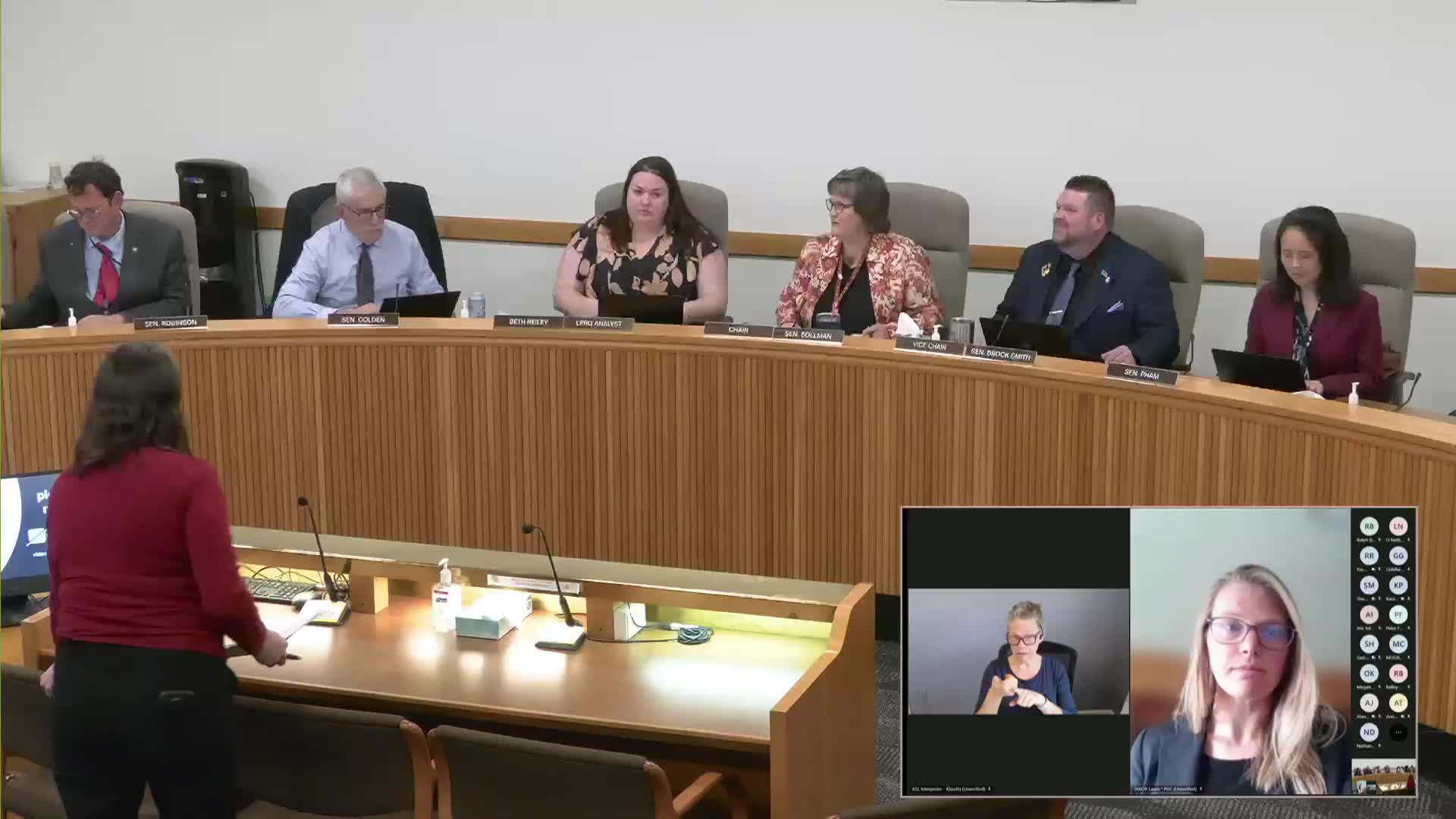
The Senate Committee on Energy and Environment held a work session on Senate Bill 92 on April 7 to consider changes to Oregon’s community solar program, including removing limits on how much aggregate community solar capacity a single subscriber may lease and easing interconnection and local tax rules for small projects.
The amendment under consideration (dash‑4) would direct the Public Utility Commission to establish procurement and program rules allowing a community‑solar subscriber to subscribe without limit to aggregate capacity across community solar projects and electric companies, permit community solar projects to be sited in a different utility service territory than their subscribers, allow projects with nameplate capacity under 2 megawatts to use an interconnection process, and exempt community solar projects with nameplate capacity of 3 megawatts or less from ad valorem taxation beginning Jan. 1, 2026. A fiscal and revenue statement was filed for the dash‑4 amendment.
The chair opened the session and asked for staff and agency comments. Angela Crowley Cook, Executive Director of the Oregon Solar and Storage Industries Association, told the committee that "all projects pay for their own interconnection costs," noting developers—nonprofit or private—pay for interconnection studies and any required grid upgrades whether distribution or transmission. Laura Taber, Legislative Affairs Director for the Public Utility Commission, told the committee that the PUC "does have authority to expand the program, both in terms of overall capacity and to expand the carve out capacity specifically," and that commission staff are meeting with community organizations and program administrators to assess pipeline needs.
Taber said PUC staff anticipate a reasonable pipeline likely would "exceed the 7 megawatts of projects" previously discussed to the committee, and that commissioners are open to considering an expansion of carve‑out capacity. She added, however, that expanding overall program capacity beyond the carve‑out would require more time, stakeholder input and a broader public process because of potential cost impacts on nonparticipants.
Angela Crowley Cook noted many community‑focused projects already have committed funding and some have spent thousands of dollars on system impact studies; she said that uncertainty about program expansion has left developers and nonprofits “nervous.” Committee members asked whether locating projects in one service territory while serving subscribers in another would require additional transmission payment responsibility; witnesses said interconnection costs are paid by the project developer, but locating projects farther from customer load could affect regional transmission availability.
The chair carried Senate Bill 92 forward to Wednesday for continued consideration and closed the work session.
The work session produced questions for staff and the PUC but no formal committee vote.
For readers: the committee is considering removing an Oregon‑specific four‑megawatt aggregate cap on subscribers and adding tax and interconnection changes that would affect small community solar projects. PUC staff described an ongoing stakeholder process to evaluate an expansion of the carve‑out program.