Get Full Government Meeting Transcripts, Videos, & Alerts Forever!
Get email alerts on the City Budget topic
No spam. Unsubscribe anytime.
Waynesboro staff propose $74,018,262 general fund balanced at 89 cents; budget funds school debt, pay adjustments and public safety staffing
Summary
City staff presented a $74,018,262 recommended general fund budget that would balance at a property tax rate of 89 cents per $100 of assessed value and includes money for Waynesboro High School debt service, partial implementation of a compensation study, added public-safety positions and aid to the local first-aid crew.
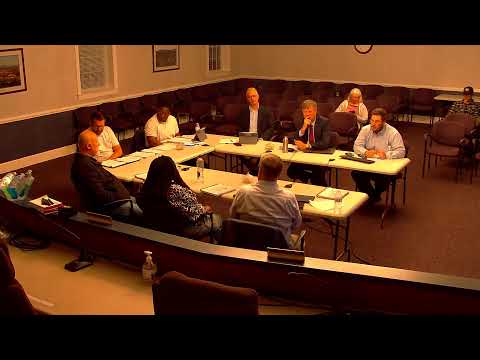
Staff member (presenter) opened the budget work session presenting a recommended general fund of $74,018,262 and said the package “balances at a property tax rate of 89¢,” while noting the proposal reflects multi‑year planning and partial implementation of prior commitments.
The budget matters because it sets the city’s tax rate and spending priorities for core municipal services, personnel and debt service for capital projects such as the Waynesboro High School project. City staff framed the proposal as a multiyear plan that cannot be fully realized in a single fiscal year and asked council for feedback before public hearings and ordinance adoption.
The recommended package and major drivers
The presentation lists several explicit drivers of the increase: partial implementation of a compensation study and salary‑scale adjustment, increased debt service set aside for the Waynesboro High School project, additions to public safety staffing, higher employer health‑insurance costs and increased transfers to school and social‑services programs.
Staff member (presenter) said the budget includes a transfer designated for high‑school debt service by programming a three‑cent reserve for the bond payment. He described the package as a multi‑year plan that shows higher reserves for the same project in 2027 and 2028.
Cameron (staff member) walked through the expenditure changes and called the ‘‘main budget driver this year’’ the salary and compensation adjustments, explaining the recommended step would implement part of a pre‑COVID compensation study. Cameron said the recommended implementation does not reach the study’s full goal but would move base pay closer to a living‑wage benchmark and noted prior mid‑year raises left unpaid amounts that must be funded in this budget.
Personnel, pay and benefits
- Salary and compensation: staff described a phased implementation of a compensation study with a multi‑year approach. The presentation cited the study’s goal of positioning pay near the 50th percentile of comparable employers and tying the pay system to a living‑wage indicator. Staff said the recommended changes for this budget move the scale toward those targets but do not complete the full plan. - New and phased positions: the package recommends several position changes. Staff described recommended police department additions (one sworn officer and one civilian position) and recommends funding six additional firefighter positions in total for the coming year, with three funded at the start of the fiscal year and three funded in January to allow time for recruitment and training; the remaining requested positions would appear in future fiscal years in the multi‑year plan. - Health insurance: staff estimated an increase of about $240,000 in employer health‑insurance costs.
Support for schools, social services and local emergency medical services
Staff cited an $840,000 increase to school support calculated under the city’s funding formula (noted in the presentation as 42.5% of discretionary revenue). The budget also programs a $400,000 increase in support for the Waynesboro First Aid Crew to help cover a reduced reserve held by that agency and operating shortfalls. The Comprehensive Services Act (CSA) and related administrative portion (BPA) were described with amounts of roughly $320,000 for CSA and $80,000 for BPA in staff remarks.
Enterprise funds, fees and studies
Staff proposed no rate increases for most enterprise funds this year but recommended a 5% increase to the stormwater utility fee to help cover inflation and to preserve that fund’s ability to absorb compensation costs. Staff recommended pursuing rate studies for water, sewer and refuse funds (but suggested holding off on a stormwater rate study until MS4 permit requirements are clearer).
Revenue assumptions and reassessment context
Staff said the budget is prepared on the recently completed general reassessment, noting overall equalized property values increased by an average of about 13.5% and a median single‑family value of $257,100 was cited. Revenue drivers cited in the presentation included reassessment increases, a rate adjustment, new construction and other revenue categories; specific numbers mentioned in the presentation included: new construction revenue of about $350,000, interest revenue estimated with a three‑year average at roughly $720,000, sales and meals tax budgeted at about $565,000, and personal property at about $140,000.
Capital projects, debt and next steps
Staff described programming debt service and reserves in a multi‑year capital improvement plan (CIP) to cover the Waynesboro High School bond issuance (anticipated if council moves forward) and noted Nature’s Crossing Technology Center is highlighted but requires no appropriation this fiscal year. Staff said borrowing for some projects could be scheduled for the next fiscal year, and discussed options for financing (including the Virginia Resources Authority and issuing the city’s own bonds) and the need to coordinate timing with the audit and financial advisers.
Public process and schedule
Staff outlined next steps including continued work sessions and public hearings: a budget work session and alignment meeting (April 23), a regular council meeting with a budget‑rate and fee public hearing (April 28), an additional work session (May 7) for final alignment, and the adoption of necessary ordinances scheduled for May 12, 2025. Staff also noted fund‑balance appropriations for smaller capital items would occur after adoption and that some CIP appropriations could be introduced in late May with final adoption following.
Council discussion
Council members asked clarifying questions about the treatment of the $900,000 set aside for school debt service, the mechanics of the school funding formula and options for excluding specific revenues from the formula. Multiple council members urged coordinating with the school board through 2‑by‑2 meetings to discuss guardrails and shared expectations before making changes that would affect the school transfer calculation. Staff confirmed the current recommended budget is the city manager’s recommended budget and any council changes at this point must originate from the council.
Ending
Staff requested council feedback on areas for additional analysis and confirmed they will circulate detailed supplemental sheets, distribute corrected printed materials and proceed with the public‑hearing schedule. The presentation closed with staff inviting council members to submit preferences or priorities they would like staff to model in alternative budget scenarios.