Get Full Government Meeting Transcripts, Videos, & Alerts Forever!
Get email alerts on the Infrastructure Private Roads topic
No spam. Unsubscribe anytime.
Orinda council gives staff direction to proceed with private-road resident questionnaire, consultant to be engaged
Summary
The council endorsed the infrastructure committee's request to hire FM3 Research to survey households on private roads about road and drainage maintenance options, with an estimated cost around $22,500 to be absorbed in the current budget and executed under the city manager's authority.
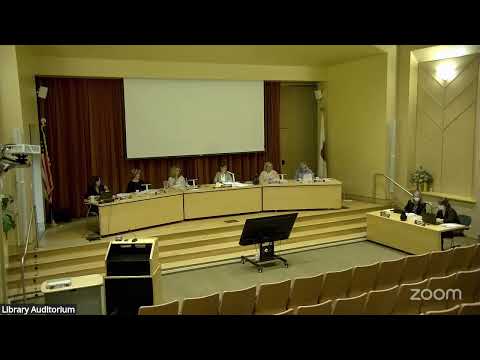
The Orinda City Council on April 7 gave staff direction to proceed with the infrastructure committee’s funding request to contract FM3 Research for a questionnaire and needs assessment of households on private roads.
Councilmember Gee, who led the infrastructure committee effort, said the study is intended to gather representative input from the roughly 1,600 addresses the city has identified as located on private roads, to better understand resident preferences and form options for potential policy or funding responses. The committee and staff recommended a targeted questionnaire (not an anonymous poll) mailed to those addresses, supplemented with matched voter and contact data so phone or text follow-ups can lift response rates.
Dave Metz of FM3 Research explained the firm could match city address data to voter-registration and consumer databases to obtain phone numbers, emails and to characterize properties by type (HOA-associated developments, private roads without HOA, etc.). He said FM3 can set quotas and statistically weight results so responses reflect the various private-road subgroups. Staff estimated a likely contract cost in the neighborhood of $22,500 (the range presented to the committee was roughly $17,000–$22,500 depending on depth), and city manager staff indicated the work could be absorbed within the current budget and executed under the city manager’s contracting authority.
Council discussion emphasized the variety of private-road situations in Orinda—ranging from well-run HOAs to small cul-de-sacs and older neighborhoods where residents later discovered they lived on private roads—and the need for sufficient sample design so smaller subgroups are not misrepresented. Councilmember Gee argued that previous conversations lacked representative data and that a targeted questionnaire would help the city evaluate options, including whether additional revenue or new policies might be needed. Councilmember Riley asked whether results could be reported by street or HOA; FM3 said the physical address of each respondent would allow slicing results by geography or identified subgroup, subject to statistical limitations where sample sizes are small.
After discussion, councilmembers indicated consensus to proceed with the infrastructure committee’s request. The city manager noted this is a direction to proceed, not a separate budget appropriation; the manager said he has the authority to enter the agreement and staff will return with a contract and the questionnaire instrument for committee review.
Why it matters: About one in five Orinda residents live on private roads and many of those roads and private drainage facilities are maintained privately. The city has previously invested in public road repairs via voter-approved measures; private-road maintenance and funding options have long been contentious and data have been limited. A targeted questionnaire aims to produce representative resident input to inform policy options.
Next steps: Staff will finalize scope and contract with FM3, produce a draft questionnaire for the infrastructure committee’s review, and return with a contract document for the city manager to execute under existing budget authority.