Get Full Government Meeting Transcripts, Videos, & Alerts Forever!
Get email alerts on the Land Use Tree Management topic
No spam. Unsubscribe anytime.
Orinda council introduces broader tree-management ordinance changes to allow insurance exceptions and new review factors
Summary
Council introduced Ordinance 25-03 (version A), amending Chapter 17.21 (tree management) of the Orinda Municipal Code to add an exception process for insurance-related tree removal, clarify protected-tree definitions, and expand decision factors used to evaluate removal permits; council removed one recital referencing insurance language.
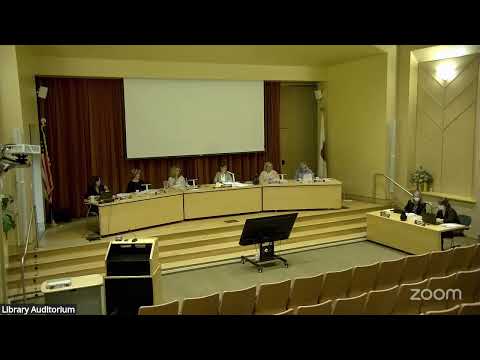
The Orinda City Council on April 7 introduced Ordinance 25-03, a zoning-text amendment to Chapter 17.21 (tree management) of the Orinda Municipal Code, authorizing a revised exception process for protected-tree removal requests and expanding factors planners may consider when deciding permits.
Staff associate planner Darren Hughes told the council the revisions were prompted by resident reports that insurance companies had been requiring tree removal to obtain or retain homeowner insurance, sometimes involving large, old oaks adjacent to structures. Hughes said the amendment would add a documented-exception pathway for circumstances where tree removal is required to obtain or retain insurance coverage and would clarify the definition of protected trees and other technical details.
Key proposed changes in the introduced version (version A) include:
- A clarified schedule for "protected tree" designations: on developed parcels, certain oak species become protected at 12 inches diameter at breast height (DBH); on vacant parcels or within identified downtown zones protected trees are those not on a disallowed plant list and 6 inches DBH or greater; riparian/native trees have lower thresholds (single trunk >= 4" or combined multi-trunk equivalent); and replacement trees planted as restitution or as project conditions are protected regardless of size.
- An exceptions section stating a permit is not required when the property provides documentation from an "appropriate authority" demonstrating the reason and specific trees to be removed, including a narrowly drafted exception where removal is necessary to obtain or retain insurance coverage for the specific property.
- An expanded set of factors for planner determinations (bringing the list from two to six) to include imminent threat to public health/safety/property supported by a certified arborist; documented disease, decay or structural instability; cumulative impacts of removal; potential for additional removals by other authorities; and feasible alternatives such as pruning or root management.
- For removals tied to development projects, a tree-removal permit would be valid only upon issuance of the associated building permit, intended to deter pre-development clear-cutting on vacant lots.
Hughes told council the planning commission reviewed two draft versions and recommended version A. He also acknowledged a clerical error in an earlier report that caused two drafts to be labeled the same; the planning commission recommended the more comprehensive version A (Resolution 25-02).
Council discussion touched on protected-species scope, transparency, and interactions with other authorities. Councilmember Hoxie asked whether redwoods would be protected; staff said redwoods would be protected on vacant parcels (6" DBH) and in downtown zones but not currently on developed private parcels. Councilmember Riley and others discussed the wording of a proposed recital mentioning insurance mandates; the council reached consensus to remove the recital language (17.21.0.1(f)) while retaining the more specific exception in the ordinance text.
Vice Mayor Iverson, who said he "love[s] this stuff," praised the balance of the draft and supported the broader version A. Legal counsel clarified that an exception under the city code would not relieve property owners from complying with separate property-instrument restrictions such as conservation easements.
The council moved to waive full reading and introduce Ordinance 25-03, version A, with two minor edits: remove recital 17.21.0.1(f) that referenced insurance language in the preamble, and correct the numbering typo before the schedule table. The motion to waive full reading and introduce the ordinance passed unanimously (5-0).
Why it matters: The amendments are intended to create an expedited, documented path for property owners who face an imminent insurance-related requirement to remove protected trees, while strengthening the planner’s ability to weigh preservation factors and guard against unnecessary loss of mature trees. The ordinance also anticipates evolving state requirements and expands criteria to consider cumulative impacts on area character and safety.
Next steps: The council introduced the ordinance and waived full reading. Introduction is the formal first reading; the ordinance will return to the council for subsequent readings or adoption as required by the municipal code. Staff indicated a broader comprehensive update to the tree code could follow in the next couple of years.