Get Full Government Meeting Transcripts, Videos, & Alerts Forever!
Get email alerts on the Housing Comprehensive Plans topic
No spam. Unsubscribe anytime.
Senate Bill 50 would add optional housing development plan to borough comprehensive plans
Summary
Sen. Forrest Dunbar introduced SB 50 to add a “housing development plan” as an optional component of municipal comprehensive plans for first- and second-class boroughs. The bill is advisory—not a mandate—and would apply at each jurisdiction’s next scheduled update. The committee set the bill aside for future consideration after invited testimony.
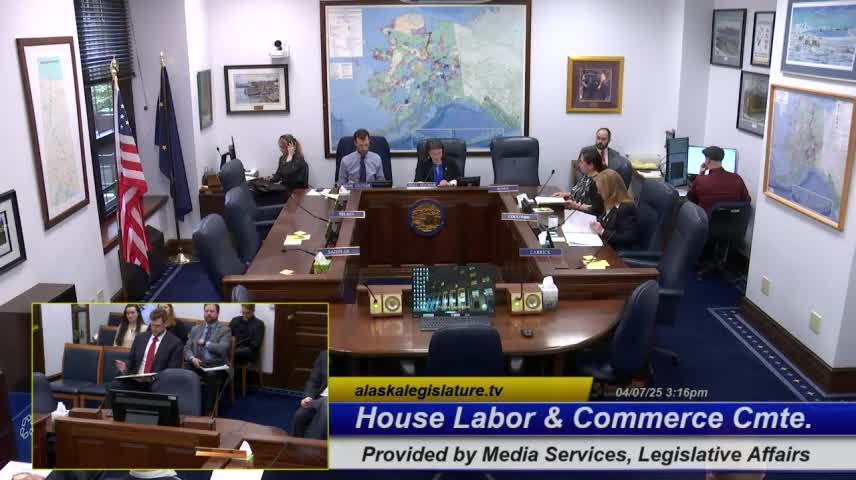
Senator Forrest Dunbar, sponsor of Senate Bill 50, told the House Labor and Commerce Committee on April 7 that SB 50 would add a housing development plan as a suggested component of municipal comprehensive plans for first- and second-class boroughs.
"SB 50 is a common sense measure to bring more focus to Alaska's housing crisis," said Senator Forrest Dunbar. He told the committee the state already requires comprehensive plans under Title 29 but does not prescribe detailed content, and that housing does not always fit neatly into the existing suggested components.
The bill would add a housing development plan as a new suggested component to AS 29.40.030(a). Dunbar emphasized the measure is not a mandate and “does not require them to redo or immediately update their current plans,” adding that the suggested component would be considered during jurisdictions’ normal plan update cycle, which he said is often about every 10 years.
James Devins, a Valdez city council member who participated remotely, supported the bill based on Valdez’s experience. "Setting housing as a specific goal of our comprehensive plan absolutely benefited our ability to achieve that goal more successfully than I believe we otherwise would have been able to," Devins said, describing local gains in housing units after revising the city’s comprehensive plan.
Committee members asked how the bill would interact with local authority and whether it would impose new burdens. Dunbar said the bill applies only to first- and second-class boroughs and not to home-rule municipalities and that state law currently functions as guidance that local governments typically consult during their planning processes. He also told members the idea grew from conversations with Anchorage planners and that the bill was intended to encourage local assessment of regulations and public engagement to address housing supply.
Representatives raised policy options beyond the bill’s text, including tax incentives and blighted-property tools to encourage redevelopment, and whether zoning or parking minimum reforms should be included. Dunbar said some reforms, like repealing parking minimums, happen at the local level and that other incentive ideas had been considered in prior sessions. Representative Sadler asked whether the bill would require immediate revisions; Dunbar clarified it would take effect on each jurisdiction’s normal cadence for updating plans.
With no formal motion or vote taken on SB 50, the committee set the bill aside for consideration at a future date.
The committee also heard that the bill passed unanimously in Dunbar’s originating chamber and that staff will provide a sectional analysis of the single addition to statute: adding a new subsection to AS 29.40.030 to list a housing development plan among suggested comprehensive-plan components.