Get Full Government Meeting Transcripts, Videos, & Alerts Forever!
Get email alerts on the Civil Legal Aid topic
No spam. Unsubscribe anytime.
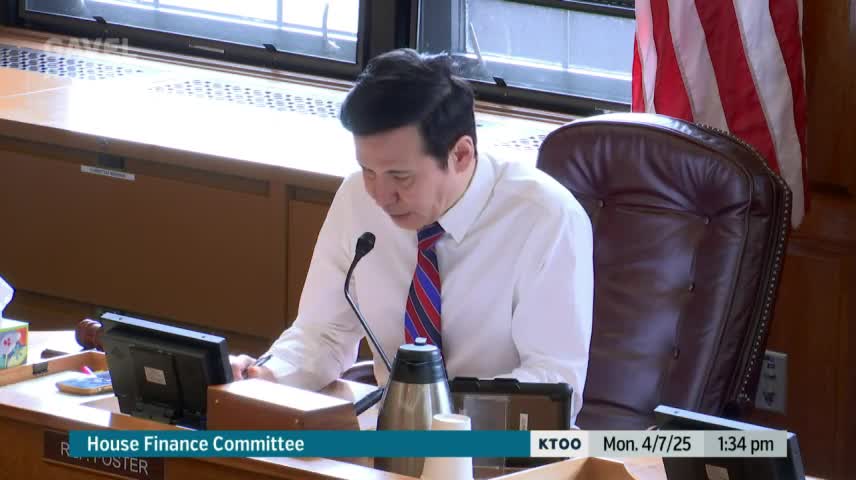
House Finance committee advances bill to dedicate court-fee revenue to civil legal aid
Summary
The House Finance Committee voted to move House Bill 48 out of committee with individual recommendations; the bill would change statute to dedicate a portion of court filing fees to the Alaska Legal Services Corporation (ALSC). Committee members questioned the timing and fiscal effect as the state faces tight budgets.
House Finance Committee Co‑Chair Foster moved Thursday to advance House Bill 48, which would change statutory language to dedicate a portion of court filing fees to the Civil Legal Services Fund and direct a specified share to the Alaska Legal Services Corporation. The committee voted to move the bill out of committee with individual recommendations and attached fiscal notes after a brief debate and invited testimony.
The bill’s sponsor, Representative Sarah Hannan, told the committee the change “simply changes in the statute the percentage from the civil legal services fund that could be appropriated to the Alaska Legal Services Corporation.” She and ALSC representatives said the change creates a stable revenue stream for civil legal aid to serve low‑income Alaskans.
The bill drew both support and fiscal concern. Representative Josephson, among supporters, described services ALSC provides — including family law, elder advocacy, housing and domestic‑violence work — and said those services can reduce downstream state costs by keeping people housed and connected to benefits. ALSC testimony to the committee said the organization’s total budget is about $10.3 million and that federal funding accounts for roughly 40–50% of that budget. The ALSC representative said private fundraising (the “Partners in Justice” campaign) raises roughly $250,000–$300,000 annually.
ALSC told the committee it handled just over 6,200 cases in state fiscal year 2024 and that it turns away roughly 40–50% of applicants when capacity or eligibility limits are reached. In explaining program eligibility, ALSC said it generally serves people at or below 125% of the federal poverty guidelines and can flex to higher thresholds in limited circumstances.
Opponents and skeptics on the committee, including Representative Johnson and others, said redirecting court filing fees into a dedicated fund effectively reduces the unrestricted general fund revenue available for core state services. Representative Allard urged nonprofits to raise private funds rather than rely on new statutory revenue streams; Representative Staff noted that the change would redirect court fee receipts that otherwise flow into the General Fund. Several members said the committee’s decision to advance the bill should not be read as endorsement of additional spending given current budget pressures.
Motion and committee action: a committee member moved to report House Bill 48 out of committee with individual recommendations and attached fiscal notes; there were no recorded objections and the bill passed out of committee.
Why it matters: supporters say a stable funding stream for civil legal aid preserves access to services for veterans, elders, domestic‑violence survivors and other low‑income Alaskans; critics say the measure redirects general‑purpose revenue at a time the state faces fiscal constraints.
The committee directed staff to file the committee report; sponsors offered brief closing remarks. The bill now proceeds in the legislative process with the committee’s recommendation and the attached fiscal notes.