
Horace Mann students demonstrate early literacy strategies to West Allis-West Milwaukee board
Get AI-powered insights, summaries, and transcripts
Sign Up Free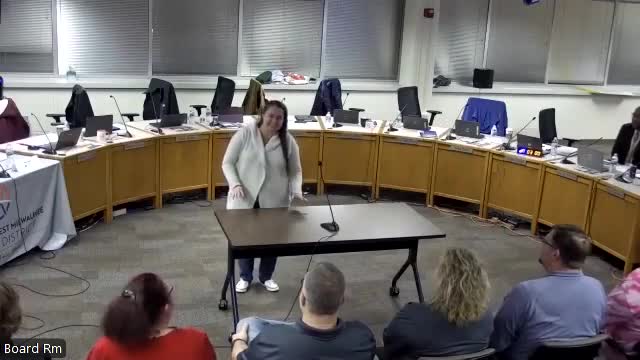
Summary
Teachers and students from Horace Mann Elementary demonstrated phonics routines, small-group data checks and literacy centers to the West Allis-West Milwaukee School Board, outlining classroom use of mirrors, sound segmentation and a 30-day challenge.
Dr. Mintzlaff, principal of Horace Mann Elementary, and teachers showed the West Allis-West Milwaukee School District Board examples of classroom literacy routines on Dec. 9 during the board’s regular meeting. The demonstration featured 4K and first-grade students using mirrors, “sound walls,” poppets and structured centers to practice letter sounds, segmentation and early decoding.
The presentation highlighted the school’s “theory of action” for the year: fast-paced reading and math paired with frequent data checks. "Our theory of action this year is all based off around fast paced reading, and math," Dr. Mintzlaff told the board. Teachers and coaches said they use small-group instruction and one-on-one checks to monitor progress and plan interventions.
Deeper learning coach Jen Houston introduced 4K teacher Amanda Hishma and students for a demonstration of mirror work and sound practice. Hishma said students look at how their mouths form sounds so teachers can correct tongue or lip placement; she described the mirrors as a classroom tool purchased for kindergarten and adopted after observing early benefits in other grades.
First-grade teachers described centers that run on a four-day cycle so students spend a full session in one center to reduce transitions. Teachers said centers are differentiated: students receive district-app assignments, check-ins every 15 to 20 minutes, and supplemental tubs of leveled activities when students finish required tasks. The center rotation includes a library center, write-the-room activities, a writing center focusing on grammar and sentence construction, and a light table for phonemic awareness.
Teachers demonstrated segmentation activities using poppets and asked board members to participate in a short sound-box exercise to show how students map sounds to spelling. Staff said the program uses two letters per week from the district curriculum and tracks progress through short, frequent assessments; they described a 30-day challenge used to collect and respond to classroom data.
Board members applauded the students’ work and thanked teachers and families for attending. The presentation concluded with district and school staff noting that the mirror and sound-work methods had produced observable changes in students’ awareness of mouth position and pronunciation during recent lessons.
The demonstration was presented during the board’s regular meeting and was followed by the superintendent’s report and other agenda business.