Get Full Government Meeting Transcripts, Videos, & Alerts Forever!
Get email alerts on the Special Education topic
No spam. Unsubscribe anytime.
Board discusses Lakes Region special‑education consortium proposal and classroom behavior concerns; some members warn against segregation
Summary
The board reviewed a Lakes Region special‑education consortium proposal and a memorandum of understanding and also heard sustained concerns about classroom disruptions and inclusion, with multiple speakers insisting segregationist options be off the table.
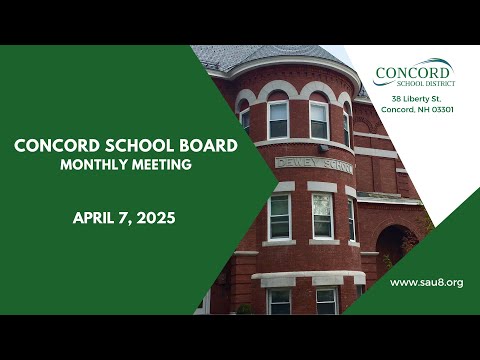
The Concord School District Board of Education discussed a Lakes Region special‑education consortium and a related memorandum of understanding at its April 7 meeting, and board members, staff and public speakers debated whether shared services could reduce costs without moving toward segregated placements.
The superintendent said she received two documents from the Lakes Region: (1) a 10‑year consortium agreement focused on curricular exchanges and shared services and (2) a one‑year memorandum of understanding whose language the superintendent described as “fairly vague” and which referenced conversations about building a separate school. She told the board she has not finalized anything and would bring any proposal forward for board review before signing.
Board members and public commenters raised concerns. One board member said “we should have segregationist thinking off the table,” and another public commenter argued the consortium conversation is a “manufactured economic imperative” that results from inadequate federal IDEA funding and state school‑funding structures. The superintendent said Concord’s practice is to prioritize inclusive placements and that, while the district places a modest number of students out of district when appropriate, Concord is “conscientious” about keeping students close to home when possible.
District staff explained there are existing regional consortia (named examples included Seacoast Learning Collaborative and Strafford/South‑Central groups) that some districts use to access specialized staff or programs; the board said it expects the superintendent to bring any final consortium language, memoranda or agreements to the board for review before signing. One board member asked whether the superintendent had seen the consortium language; the superintendent said she had and that she would bring it to the board when ready.
Behavior and inclusion in regular classrooms also received sustained discussion. Board members, staff and parents described classroom disruptions that can pull teachers away from instruction. The superintendent and special‑education staff described training (CPI/noncrisis intervention), restorative practices, on‑staff behavioral expertise and programs for students with behavioral needs; they said most students are served in district programs but acknowledged there are occasional placements out of district when necessary. Board members asked for clearer data on frequency and impact of disruptions and for any necessary follow up in nonpublic sessions if student‑specific information was required.
Why it matters
Shared services or new regional placements could reduce costs and expand access to specialized staff, but community members and some board members warned such efforts must not lead to the segregation of students with disabilities. At the same time, classroom disruptions raised by parents and board members prompted requests for better data on how frequently instruction is interrupted and what programmatic steps the district is taking to limit lost learning.
Next steps
The superintendent said she will bring final consortium or memorandum language to the board for review before signing and noted the district’s participation in regional collaboratives. The board asked for more data on classroom disruptions and planned to follow up as needed in public or nonpublic sessions depending on data sensitivity.