Get Full Government Meeting Transcripts, Videos, & Alerts Forever!
Get email alerts on the Redevelopment Finance Tif topic
No spam. Unsubscribe anytime.
Logansport redevelopment commission delivers 2024 TIF activity report; several allocation areas near expiration
Summary
Consultants presented the redevelopment commission's required April 15 report summarizing 2024 tax-increment finance (TIF) receipts, expenditures, fund balances and upcoming area expirations; council members asked clarifying questions about bond payments and project spending.
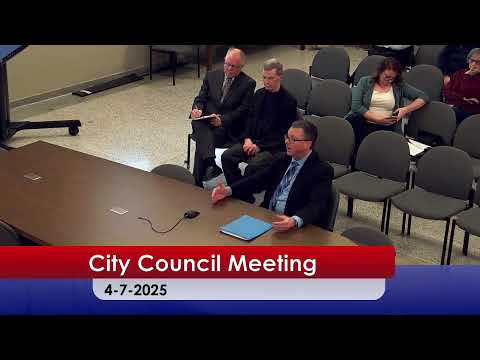
Consultants to the Logansport Redevelopment Commission presented the commission's annual April 15 report to the Logansport Common Council on Monday, summarizing tax-increment finance (TIF) activity for calendar year 2024 and noting several allocation areas approaching their scheduled expiration dates.
The report, prepared for the city and the redevelopment commission, covered receipts and expenditures across consolidated and individual allocation areas and described the requirement to submit the information to the Indiana Department of Local Government Finance gateway. The consultant said, “By each April 15, redevelopment commissions do have to report on prior year activity,” and that the report would be uploaded by the city by the deadline next week.
The consultant explained how TIF works: when a TIF area is established, “the value of any property within those geographic boundaries in that base year is set,” and the district captures growth above that base. The presentation showed that some Logansport TIF areas are still early in their lifecycle while others ' notably downtown and industrial-park areas ' are more mature and producing larger increments that will expire through the 2030s.
Key finance figures shown in the presentation included recent revenues and expenditures by allocation area: the consolidated EDG area brought in roughly $900,000 and spent about the same amount; the airport/allocation areas recorded about $370,000 in receipts and roughly $900,000 in spending; the downtown area brought in about $450,000 and spent nearly $300,000; Junction recorded about $115,000 in receipts and $40,000 in expenditures; and Lexington Village had receipts of about $21,000 and expenditures of $287,000, the presenter said, noting that much of Lexington Village's spending reflected bond proceeds used for project-related work.
On expenditures by category the consultant reported roughly $200,000 on professional services, about $1.5 million on capital outlays, roughly $100,000 on machinery and equipment (including school career-center equipment), about $65,000 on land, and $176,000 on principal and interest. The RDC's consolidated allocation fund balances were listed as roughly $1.2 million (consolidated), $1.5 million (industrial park), $800,000 (downtown), $38,000 (Junction), $86,000 (Soleil) and approximately $692,000 (Lexington Village allocation fund), plus other bond and construction funds described in the report.
Council members asked several follow-up questions about the hotel and Junction bond payments. The consultant explained that about 75% of increment distributions in certain districts return to debt service for developer-issued bonds and noted timing differences between December revenue receipts and January bond payments as an explanation for apparent mismatches in one allocation area.
The presentation also listed expiration schedules: Airport Industrial Park and related areas were noted as expiring in 2031, the consolidated East End area in 2038, Gateway Commerce in 2037, and several Lexington Village and Junction allocation areas in the 2040s. The consultant cautioned that when TIF areas expire, incremental value returns to the general tax base.
No formal council action was recorded during the presentation; the report is a mandated informational filing and will be submitted to the Department of Local Government Finance gateway as described by the presenters.