Lifetime Citizen Portal Access — AI Briefings, Alerts & Unlimited Follows
Senate Indian Affairs panel warns against dismantling Education Department, highlights risks to Native students
Loading...
Summary
Witnesses told the Senate Committee on Indian Affairs that Department of Education programs — including Title VI Indian Education, Impact Aid, ANEP and Title III support for tribal colleges — are central to the federal trust responsibility and would be disrupted by proposals to dismantle or relocate the agency’s programs.
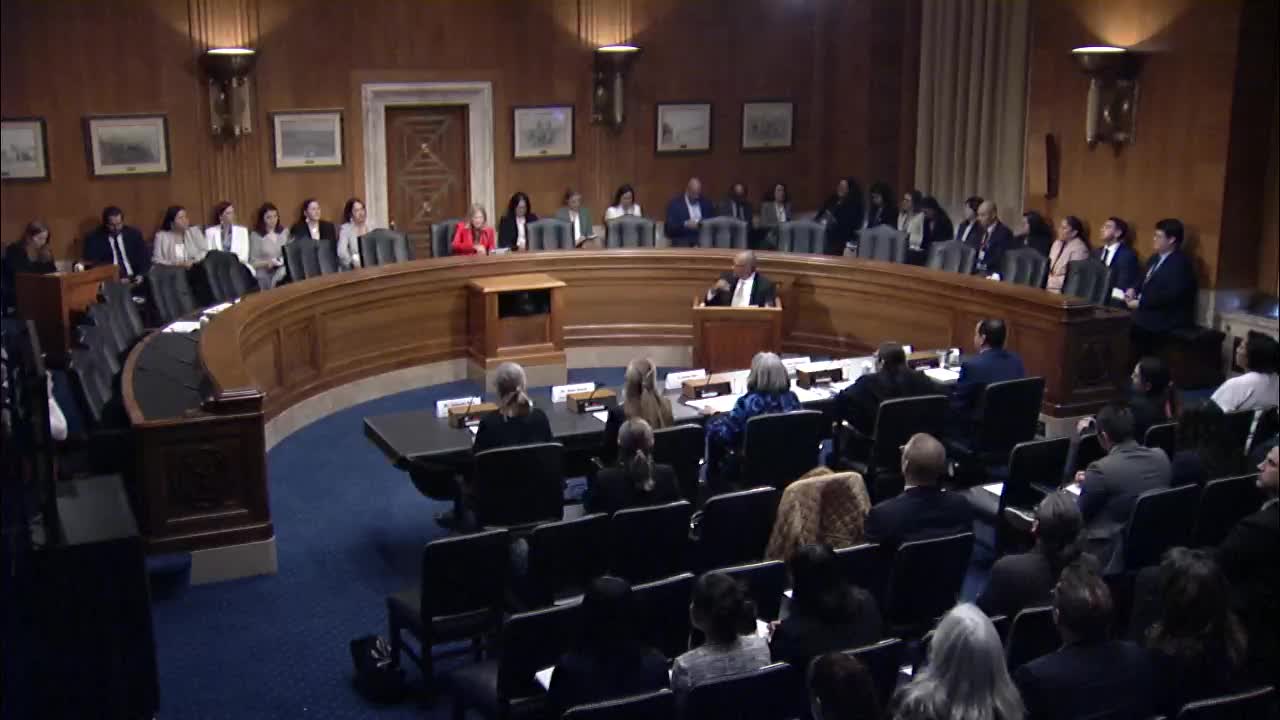
Chairwoman Murkowski opened an oversight hearing of the Senate Committee on Indian Affairs saying the committee was “here to learn more about the US Department of Education programs that work to meet the trust responsibility that the federal government has to our native students in elementary, secondary, and post secondary education.”
Witnesses from tribal education organizations told senators that a range of Department of Education programs — Title VI Indian Education Formula Grants, Impact Aid, the Alaska Native Education Program (ANEP), Title I and IDEA set-asides, and Title III postsecondary grants for tribal colleges — are central to fulfilling the federal government’s trust and treaty obligations to American Indian, Alaska Native and Native Hawaiian students.
Jason Droppick, executive director of the National Indian Education Association, told the committee the federal role is unique and nondelegable: “the federal government's sacred trust and treaty obligations to native students.” He urged Congress to protect funding, staffing and program integrity and to require meaningful government-to-government consultation should any restructuring be considered.
The hearing focused on several immediate concerns: recent executive actions and agency reorganization plans that witnesses say have already reduced or threatened staff in native-serving offices; delays in federal payments after a continuing resolution; and the risk that routing programs through states or other agencies would disrupt services and tribal consultation.
Nicole Russell, executive director of the National Association of Federally Impacted Schools, told senators that Impact Aid — created in 1950 to offset lost local tax revenue where federal or tribal lands reduce property tax bases — reaches school districts that serve more than 105,000 students on tribal lands and that many federally impacted districts rely on Impact Aid for teacher salaries, special education and school infrastructure. “Moving Impact Aid to a different agency would introduce unnecessary bureaucratic hurdles, result in a loss of valuable institutional knowledge, and lead to significant delays in payments,” Russell said.
Witnesses described immediate cash-flow stress caused by late appropriations. Russell said many federally impacted districts were still waiting for FY2025 appropriations and some had enacted hiring freezes; one district reported it was “three pay periods away from needing to borrow funds just to make payroll.”
Speakers from Alaska emphasized the role of culture-based programming. Rosita Kahani Wuerl, president of the Sealaska Heritage Institute, described measurable gains tied to Alaska Native Education Program grants and culture‑based curricula such as the Baby Raven Reads early‑literacy series. She told the committee that in Juneau, where native language and culture programs have been integrated into early education, “native literacy scores are higher than non‑natives.” Wuerl recommended increasing the ANEP appropriation for FY2026 to $70,000,000 to expand participation.
Sydney Yellowfish, Title VI coordinator for Edmond Public Schools in Oklahoma, described how Title VI funds support culturally specific classes and social‑emotional interventions. She said Edmond Public Schools serves 1,950 Indian students out of 25,754 enrolled and that Title VI funding helped staff secure devices, broadband and other supports to allow a displaced senior to graduate.
Anawake (Anna Wake) Rose, president and CEO of the American Indian Higher Education Consortium, outlined risks to tribal colleges and universities if direct, TCU‑specific funding streams were delayed, reduced or rerouted through states. Rose emphasized Title III Strengthening Institutions grants that allow TCUs to support faculty, upgrade facilities and deliver distance learning. She warned that “any cut in funding, freeze, or delay, or any TCU specific funding that is block granted and inefficiently rerouted through state governments would result in drastic cuts to faculty and staff and threaten our accreditation status.”
Senators pressed witnesses about the legal and practical limits of executive action. Senator Cortez Masto told the panel, “An executive order is not a law. It is an instruction about how to implement a law,” and asked whether the administration had consulted tribes about proposals affecting the Department of Education; witnesses said consultation was incomplete or absent for the proposals discussed.
Senator Moran described a pending legislative effort, the Haskell Indian Nations University Improvement Act, to grant Haskell a federal charter and transfer governance from the Bureau of Indian Education to a Haskell Board of Regents nominated by regional tribes. Witnesses, including Rose and Droppick, expressed support for the concept and offered to assist in drafting and outreach.
Throughout the hearing, witnesses repeatedly urged that tribal consultation be treated as a substantive, governing process rather than a procedural checkbox; that federally funded, native‑specific set‑asides remain direct from the federal government; and that staff with institutional knowledge be preserved to avoid service disruptions.
The committee did not take any formal votes during the hearing; it adjourned after questions and statements.