Get Full Government Meeting Transcripts, Videos, & Alerts Forever!
Get email alerts on the Superintendent Candidate Interview topic
No spam. Unsubscribe anytime.
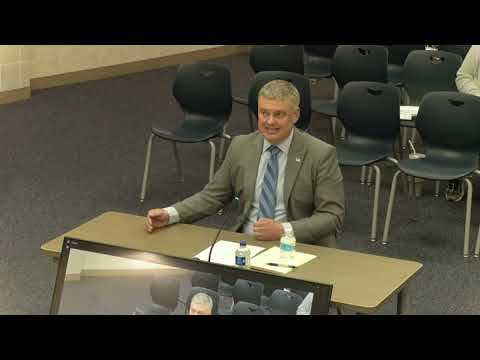
Candidate Stephen Heil emphasizes presence, strategic planning and school-community ties in Albert Lea superintendent interview
Summary
Stephen Heil, a finalist for the Albert Lea superintendent vacancy, told the school board he prioritizes being physically present in schools, aligning budgets with strategic plans and building community trust; he described specific examples from past roles on literacy initiatives, facility fund-building and leadership development.
Stephen Heil, a finalist for the superintendent vacancy at Albert Lea Public School District, told the school board during a candidate interview that his top priorities would be being visibly present across schools, aligning spending with a written strategic plan and building relationships with students, staff and the wider community.
Heil said he believes presence is the first step in relationship-building: “You have to be present. You can’t build a relationship from afar,” he told the board. He described greeting preschoolers on the first day and handshaking graduates on the last day as concrete examples of that approach.
The board convened the hourlong interview with MSBA time signals and a set list of questions. Heil framed academics, supports and budgeting as elements that should flow from a district’s strategic plan, saying district- and school-level goals must “funnel down to the classroom.” He described using monthly cabinet and administrative meetings to keep priorities aligned and said site-based leadership teams should adapt district goals to local needs.
Why it matters: the board is filling a senior post that directs district finances, curriculum priorities, hiring and community relations. Heil told members he has experience turning around budgets and academics in rural districts and said those skills fit Albert Lea’s stated goals.
Supporting details and examples
Budget and facilities: Heil described turning a prior district’s unassigned fund balance from about $7,000 to roughly $2.3 million over five years and said he sets aside funds in the budget for predictable large expenses. He also described setting up separate savings accounts for known liabilities: summer unemployment (he cited recent summer unemployment costs of about $35,000–$40,000 and said his district had set aside a $50,000 account) and estimated set‑asides for paid-family‑leave obligations.
Curriculum and instruction: Heil said he has led literacy initiatives and described a multi-step adoption process that pulled teachers, building‑level leadership (BILT) teams, middle- and high-school teachers and parents into curriculum selection. He identified “wit and wisdom” (Wit & Wisdom) as a curriculum his teams have used and described how the adoption process included classroom visits, pilot teams and repeated feedback cycles.
Leadership development and personnel: Heil described using administrator core competencies to frame evaluations and having administrators pick three growth goals annually. He gave examples—custodial staff given limited autonomy to take pride in their building and a younger administrator he coached to implement a “responsive schedule” that reduced failing grades by roughly half—illustrating how he identifies and cultivates leadership and addresses performance issues.
Community engagement and equity: Heil said he joins civic groups, attends activities and walks the community to build trust. He offered an example from a prior district in which he convened three concerned parents for a conversation that became an ongoing channel for feedback and improved relationships between families and staff.
Extracurricular and CTE emphasis: Heil argued extracurriculars, arts and career-and-technical-education provide pathways for students who later enter trades or college; he cited a former student who became an HVAC technician after taking CTE classes.
Closing and candidate questions: Heil asked the board what they wanted him to accomplish if hired; board members emphasized trust- and relationship-building, alignment of mission to student supports, and planning for projected enrollment declines and budget pressures over a three- to five-year horizon.
Ending: The interview was one step in a multi-stage process. The board asked follow-up questions and later moved to a closed deliberation about which finalists to bring back for second-round interviews.