Get Full Government Meeting Transcripts, Videos, & Alerts Forever!
Get email alerts on the Vision Zero topic
No spam. Unsubscribe anytime.
Public advocates press Bellevue for stronger Vision Zero actions as staff report rise in serious crashes
Summary
Advocates urged protected bike lanes and other Vision Zero strategies during public comment; transportation staff reported 2024 was Bellevue’s worst year in a decade for serious injury and fatal crashes and outlined planned infrastructure and technology measures for 2025.
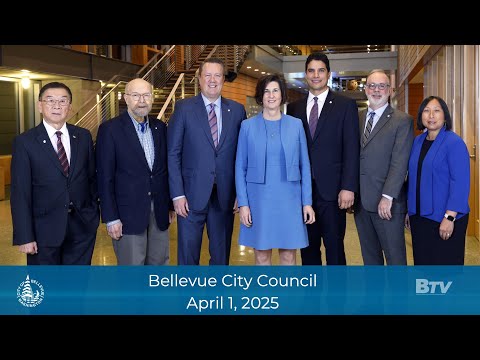
Speakers at the April 1 Bellevue City Council meeting urged faster adoption of protected bike lanes, pedestrian streets and other Vision Zero strategies, as city transportation staff reported 2024 produced the highest number of fatal and serious‑injury collisions in the past decade.
Public comments: Representatives of Eastside Urbanism presented survey results from 234 respondents that prioritized protected bike lanes, pedestrian streets, more transit service, intersection daylighting and leading pedestrian intervals. “Protected bike lanes … make our streets safer for everyone,” said Ben Mickle, identified in remarks as an Eastside Urbanism member and Bellevue resident; Valentina (last name in transcript not provided) and Cameron Cast spoke about near‑misses, crashes in Crossroads and benefits they had experienced from recent improvements.
Staff briefings and data: Transportation staff told council that Bellevue recorded two fatalities and 34 serious‑injury crashes in 2024, and that over the past decade the city has logged 232 serious injuries and 22 fatalities — roughly one serious injury or fatal collision every 14 days. Staff said 65% of fatal and serious injury crashes from 2015–2024 involved pedestrians, and many of those pedestrian incidents occurred at signalized intersections.
Planned and continuing work: Staff outlined the city’s Vision Zero action work for 2024–25, including implementation of more than 3.5 miles of pedestrian and bicycle infrastructure in 2024, 55+ road‑safety projects (rectangular rapid‑flashing beacons, radar feedback signs, leading pedestrian intervals, no‑right‑on‑red restrictions), and targeted grant awards totaling more than $15.7 million in federal and state funds. Staff also highlighted technology pilots: a sensor‑based “real time traffic signal safety interventions” prototype funded with $1.4 million in federal smart‑city funds; a connected‑vehicle pilot in partnership with T‑Mobile covering 47 locations; and a next‑generation transit‑signal‑priority software deployment with King County Metro.
Automated speed enforcement and outreach: Staff said recent state law broadened where automated speed enforcement cameras can be sited (beyond school zones to parks, hospital precincts and high‑speed corridors) and expanded who can administer infractions; the city will conduct an equity and needs assessment for any new camera locations as required by statute. Staff said they will present an arterial speed management study in May and conduct road‑safety audits and public outreach on target speeds and enforcement options through June.
Council reaction: Councilmembers praised staff work and requested more specific project prioritization, cost estimates and timelines to guide mid‑year budget and near‑term decisions. Several councilmembers emphasized urgency — describing the 2024 rise in serious injuries as unacceptable — and asked staff to bring back the highest‑impact projects with cost estimates. Staff said work to evaluate corridors and testing of digital safety interventions will continue and that larger infrastructure projects require additional funding.
Staff noted the Vision Zero program is a cross‑departmental effort that will continue to seek grant funds and pilot technologies while building out physical infrastructure; the study session was for information only.