Get Full Government Meeting Transcripts, Videos, & Alerts Forever!
Get email alerts on the Arts Grants Woodland Indian Arts topic
No spam. Unsubscribe anytime.
Wisconsin Arts Board panel recommends funding four Woodland Indian Arts grants; one application not recommended
Summary
A Wisconsin Arts Board review panel recommended that four of five Woodland Indian Arts regrant applications receive funding and declined to recommend one application, citing unclear objectives and budget details. Staff will bring the panel’s recommendations to the full board next week for ratification.
A review panel convened by the Wisconsin Arts Board recommended funding four of the five applicants to this year’s Woodland Indian Arts regrant program and did not recommend the Institute of Indigenous Teaching and Learning’s application, panelists said.
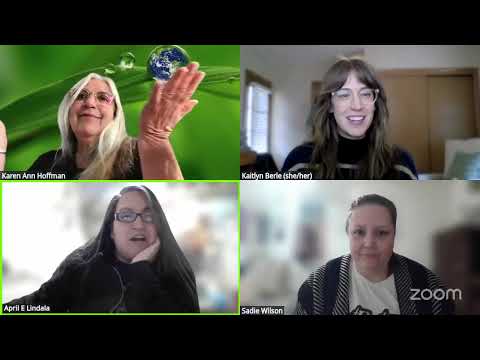
Karen Ann Hoffman, chair of the Woodland Indian Arts panel and a member of the Wisconsin Arts Board, opened the session and framed the program’s mission, saying the state agency “nurture[s] creativity, cultivate[s] expression, promote[s] the arts, support[s] the arts in education, stimulate community and economic development, and serve[s] as a resource for people of agriculture and heritage.” Caitlin Burrell, the board’s folk and traditional arts coordinator, and Dale Johnson, grants and information specialist, staffed the panel and handled technical questions and score averaging.
The panel reviewed five applications. Panelists — including April Bridal, who works in Native American studies at Northern Michigan University, and Sadie (Oneida Nation arts program coordinator) — discussed strengths and weaknesses of each proposal before submitting numerical scores. Dale Johnson averaged the reviewers’ scores and displayed rankings for group discussion.
Panel findings and applicant summaries
- College of the Menominee Nation (Keshena), request: $6,000. The proposal sought funds to produce a full-length pageant at the historic Woodland Bowl, the first new pageant there in about 50 years. Panelists described the application as “well written” with a clear budget and timeline but noted concerns that the proposed rehearsal and marketing timeline (under two months) was tight for a new full production.
- Saint Croix Chippewa Indians of Wisconsin (Webster), request: $6,000. The proposal combined drum and song teachings with a reintegration program for formerly incarcerated participants. Panelists praised the project’s healing focus and community impact but asked for clarification about the specific roles of formerly incarcerated participants (teachers or students). One panelist noted appreciation that the application included female singers.
- Umagwa (De Pere), request: $4,809. The project centers on traditional arts that emphasize sustainable harvest and invited teachers from multiple tribal nations. Panelists praised the pedagogy and environmental focus, asked why the applicant did not request the full $6,000, and noted the workshops were capped at about 12 participants, which some reviewers said could be pedagogically sensible but limits reach.
- Institute of Indigenous Teaching and Learning (Lac du Flambeau), request: $6,000. Panelists expressed the most concern about this application. Reviewers said the proposal’s proposed space, timeline and staffing were unclear; they specifically asked why printing received a relatively large budget allocation, what the role of a listed individual (Carol Amor) would be, and how the proposed new space would be secured and maintained. Multiple panelists flagged that the application left questions unanswered about outcomes and participant numbers.
- Woodland Indian Art Incorporated (Oneida), request: $6,000. The organization sought support for a “Connections” Indigenous fashion show at the Woodland Indian Art Show and Market in Green Bay. Panelists described the application as clear, produced strong visual materials (photos/videos) and said the event supports both cultural expression and vendor sales. One reviewer emphasized the project’s role in providing authentic woodland fashion alternatives to mainstream mass-produced designs.
Scoring and recommendation
Panelists had already submitted initial reviews before discussion. After each application was discussed, the group finalized numerical scores for five evaluation criteria (community need, artistic quality, feasibility, budget feasibility, and cultural/economic impact). Dale Johnson averaged the scores and displayed the ranking. Panelists discussed whether there was a natural break in the averages and agreed to set a funding floor.
Panel consensus: recommend the top four applications for funding and not recommend the Institute of Indigenous Teaching and Learning application this year. April Bridal said the panel should set “a floor of 85 or above” for average scores and the group agreed that the fifth-ranked application fell below that threshold. Karen Ann Hoffman said she would present the panel’s recommendations to the full Wisconsin Arts Board at its meeting next week.
What remains procedural
The panel is advisory. The Wisconsin Arts Board must review and ratify the recommendations at its next board meeting before staff issues award notices. As explained to panelists, applicants may appeal only on procedural grounds, not on artistic judgment. Staff also committed to offering technical assistance to applicants who received critical feedback and to follow up with the applicant whose proposal was not recommended to help strengthen future submissions.
Quotes from the meeting
“I’m the folk and traditional arts coordinator here at the Wisconsin Arts Board,” Caitlin Burrell said as she described staff’s role in stewarding the program. Sadie, identifying herself as a tribal arts coordinator, said she appreciated seeing applications that “bring together the different woodland tribes.”
Next steps
Staff will bring the panel’s recommendations to the full Wisconsin Arts Board at its next meeting for ratification; applicants will be notified shortly after that meeting, the panel was told. Panelists encouraged continued outreach and technical assistance to increase applicant participation in future cycles.