Get Full Government Meeting Transcripts, Videos, & Alerts Forever!
Get email alerts on the Agriculture topic
No spam. Unsubscribe anytime.
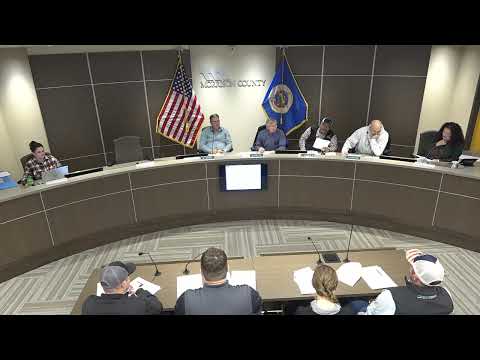
Morrison County board approves variance allowing Enchanted Dairy to exceed animal-unit cap
Summary
The Morrison County Board of Adjustment on April 1 approved a variance allowing Enchanted Dairy LLC to exceed the county's animal-unit cap to 5,040 animal units. The vote clears an early procedural hurdle; the project still requires an Environmental Assessment Worksheet, MPCA permitting, and a conditional-use permit before the county board.
Morrison County Board of Adjustment members voted to approve a variance requested by Enchanted Dairy LLC on April 1, 2025, allowing the proposed new facility to exceed the county's animal-unit cap and to be sized at 5,040 animal units. The motion to approve was made by Clinton and seconded by George; the roll call recorded four votes in favor and one absence. The vote does not grant final permits: the applicants must complete an Environmental Assessment Worksheet (EAW), seek an MPCA (Minnesota Pollution Control Agency) permit, and apply for a conditional-use permit before the Planning Commission and the county board.
The variance request and the board's approval were the central items at the Board of Adjustment public hearing. Staff described the application as a request "to exceed the allowable animal unit cap on the by 200 or 2,540 animal units" and said that "a mandatory environmental assessment worksheet must be completed before feedlot permitting." The applicants, Jacob and Brooke Caro, described the proposal as a new greenfield dairy site intended to incorporate modern manure-management and odor-control technologies. "We are owners of Enchanted Dairy in Little Falls, Minnesota," Jacob Caro told the board, and he said the new site would allow the operation to adopt newer industry technologies and consolidate milking operations to a single, modern facility.
Why this matters: a variance of this size triggers state-level review and MPCA oversight and touches on concerns raised repeatedly in public comment about water quality, nutrient buildup and proximity to wetlands and the federal Crane Meadows area. The board's approval advances the project to permit stages where regulators and technical reviews will evaluate groundwater, surface water, manure application acres and other environmental effects.
Applicants and technical review: consultants from Central Crop Consulting narrated engineering and site materials included in the application packet. The proposed site design includes 13 months of manure storage and a solid-separation/centrifuge process to create a nutrient-rich organic solid that the applicants said would reduce odor and allow transport of solids to more distant fields. The applicants and their consultant told the board the permitting path includes an EAW, an MPCA-administered NPDES (National Pollutant Discharge Elimination System) livestock permit, a DNR water-appropriations permit if water use exceeds thresholds, and a county conditional-use permit before the county board.
Regulatory context and staff notes: staff reminded the board that the MPCA and state rules govern many aspects of a feedlot of this size and that Minnesota requires environmental review at certain animal-unit thresholds. "This information has not been supplied, today. It's in progress," a staff member told the board about EAW materials the panel should expect during the next phase. Staff also noted six distinct public comment submissions had been received before the hearing.
Public comment: speakers were split. Supporters emphasized local economic ties, feed and service supply chains and the applicants' record. Tom Behringer of Bongards Creameries urged approval, saying the cooperative relies on local milk suppliers and asking the board to "support the request by Enchanted Dairy to benefit your local economy and all dairy farmers in Minnesota." Local farmers described existing commercial relationships, saying manure and local feed demand have been beneficial to area crop producers.
Opponents focused on environmental and quality-of-life concerns. Neighbors and commenters asked for broader study and expressed worry about groundwater nitrates, high soil-phosphorus readings in some fields, wetland hydrology and proximity to Crane Meadows National Wildlife Refuge. Susan Peterson, a property owner across the road from the proposed site, said, "I am asking for a no vote for this proposal," and asked the board to consider potential impacts to a family farm and drinking water. Additional written comments asked for expanded notice radius, a moratorium on variances until an updated county ordinance and a comprehensive environmental study.
Technical questions and clarifications: the board and staff pressed applicants on manure-application acreage, soil-test baselines and how the facility would manage phosphorus and nitrates across the landscape. The consultant acknowledged some fields currently have elevated soil-phosphorus levels (one referenced field, labeled "Smith Pivot South," showed a phosphorus test result of 168 parts per million in the application materials) and explained that MPCA rules set soil-phosphorus thresholds that determine allowable application rates. The applicants said the solid-separation technology and diversified crop rotations (e.g., alfalfa and silage) are part of their plan to manage and, where possible, reduce phosphorus on receiving fields over time.
Next steps: approval of the variance sends the proposal to the EAW and permit phases. The EAW is expected to address groundwater and surface-water concerns, soils, wetlands, transportation, air quality and socioeconomic effects and typically takes months to more than a year to complete. If the project proceeds, the MPCA will review a manure-management plan and the county will consider a conditional-use permit with additional public hearings.
The board's action was narrowly procedural: it allows the applicants to pursue the technically detailed and publicly noticed review steps required by state and county regulation. Those next steps will provide regulators and neighbors with the data and mitigation proposals that several speakers at the hearing said they wanted before final approval.