Get Full Government Meeting Transcripts, Videos, & Alerts Forever!
Get email alerts on the Shoreline‑erosion‑variance topic
No spam. Unsubscribe anytime.
Board approves after‑the‑fact screen porch on Lake Superior parcel, citing shoreline erosion record
Summary
Cook County Board approved an after‑the‑fact 47‑sq‑ft screen porch on Lake Superior after finding evidence the vegetation line had shifted since construction and staff recommended approval with conditions to stabilize shoreline vegetation.
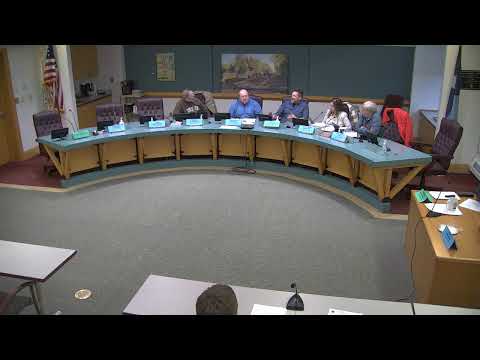
Cook County’s Board of Adjustment voted March 12 to allow a 47‑square‑foot screen porch to remain at 22 Mossy Hollow Point on Lake Superior, concluding that historical shoreline erosion contributed to the nonconforming location.
Neva, the county land‑use presenter, said the parcel is a conforming lot of about 11.16 acres with roughly 310 feet of Lake Superior shoreline. The screen porch was constructed in 2017–18 without a separate permit; staff reported an earlier 2017 house permit but no explicit permit drawing for the screen porch. Staff’s aerial review showed the vegetation line has retreated since 2017, and that the porch appears to have met the 40‑foot shoreline setback at the time of construction but now encroaches about 6 feet due to shoreline recession.
The parcel contains substantial wetlands that concentrate development on a limited upland corner by the lake, the presenter said. County Soil & Water advised maintaining shoreline vegetation and using best management practices; the DNR did not submit comment. No adjacent property owners submitted written opposition.
Applicant Bill (William) Beckstrand said neighbors had told him they supported the project and described wetland and upland constraints that limit alternative building locations. Board members noted the aerial evidence of vegetation‑line change and the limited buildable upland area between wetlands and shoreline; several members said those factors supported approval with conditions.
The board approved the after‑the‑fact variance with conditions including a land‑use permit for the addition, vegetation maintenance within the shore impact zone, and coordination with the Soil & Water District to stabilize the shoreline. Staff urged the owner to stake future proposed construction to avoid unexpected nonconformities as shoreline recedes.