Get Full Government Meeting Transcripts, Videos, & Alerts Forever!
Get email alerts on the Land Use Sawtooth Bluffs topic
No spam. Unsubscribe anytime.
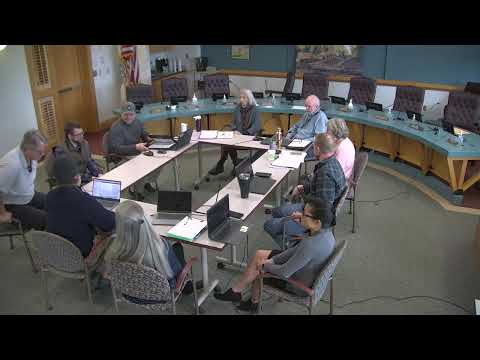
Debate continues over Sheaf parcel and Sawtooth Bluffs master plan; county staff to pursue options with land trust and owner
Summary
Cook County staff and commissioners discussed options on March 18 for the privately owned Sheaf parcel adjacent to the proposed Sawtooth Bluffs regional park, including purchase, conservation easement, granting an access easement or leaving the property to the owner's legal rights under a historic plat.
Cook County staff and commissioners discussed the privately owned —Sheaf parcel and the Sawtooth Bluffs master plan at length on March 18, reviewing survey results, landowner proposals and legal constraints tied to tax-forfeited land and recorded plats.
Land Services staffer Bob Thompson summarized options the county had considered since 2022: a conservation easement with the Minnesota Land Trust, a county purchase or land exchange, or granting the landowner a preferred access easement. Thompson said landowner John Sheaf and his representatives have asked the county to grant a preferred access route that, they say, would be "less disruptive to the Sawtooth Bluff Master Plan." Thompson also reported that Sheaf has prepared a subdivision plan that would split the parcel into multiple lots and that a court ruling established existing dedicated public rights shown on a 1903 Munson and Pierce plat.
Legal and valuation issues: County Administrator Rowan walked the committee through relevant statutory limits for tax-forfeited land, referencing "Minnesota statute 282.04, subdivision 4," and said any access easement across tax-forfeited land typically requires compensation to the county. Rowan also noted a separate provision in the statute allowing the county to cancel an easement if it conflicts with public use or is not used. Rowan and staff said appraisals and valuation disputes have been central to stalled negotiations; Thompson said the landowner appraisal included a road-and-utility subtraction (a road cost estimate of roughly $30 per linear foot that staff described as unrealistically low) and that earlier conservation-easement discussions included a compensation figure the parties referenced as about $96,970 for enrolling the property.
Public support and feasibility: Land Services presented a February survey of potential park users and Cook County residents. Staff said about 60% of full-time Cook County respondents said they were likely or very likely to use a regional park if developed; responses varied by residency and distance. Concerns flagged by survey respondents included environmental impact, traffic and cost to taxpayers; many respondents also suggested preserving the hillside with limited development.
Options and risk: commissioners and staff canvassed four broad options: 1) acquire the parcel (purchase or exchange); 2) pursue a conservation easement with the Minnesota Land Trust; 3) grant a preferred access and utility easement subject to compensation under statute; or 4) do nothing and allow legal access under the court ruling, which the county has limited control over. Rowan and Thompson cautioned that granting a preferred access easement or utility easement on tax-forfeited land would normally require compensation and could create an enduring legal right that constrains the county's future park plan, while doing nothing carries the risk that a developer could place a road across the existing plat.
Next steps: staff said they will reach out to the Minnesota Land Trust to determine whether the earlier conservation-easement proposal remains viable, invite Sheaf and his representatives to a future board meeting (staff suggested April or May) to hear his position and to provide updated appraisal information, and return to the Committee with additional detail on legal options and projected costs. Thompson summarized bluntly: "I don't really feel like it's an option to leave it alone. I think we either do something with it or sell it."