Get Full Government Meeting Transcripts, Videos, & Alerts Forever!
Get email alerts on the Higher Education.dei Ban topic
No spam. Unsubscribe anytime.
Senate passes measure banning DEI offices and officers at public universities after extended debate
Summary
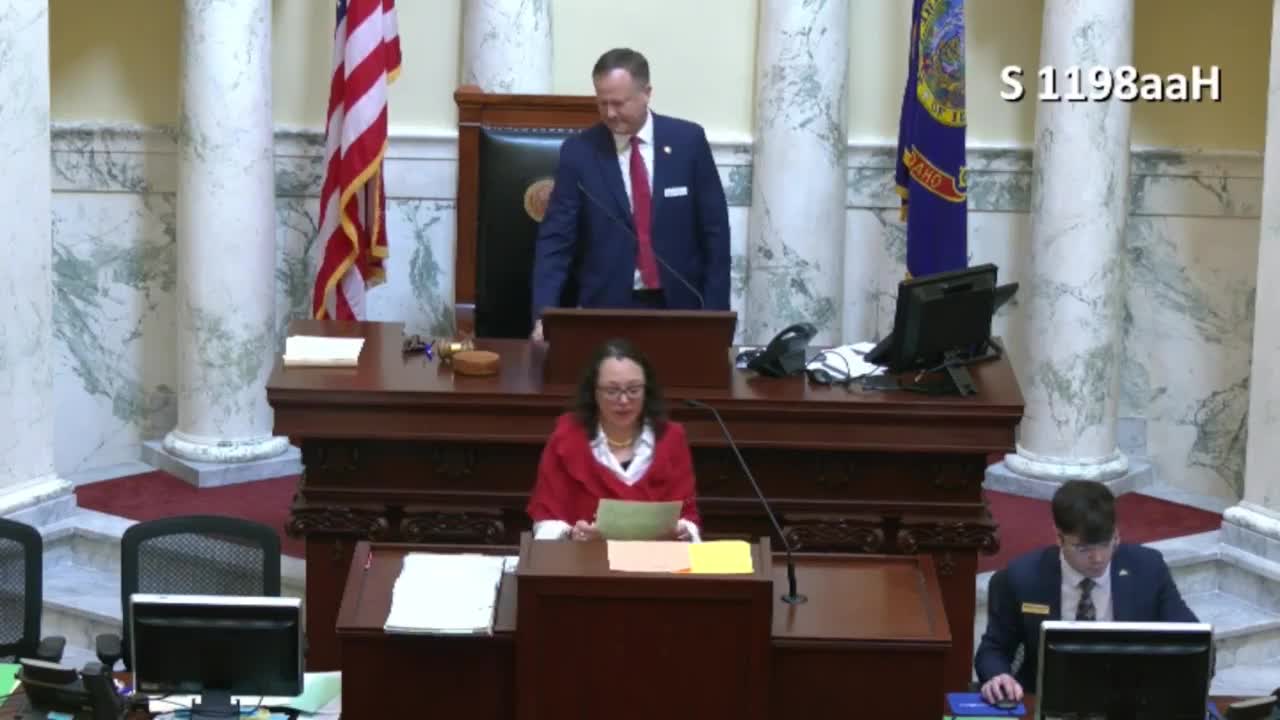
After hours of floor debate, the Idaho Senate passed Senate Bill 11-98 (as amended in the House), a measure that prohibits diversity, equity and inclusion (DEI) offices and officers at public institutions of higher education and creates enforcement avenues including attorney general penalties and private injunctive relief.
Boise, Idaho — The Idaho Senate on April 4 passed Senate Bill 11-98, as amended in the House, a high-profile measure that prohibits diversity, equity and inclusion (DEI) offices and officers at the state’s public institutions of higher education.
Senator Toews, who opened debate, framed the bill as an effort to “get our universities back to what they’re designed to do,” focusing on academic instruction and workforce training. Supporters said existing statewide steps — including budget reductions and prior statutes restricting DEI activities — had not fully removed DEI functions from campuses, and they argued SB 11-98 provides clearer statutory definitions and enforcement mechanisms.
Opponents warned the bill could produce legal challenges and harm the state’s ability to recruit and retain faculty and students. Senator Burton Shaw raised concerns that the bill’s enforcement section could allow multiple parties to seek injunctive relief and described a possible scenario where cumulative suits would create large costs; other senators urged clarity that the private civil cause of action provides injunctive relief but not monetary damages.
Senator Taves, closing debate, said the bill “is trying to stop taxpayer funded forced discrimination and ideological training,” and stressed that the final text removed monetary damages from the private cause of action, leaving injunctive relief as the civil remedy. Several senators referenced a December 2024 resolution by the Idaho State Board of Education and prior statutes (discussed on the floor) as context for the bill.
The final roll call was recorded as 23 ayes, 12 nays, 0 absent/excused; the Senate announced a majority had voted in the affirmative and that SB 11-98, as amended in the House, had passed. After passage, the Senate referred the measure to Judiciary and Rules for enrolling and transmitted enrolled paperwork later in the day.
Votes and procedure: The body first voted to suspend rules to take the bill from the suspension calendar (roll call showed 33 ayes, 0 nays, 2 absent/excused), then debated for multiple hours before final passage (final roll: 23 ayes, 12 nays). Senators spoke both for and against the measure on grounds ranging from academic freedom and recruitment to the need for statutory clarity and enforcement.
Proponents said the bill clarifies permissible university practices and protects students from mandatory trainings and bias-reporting systems; critics warned of legal risk, potential federal funding implications, and damage to campus recruitment and retention.
The Senate’s action ends its consideration of the measure; administrative enrolling and transmittal steps followed later in the day. The Senate record shows subsequent delivery of the enrolled bill as part of the normal end-of-session enrolling process.