Get Full Government Meeting Transcripts, Videos, & Alerts Forever!
Get email alerts on the Land Ownership Foreign Ownership topic
No spam. Unsubscribe anytime.
House approves bill to bar foreign adversaries from owning Idaho farmland, water, mining rights
Summary
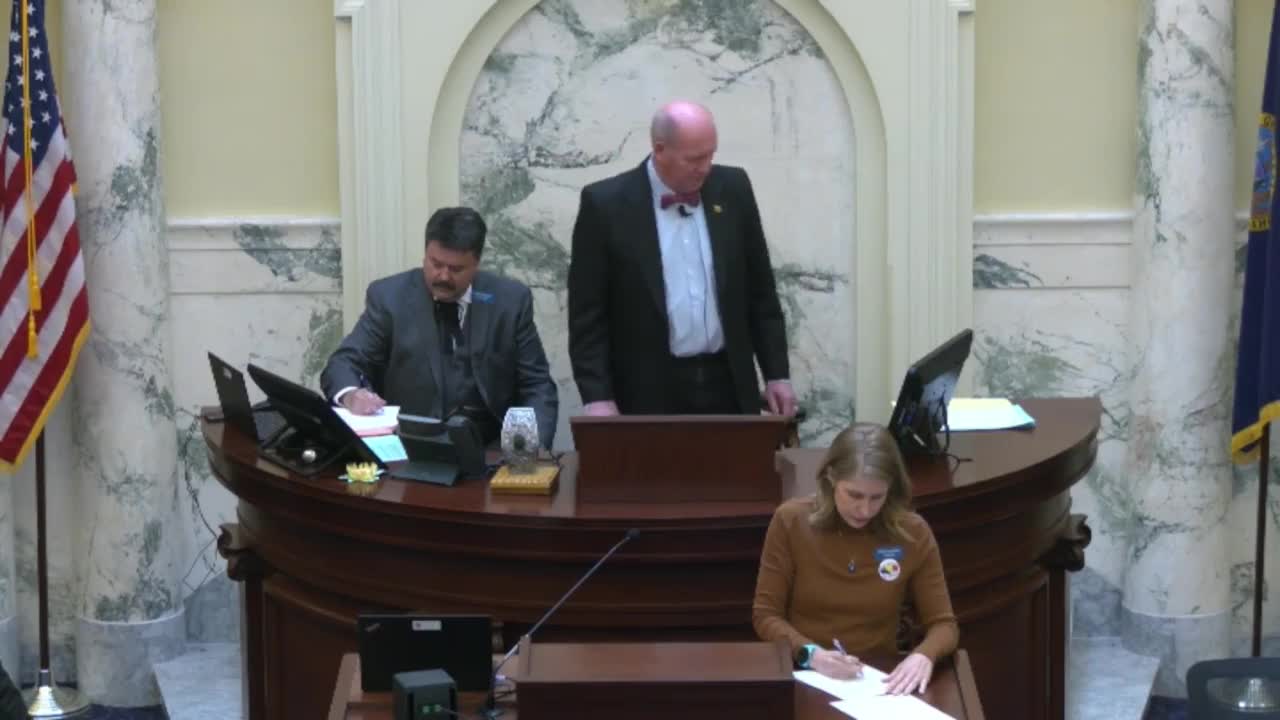
The Idaho House passed House Bill 356 on April 4, 2025, to prohibit ownership of agricultural land, water rights and mining rights by defined "foreign adversaries." The House recorded a 64–0-ish favorable vote and transmitted the bill to the Senate for enrollment.
The Idaho House of Representatives approved House Bill 3 56 on April 4, 2025, a measure that, as described on the floor, would bar defined "foreign adversaries" from owning farmland, associated water rights and mining rights in Idaho and require a sale within 180 days or allow state foreclosure.
A floor sponsor described the provision as an effort to protect “sovereignty over our food supply and over our resources” and repeatedly identified specific countries in the bill’s definition of "foreign adversary," saying the list includes China, Russia, Iran, Cuba and North Korea. On the House floor the sponsor said, “The Chinese Communist Party is our enemy. They are at war with us in every domain except bolts and bombs,” and urged passage to protect military training areas and agricultural security.
The motion to suspend the rules and take the bill up immediately was moved by Representative Skogg and seconded by Representative Gannon. The suspension motion passed with the required two-thirds support, after which the House debated and voted on the bill. The clerk recorded the final tally for passage as 64 ayes and 6 absent or excused; the bill was ordered transmitted for enrollment and transmittal to the governor or the appropriate next step.
Floor discussion cited national-security and agricultural-security concerns and included references to federal coordination; the sponsor told colleagues he had discussed similar measures with federal legislators. Supporters emphasized protecting military ranges and preventing surveillance on sensitive sites; the sponsor referred to a previously discovered foreign operation in Nevada as an example.
The House approved the bill and transmitted it to the Senate for enrollment and final processing. The bill was readied for delivery to the governor’s office as part of the chamber’s enrollment and transmittal process that day.