Get Full Government Meeting Transcripts, Videos, & Alerts Forever!
Get email alerts on the Privacy Surveillance topic
No spam. Unsubscribe anytime.
Idaho House approves license‑plate reader rules, eases front‑plate requirement amid privacy debate
Summary
The House passed Senate Bill 11‑80 on April 3, 2025, after hours of debate over license‑plate reader rules and a provision that removes the requirement to affix a front license plate if a vehicle does not come with a factory bracket. The measure passed 45‑24 with 1 absent.
The Idaho House of Representatives on April 3 passed Senate Bill 11‑80, a measure that sets rules for law enforcement use of license‑plate readers (LPRs) and removes the requirement to mount a front license plate when a vehicle was not manufactured with a front‑plate bracket. The bill passed by a recorded vote of 45‑24 with 1 member absent.
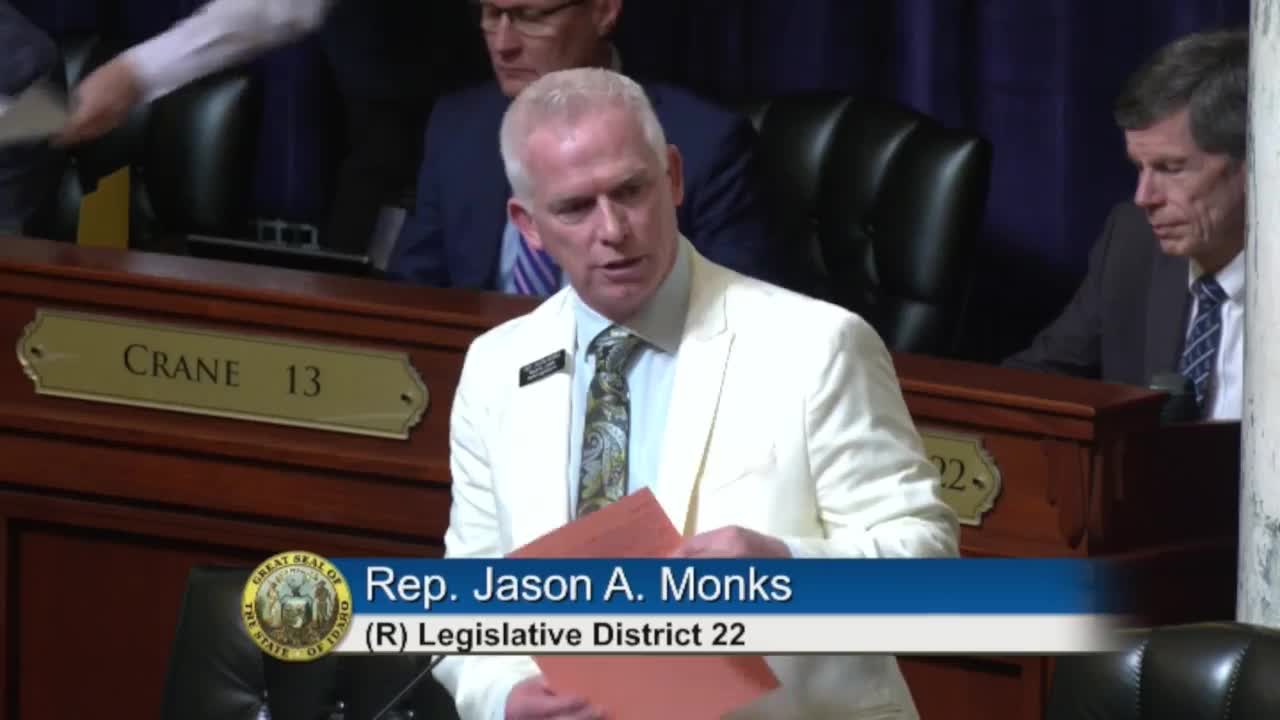
Supporters said the bill balances law enforcement needs with privacy safeguards. The bill’s sponsor, Representative (sponsor), described demonstrations of the cameras and said the LPR systems can locate vehicles quickly and are helpful in stolen‑vehicle or missing‑child cases. “They showed my truck in about eight different locations across the valley and the times and dates,” Representative (sponsor) said in floor remarks, adding that law enforcement wrote much of the camera language and included auditing and access controls.
Opponents focused on privacy, potential mission creep and the companion change to front‑license‑plate law. Representative (opponent) said LPR systems and other cameras can be used beyond the narrow purposes envisioned and urged stronger sideboards. Another opponent, Representative (District 15), said removing the requirement for front plates would hinder Amber and Silver Alert searches and cited out‑of‑state statistics she said showed lives saved by front plates.
The bill contains separate provisions: the LPR section sets access controls, logging and auditing requirements and limits on automated ticketing (the bill prohibits using the cameras to issue red‑light tickets, though recorded footage may be reviewed after a crash). The front‑plate provision says that if a vehicle was not manufactured with a front‑plate bracket the owner is not required to display a front license plate; vehicles that come with a factory bracket must continue to display a front plate.
Law enforcement organizations took mixed positions in the record. Several sheriffs opposed the measure because they prefer front plates and longer LPR retention windows; the Fraternal Order of Police and some police chiefs were recorded as neutral or cautious, the sponsor said. Supporters argued the LPR controls in the bill and the bracket‑based front‑plate exemption are a “soft touch” that preserve investigative tools while narrowing mandatory display rules.
The House first suspended rules to take up the bill for immediate consideration. After debate and multiple floor statements from members on both sides, the House approved the bill and ordered it transmitted to the Senate.