Get Full Government Meeting Transcripts, Videos, & Alerts Forever!
Get email alerts on the Energy Policy topic
No spam. Unsubscribe anytime.
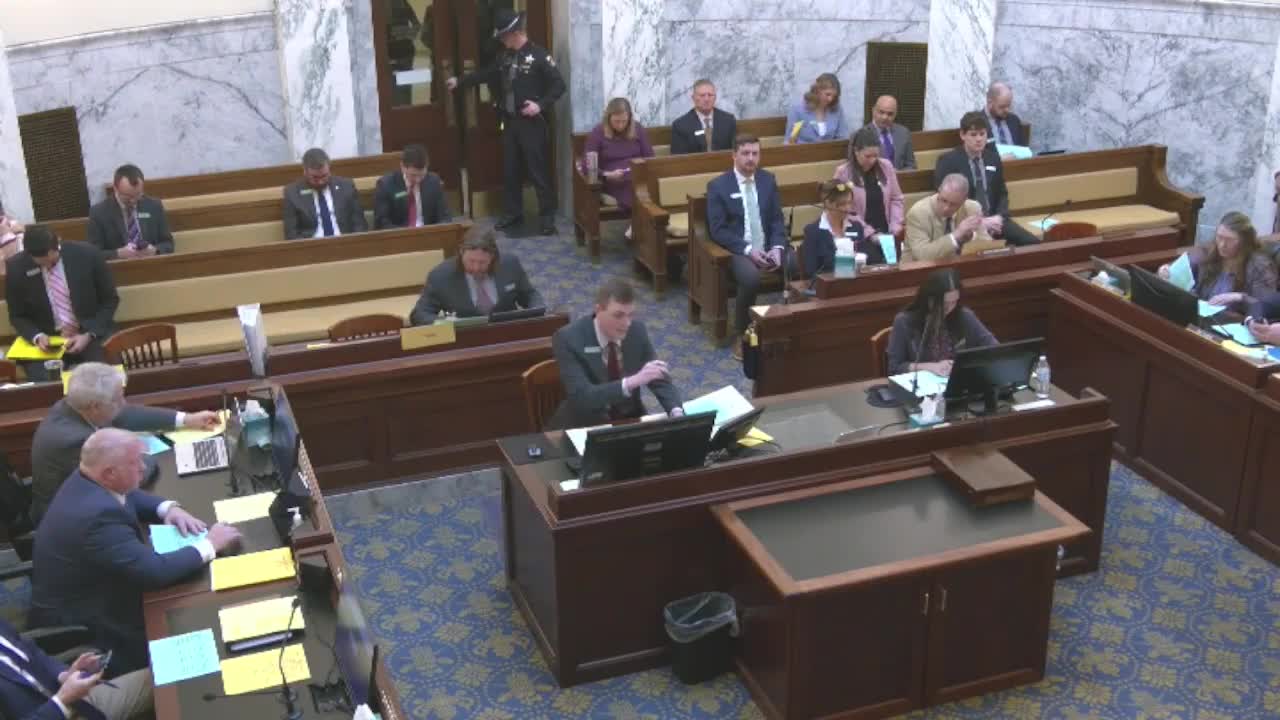
JFAC deadlocks on Office of Energy proposals; home energy rebates and a 'speed council' repeatedly fail to secure majority
Summary
Multiple attempts in JFAC to fund a governor’s Speed Council and to appropriate state resources alongside federal home‑energy rebate authority failed to win the committee majority; OEMR sought authority to administer federal rebates and state funding to stand up the council but committee voting splintered across several motions.
The Joint Finance‑Appropriations Committee considered three related FY2026 items from the Office of Energy and Mineral Resources (OEMR): (1) aligning dedicated fund personnel costs, (2) requesting federal fund appropriation to administer the Home Energy Rebates program created under the Inflation Reduction Act of 2022, and (3) a governor’s proposal to create a “Speed Council” with state funding and a public dashboard to track permitting timelines.
OEMR’s analyst described the rebate program as federal funding (roughly $80.8 million available to Idaho under federal law) to provide rebates to households for appliance and efficiency upgrades; no state match is required, and funds would be administered through a third‑party implementer if adopted. The governor’s Speed Council proposal included one new FTP, ongoing personnel and operating support from the general fund, and one‑time funding for initial development of a dashboard and council startup costs.
Committee members asked OEMR’s new administrator, Callie Younger, to describe the Speed Council’s goals. Younger said she expected the council to focus on critical minerals permitting and permitting reform, and said that the rebate funding exists and would be reallocated to other states if Idaho declined to participate.
Over the course of a lengthy floor of motions and counter‑motions, committee members proposed multiple versions of the governor’s funding amount for the Speed Council (figures moved in committee included $331,100, $330,000, $481,100, $481,000, $480,900 and other variants). Several motions were debated, amended, withdrawn and re‑voted. Committee members repeatedly noted that a prior similar motion had failed in the Senate and that JFAC was attempting alternative motions. On each recorded motion shown in the committee transcript, the item ultimately failed to gain the required majority in both chambers and was not approved for inclusion as a committee recommendation.
Why it matters: The Home Energy Rebates program represents significant federal funds tied to energy efficiency upgrades that would be administered at the state level if Idaho accepts them; declining the funds would result in reallocation to other states. The Speed Council would create a state entity focused on accelerating permitting for large‑scale critical infrastructure and would authorize staff and initial dashboard development paid from the general fund.
Votes and outcome: Committee record shows a series of motions to fund the governor’s Speed Council that did not secure majority support in both chambers. One motion produced a tied or close committee result and subsequent motions adjusted funding amounts, but the committee did not adopt a final motion to fund the Speed Council or the OEMR’s full governor‑recommended package. At least one motion including federal rebate appropriations and the Speed Council failed on recorded votes (committee membership split such that neither chamber reached the six‑vote threshold required). Transcript excerpts show committee discussion and multiple failed votes; no final due‑pass recommendation for the Speed Council was adopted in committee at that time.
Attribution: Kellen McGurkin (Legislative Services) presented OEMR budget materials; Callie Younger (OEMR administrator) responded to questions on the Speed Council and rebate program. Several JFAC members (Representative Tanner, Representative Furness, Representative Furnish/others, Senator Woodward) proposed and debated motions recorded in the transcript.
Next steps: Because the committee did not adopt a final recommendation on the council funding, legislators may reintroduce motions or floor amendments later in the session. OEMR retains the option to accept federal rebate funds if statutory and appropriation authority are provided.