Get Full Government Meeting Transcripts, Videos, & Alerts Forever!
Get email alerts on the Immigration And Legal Defense topic
No spam. Unsubscribe anytime.
Seattle committee advances 'welcoming city' draft as immigrant legal aid faces cuts
Summary
Seattle City Council’s Select Committee held a briefing April 3 on a draft “welcoming city” resolution intended to reaffirm access and non‑cooperation policies for immigrants and to propose $300,000 in additional support for the Office of Immigrant and Refugee Affairs amid recent federal cuts to immigrant legal services.
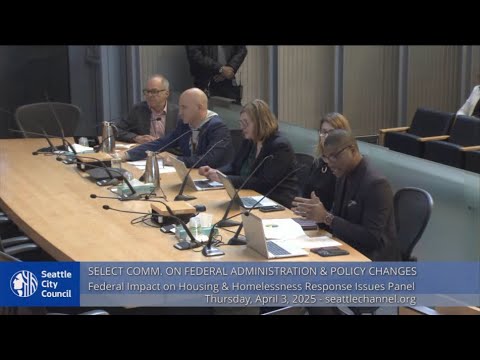
On April 3, 2025, the Seattle City Council Select Committee on Federal Administration and Policy Changes opened discussion of a draft "welcoming city" resolution and heard community testimony about rising immigration enforcement and recent cuts to legal services for unaccompanied children.
The draft resolution, prepared by council central staff at Chair Alexis Rink’s request, would reaffirm the city’s existing commitments to be accessible to immigrants and refugees; to avoid collecting or memorializing immigration status in routine service delivery; and to require training and monitoring across departments. The draft also asks the City Attorney’s Office to help prevent immigration consequences in the criminal legal system and requests an annual update from the Office of Immigrant and Refugee Affairs (OIRA). It includes a nonbinding expression of intent to add $300,000 to OIRA for rapid response, legal defense and other supports pending budget actions.
Community organizations urged the council to move from affirmation to funding and implementation. Edith Reyes, an organizer with 1 America, said the resolution’s restrictions on information-sharing and surveillance are “very important” because they reassure families that “parents can send their children to schools without worrying about their own safety.” Vanessa Reyes of the Washington Immigrant Solidarity Network noted an increase in requests for accompaniment and legal hotlines and added: “The $2,800,000,000 paid annually by Washington's undocumented workers in taxes deserves reinvestment.”
Panelists described an immediate legal‑aid crisis. Jessica Castellanos, managing director of Kids in Need of Defense (KIND) Seattle, said the federal unaccompanied children legal services contract was terminated in late March and the Seattle KIND office will close next month. “The Seattle office will remain open… my last day… is May 23,” Castellanos said; she said KIND has withdrawn from nearly 250 children’s cases and that the city-funded legal defense network accounts for roughly 55 of the cases that will remain represented.
Northwest Immigrant Rights Project and other legal providers said the termination of federal contracts coincides with a marked rise in immigration detention locally. NERP staff reported that the Tacoma detention population had risen from roughly 800 on inauguration day to about 1,400 people in recent weeks, and that the majority of detained people nationwide lack counsel. “Having an attorney makes all the difference,” a NERP representative said.
Advocates asked the council to prioritize local legal representation, rapid-response accompaniment, language access, bond funds and supports for workers afraid to seek city services. Vanessa Reyes described spikes in calls and accompaniment requests and recommended investing in a legal-defense and rapid-response capacity that includes hotline supports, bond assistance and community accompaniment teams.
Council president and other members noted existing executive-branch actions, including a mayoral directive on federal immigration enforcement and a city attorney plan to add staff to an internal federal response team. Committee members requested that the final resolution reflect work already under way in the Executive and City Attorney's Office while also signaling additional council priorities.
Central staff said the draft resolution is scheduled for additional discussion at the select committee’s next meeting and that budgetary follow-up—most immediately via the midyear supplemental—would be needed to convert the draft’s $300,000 expression of intent into an appropriation.