Get Full Government Meeting Transcripts, Videos, & Alerts Forever!
Get email alerts on the Land Use topic
No spam. Unsubscribe anytime.
Kent County Planning Commission reaffirms curb-cut waiver and setback decisions for Everton site after court remand
Summary
The commission voted to affirm prior approvals for a curb-cut waiver and building/parking setbacks for the Everton preliminary site plan and placed detailed reasons on the record after a circuit court remanded those issues for clarification.
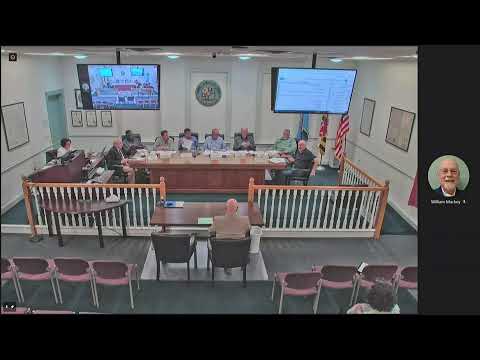
The Kent County Planning Commission on April 3 reaffirmed prior votes granting a curb-cut waiver and setting reduced front-yard setbacks for the Everton preliminary site plan after a circuit court remanded those two approvals for additional written findings.
The remand required the commission either to state that the earlier approvals were not final or to put the reasons for approving the waivers into the record. Tom, county counsel, read the court’s order into the record: “Order that the petitioners request for judicial review of the preliminary site plan approval is dismissed and it is further ordered that the curb cut waiver and setback waiver issues are remanded to the Kent County Planning Commission for further action.”
The commission determined the curb-cut and setback votes taken at a June 2024 hearing were final and voted to reaffirm them, articulating the factual basis that counsel and commissioners said had been discussed at the earlier hearing.
Bill Crowding, a planning commission member, moved to reaffirm the curb-cut waiver “for those reasons listed” and asked staff to incorporate his on-the-record summary of the prior hearing into the minutes. Commissioners recorded and referenced portions of the earlier hearing transcript (roughly pages 176–186 of the prior hearing transcript) as supporting evidence for the waivers.
The commission summarized the factual points it relied on for the curb-cut finding: staff had concluded the proposal complied with the spirit and intent of the county land-use ordinance and the comprehensive plan; testimony at the June hearing stated the waiver would not cause substantial detriment to neighboring property; the Maryland Department of Transportation indicated the waiver would not create a safety hazard or materially increase traffic congestion; the applicant agreed to remove certain trees to provide required sight distance at the Edge Road intersection; and the applicant’s testimony described the waiver as the minimum necessary to relieve a practical difficulty rather than for convenience or profit. The commission voted to affirm the curb-cut waiver unanimously (recorded ayes from Bill Crowding; Jonathan Quinn; Paul Roogie; Sean Jones; Ray Strong; Jim Saunders; and Chair Joe Hickman).
On the setback issue, commissioners said the prior hearing had included detailed discussion of front-yard setbacks and parking layout. Commissioners explained they set a 50-foot front-yard setback along both Edge Road and Chesterville Bridge Road to keep consistency around the site and to avoid placing parking farther into the roadside area. Kevin Schramm (engineer) and the applicant had indicated that the redesigned setbacks were acceptable and that the applicant could return if additional parking were required. Crowding moved to reaffirm the setback decision and again cited transcript pages from the earlier hearing; the motion carried with the same recorded affirmative votes.
County counsel and staff instructed the commission to place those reasons on the record so staff could incorporate them into the written minutes, because the court will review the minutes as the form of the commission’s “written findings.” Tom (county counsel) and Mr. Mackey (planning staff) confirmed the transcript citations and requested detailed minutes entries reflecting the bases the commission summarized.
During public comment, neighbor Alan Durham raised concerns about noise, truck traffic, road wear on Chesterville Bridge Road and the distance from his home, and asked whether the berm the applicant had indicated would be provided remained part of the approved conditions; planning staff responded that berms were a condition of the prior preliminary approval and that the reduced setbacks apply to parking areas rather than the building face. Staff reiterated that the code in this district applies setbacks to parking areas and that the building remains set back farther than typical in the area.
The commission’s actions do not change the court’s dismissal of the challenge to the preliminary site plan; they only provide the additional written and oral findings the court requested about the curb-cut and setback waivers so the record shows those approvals were final decisions with stated reasons.
(For the record: the commission moved immediately to the next agenda item after completing the votes and discussion.)