Get Full Government Meeting Transcripts, Videos, & Alerts Forever!
Get email alerts on the Neighborhood Roads Fund topic
No spam. Unsubscribe anytime.
Committee advances Neighborhood Roads Fund bill, drops township matching requirement
Summary
The House Transportation and Infrastructure Committee adopted a substitute to House Bill 42‑30 to create a Neighborhood Roads Fund, eliminate a 50% township match requirement for certain local projects and dedicate $100 million per year for local bridge repairs, then reported the bill with a recommendation.
House Bill 42‑30, a measure to create a dedicated Neighborhood Roads Fund for repairing and maintaining neighborhood streets, advanced out of the House Transportation and Infrastructure Committee after members adopted a substitute and reported the bill with recommendation.
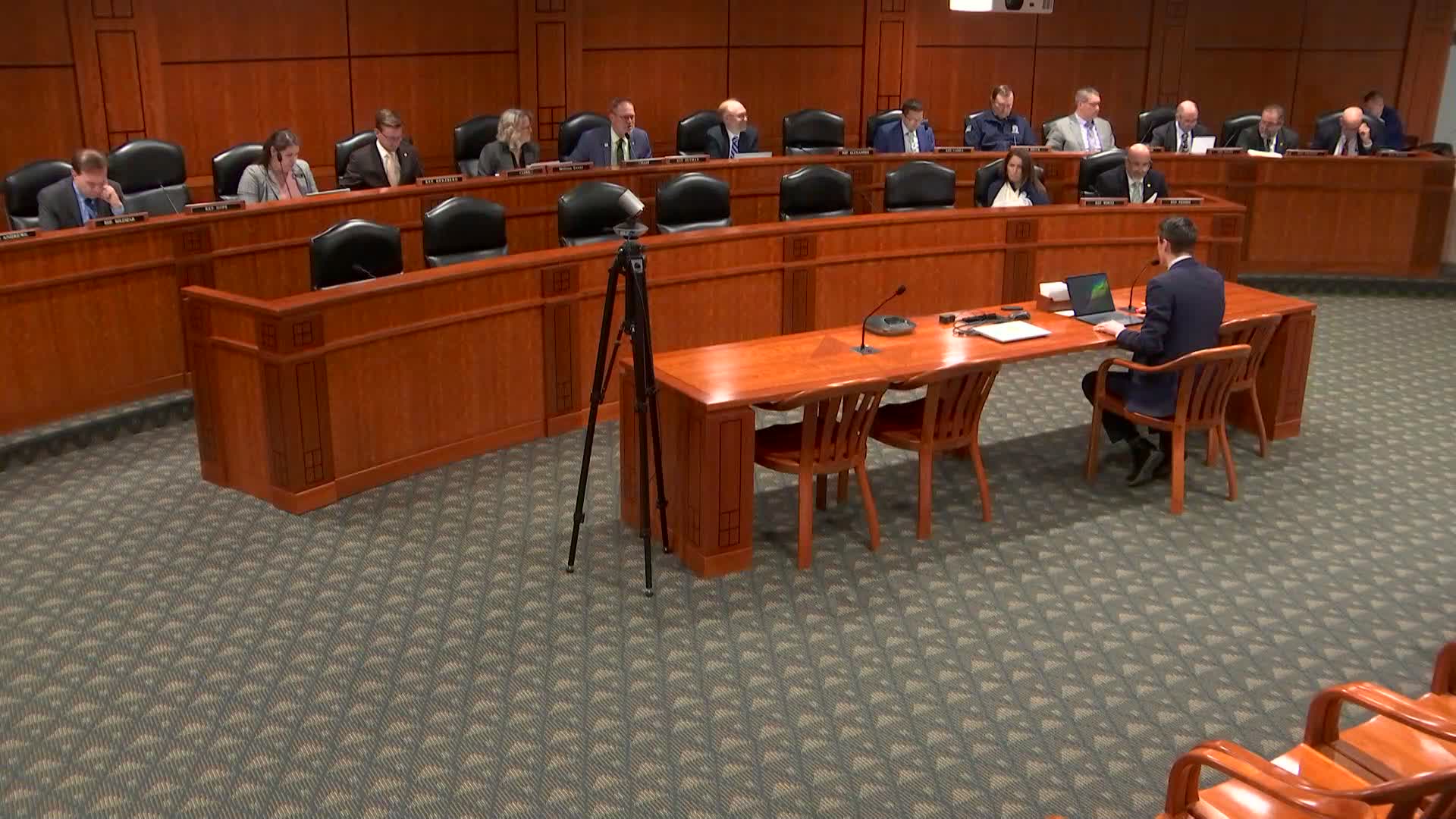
Representative Altman, sponsor of the bill, told the committee the measure is intended to provide “a structured, reliable funding source to improve the roads that matter the most to our communities.” He said the bill would create the Neighborhood Roads Fund and remove the requirement that townships match county road agencies on projects using those funds.
The bill’s substitute also allocates $100,000,000 per year for local bridges and directs distribution of those bridge dollars through the Local Bridge Advisory Board, which the bill describes as composed of local road-agency members. “With thousands of bridges across the state in disrepair, far exceeding our local agency’s ability to fund the necessary fixes, this is a critical step,” Altman said.
Supporters from local government and industry told the committee the change in matching requirements addresses a major barrier for small and rural townships. Representative Frisbie said eliminating the 50% match is “a game changer in Michigan for rural roads and bridges,” noting two closed bridges in his district. Representative Colazar, who represents suburban charter townships, said her constituents have raised similar concerns about the current formula.
Officials from the Michigan Municipal League, the County Road Association and the Michigan Association of Counties testified in support. John Lamaki of the Michigan Municipal League described the package that includes HB 42‑30 as “tremendous progress” toward a roughly $3.3 billion plan to fund local roads. Ed Noyola of the County Road Association and Dina Bosworth of the Michigan Association of Counties emphasized prioritizing local roads and noted some counties operate as road departments rather than road commissions.
Other witnesses who supported the broader package — while raising additional priorities — included the Michigan Townships Association, the Amalgamated Transit Union, Transportation Riders United, the Michigan Public Transit Association, the American Council of Engineering Companies and the Michigan Laborers’ District Council. Transit advocates urged more funding for non‑road transportation, saying the package provides only a small fraction of dollars for buses, senior rides and other services.
On the floor of the committee, Representative Wirtz moved to adopt substitute H‑1 for HB 42‑30; the clerk called the roll and the substitute was adopted. The committee then reported House Bill 42‑30 with recommendation as substitute H‑1.
Votes at the committee recorded adoption of the substitute and the report. The final committee report shows the bill advanced with recorded votes and a committee recommendation; the full roll call and official tally are in the committee minutes.
The bill would: remove certain township matching requirements for projects funded through the Neighborhood Roads Fund; create a dedicated funding stream for neighborhood streets; and allocate $100 million annually for local bridge repairs distributed by the Local Bridge Advisory Board. If enacted, the law would change how counties, townships, cities and villages partner on and pay for many local road projects.
The committee did not take final action to send the bill to the full House floor today; it reported the bill with recommendation, a procedural step that advances the measure to the next stage of the legislative process.
Supporters asked the Legislature to continue discussion as the bill moves through the House and the Senate and to coordinate with the executive branch on final details.