Get Full Government Meeting Transcripts, Videos, & Alerts Forever!
Get email alerts on the Income Tax topic
No spam. Unsubscribe anytime.
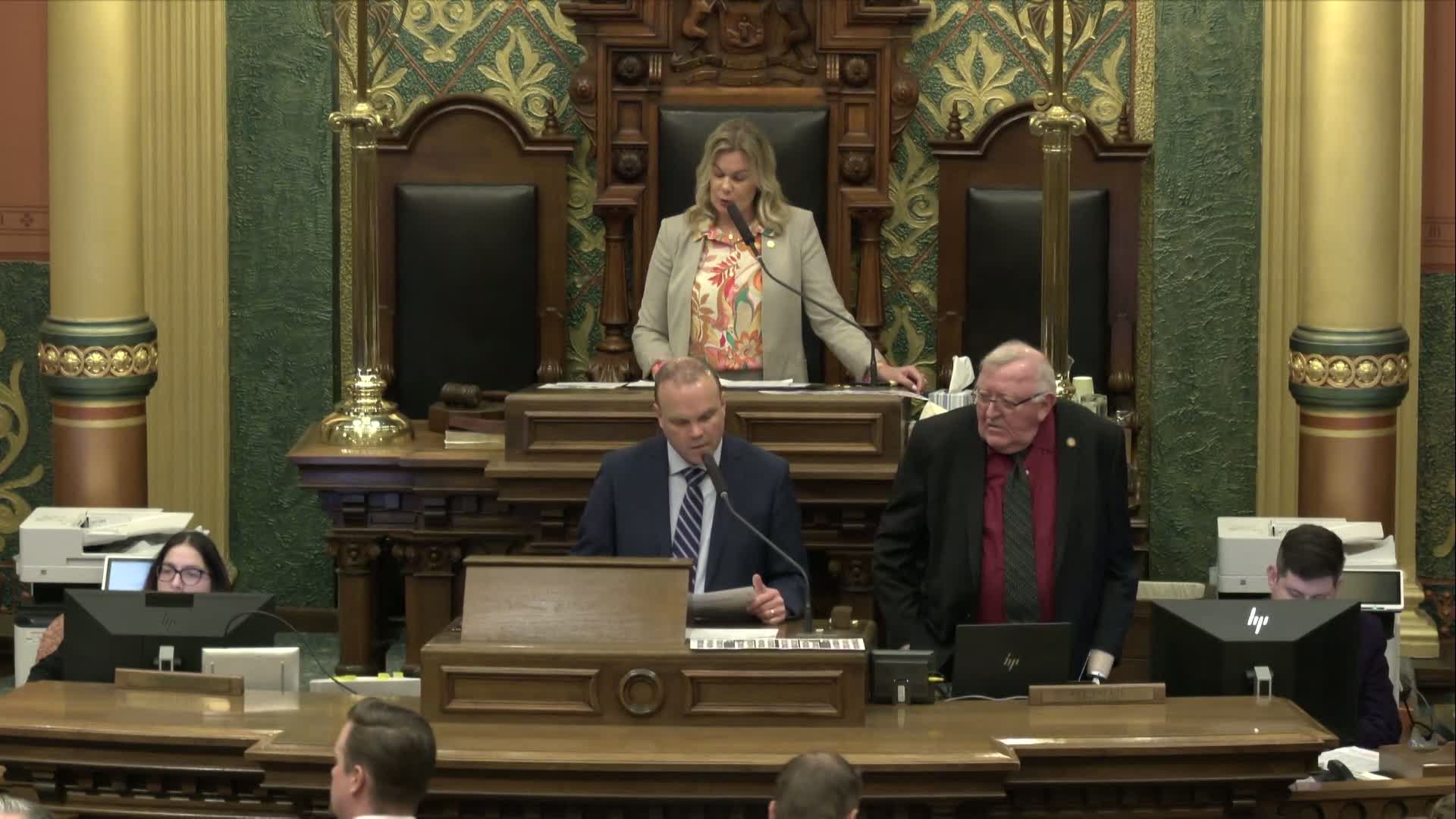
House approves income tax cut after floor debate
Summary
The Michigan House passed House Bill 4170, amending the Income Tax Act of 1967, by a 65-43 vote after floor debate where lawmakers sharply disagreed about who would benefit from the change.
House Bill 4170, a bill to amend the Income Tax Act of 1967, passed the Michigan House of Representatives by a 65-43 roll-call vote after roughly 10 minutes of floor debate.
The measure passed on a recorded vote after members debated the distributional effects of the proposed tax cut. Representative Forman, speaking against the bill, called it “a wolf in sheep’s clothing” and cited modeling by the Institute on Taxation and Economic Policy showing that “nearly 64% of the tax cut for this legislation would go to the wealthiest 20%.” Representative Martis also questioned the bill’s benefit for lower-income Michiganders, saying the bottom 20% would see “an additional $11 a year” while middle-class households would get about $77.
Supporters described the measure as relief for taxpayers. Representative Pastumas said the bill would “keep more money in the pockets of everyday Michiganders” and framed it as reversing a prior tax increase. Representative Smalls said families need immediate relief amid rising costs for groceries, gas and childcare, and urged colleagues to consider the hardships constituents have described.
The debate included statistics and partisan framing but produced no amendments on the floor before the final vote. A motion for immediate effect was moved and carried after passage, making the change effective immediately according to the House action recorded on the floor.
The passage follows a sequence in which the bill was taken up on second reading, amendments were considered off the floor and the measure was advanced to third reading before the final recorded vote. Lawmakers who opposed the bill emphasized modeling of beneficiaries and the limited dollar impact on lower-income residents; supporters emphasized tax relief and competitiveness arguments. The record roll-call vote was announced as 65 yeas and 43 nays.
No implementing details (such as effective statutory text changes beyond the bill title, fiscal-year budget offsets, or specific phase-in language) were read on the floor during the recorded debate.