Get Full Government Meeting Transcripts, Videos, & Alerts Forever!
Get email alerts on the Privacy topic
No spam. Unsubscribe anytime.
Subcommittee advances bill shielding judges’ and officers’ contact information with exceptions and implementation concerns
Summary
The Constitutional Law Subcommittee voted unanimously to give S.126 a favorable report; the bill clarifies protections for judges’ and law enforcement officers’ personal contact information and creates limited disclosure exceptions.
The Constitutional Law Subcommittee voted unanimously to give a favorable report to S.126, a bill that clarifies and narrows existing protections for the personal contact information of judges and law enforcement officers held by state and local government agencies.
Sponsor materials and testimony before the panel said the bill limits the disclosure restriction to publicly available internet sites operated by government agencies and creates specified exceptions, including allowing disclosure to title insurers, title insurance agencies and attorneys in good standing with the South Carolina Bar. The bill also directs the Office of Court Administration and the South Carolina Criminal Justice Academy to create a designated form that officers and judges may use to request restricted access to their personal contact information. The legislation sets an effective date of Jan. 1, 2026.
Sheena Wiley, general counsel and public information director for the Secretary of State’s Office, told the committee the office supports the bill and its amendments and described an operational reason for the exceptions: registered-agent information for businesses is publicly available in the Secretary of State’s filings system, and redacting that information could leave a business without a registrable agent. “If you were a retired law enforcement officer who might have a business or nonprofit and you were the registered agent for that business... under the current acts you could essentially request that information be redacted,” Wiley said. She said S.126’s exceptions avoid that outcome.
Registers of deeds officials who testified supported the bill but urged care on implementation. Margaret Bailey, register of deeds for Dorchester County and president of the South Carolina Association of Clerks of Court and Registers of Deeds, thanked the committee for moving the amendments and said many county offices will need software to shield online records while retaining the ability to restore access for mortgages or other transactions. “We do not want to redact it to the point where it’s just obliterated,” Bailey said, adding that some counties still maintain only physical records and the bill should restrict online access without destroying the underlying record.
Julie Stutz, register of deeds for Aiken County, echoed the call for a uniform form and said counties need time and funding to implement the required software changes. Committee members acknowledged those concerns; Representative Bamberg said some counties may face time and budget pressures to meet the Jan. 1, 2026 effective date and indicated he may seek additional time in later steps of the process.
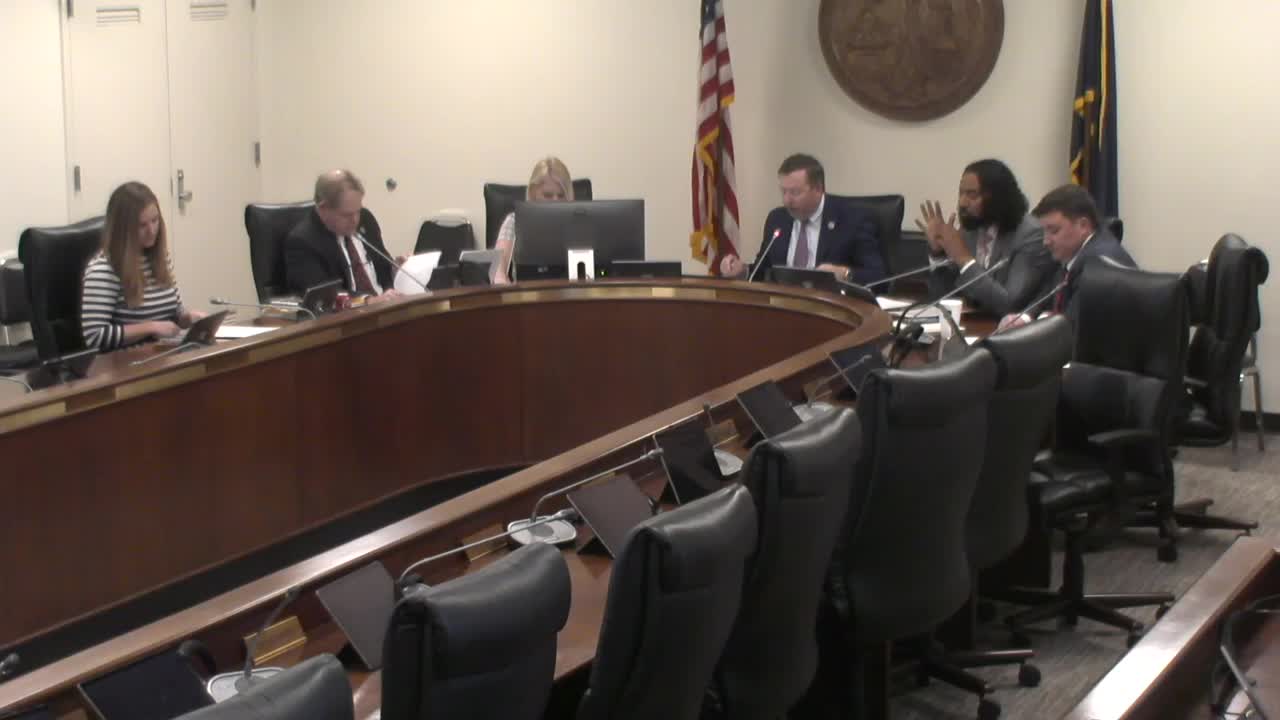
The subcommittee recorded a roll-call vote on S.126 with Representative Jordan, Representative Bamberg, Representative Mitchell, Representative Newton and Representative Wetmore each voting “Aye,” and ordered a favorable report to the full Judiciary Committee. The committee chair said the bill will appear on the full Judiciary agenda next Tuesday after session.
Background: Committee members noted S.126 builds on last session’s Law Enforcement Personal Privacy Protection Act and Judicial Personal Privacy Protection Act; S.126 clarifies the scope of restricted disclosure, delineates exceptions, and assigns responsibility for producing a standard request form to the Office of Court Administration and the South Carolina Criminal Justice Academy.