Get Full Government Meeting Transcripts, Videos, & Alerts Forever!
Get email alerts on the School Safety Panic Alerts topic
No spam. Unsubscribe anytime.
Committee advances bill to let schools use mobile panic-alert systems; vendors to provide training
Summary
The House committee adopted a department-requested amendment shifting mandatory training for school panic-alert systems from the State Department of Education to vendors, and reported H 3258 favorably as amended. The bill directs the state law enforcement agency to identify vendors by Jan. 1, 2026; funding is being worked out in Ways and Means.
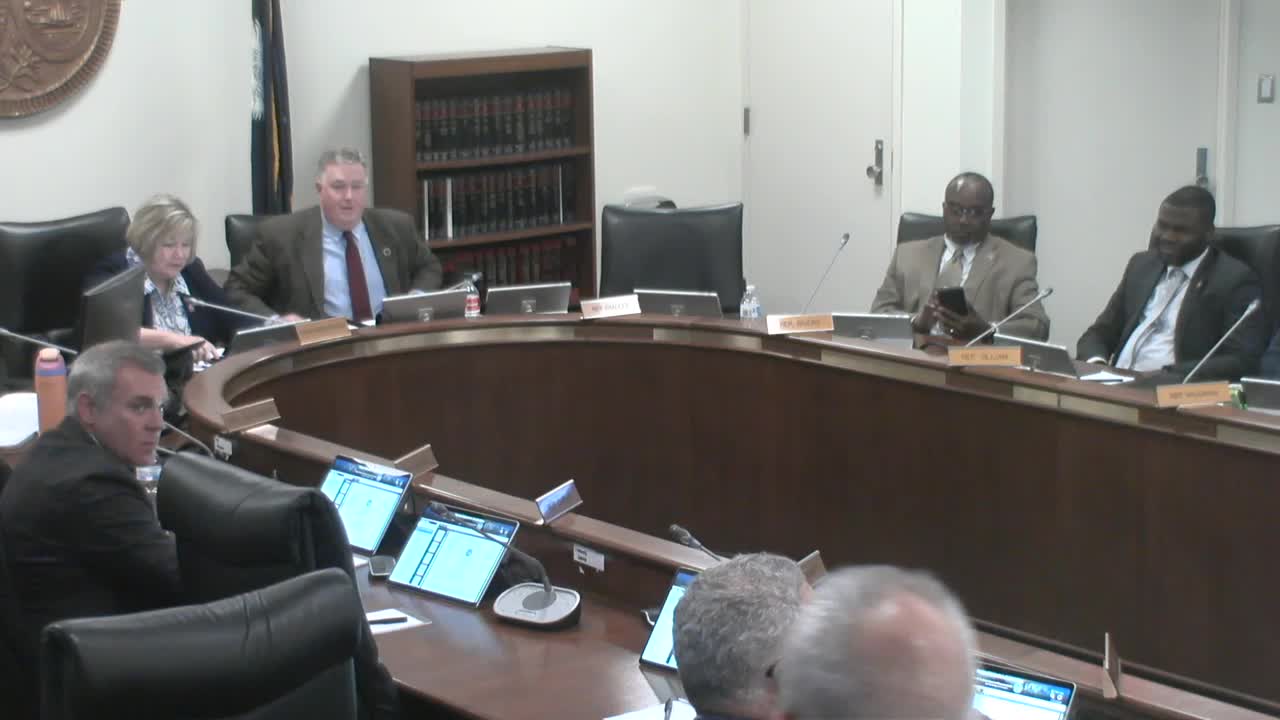
The House Education and Public Works Committee voted to adopt an amendment and then reported H 3258 favorably as amended, enabling mobile panic-alert systems in public schools and assigning some implementation responsibilities to vendors.
At the department’s request, the committee moved mandatory training language from a department responsibility to a vendor responsibility so that the company selling a system — rather than the State Department of Education — must train teachers and staff. The committee also modified regulatory language so the department “may promulgate” regulations rather than “shall promulgate” regulations, per the department’s request. The amendment was adopted by a vote of 16 to 0 with two members absent.
The bill authorizes multiple systems so districts may purchase different vendors while ensuring “real time coordination among law enforcement and first responder agencies.” The transcript states the State Law Enforcement Division (SLED) will identify vendors that meet requirements no later than Jan. 1, 2026. Committee members and presenters framed the measure as an additional tool for school safety; the chair noted similar laws are commonly called “Alyssa’s Law,” a reference to legislation prompted by the 2018 Parkland, Florida, school shooting.
Funding for statewide deployment was not taken up in this committee. The transcript records that Representatives Pope and Bannister are working with Ways and Means on funding and that the committee’s role is limited to the enabling legislation. Committee discussion included cost estimates collected by the School Administrators Association: an average recurring cost of about $8,000 per school per year (not including infrastructure or licensing), with initial per-school installation costs reported in a range between $52,000 and $325,000 depending on site-specific needs. The record also reports that a small number of districts gave much larger upper-bound estimates — one district’s figure was cited as up to $10,000,000 — and committee members characterized those large figures as outliers or unclear in their derivation.
Representative members recorded no objections to reporting the bill; the committee reported H 3258 favorably as amended by a vote of 15 to 0 with three members absent.
Clarifying details from the transcript: vendors will be responsible for training; SLED is tasked with identifying qualified vendors by Jan. 1, 2026; funding is to be determined by Ways and Means (not addressed in committee); cost estimates vary widely depending on infrastructure needs and vendor choice.
The committee’s action moves the bill to the next step in the legislative process; further appropriations or procurement decisions will be resolved in subsequent committee work.