Get Full Government Meeting Transcripts, Videos, & Alerts Forever!
Get email alerts on the Criminal Justice Gun Policy topic
No spam. Unsubscribe anytime.
Committee delays consideration of bill to dismiss pending pre–Constitutional Carry gun-possession charges
Summary
Law-enforcement representatives and the bill sponsor debated a measure to require dismissal of pending unlawful-handgun charges that arose before South Carolina's Constitutional Carry law; committee voted to adjourn debate to next week after questions about victims, bail and prosecutorial discretion.
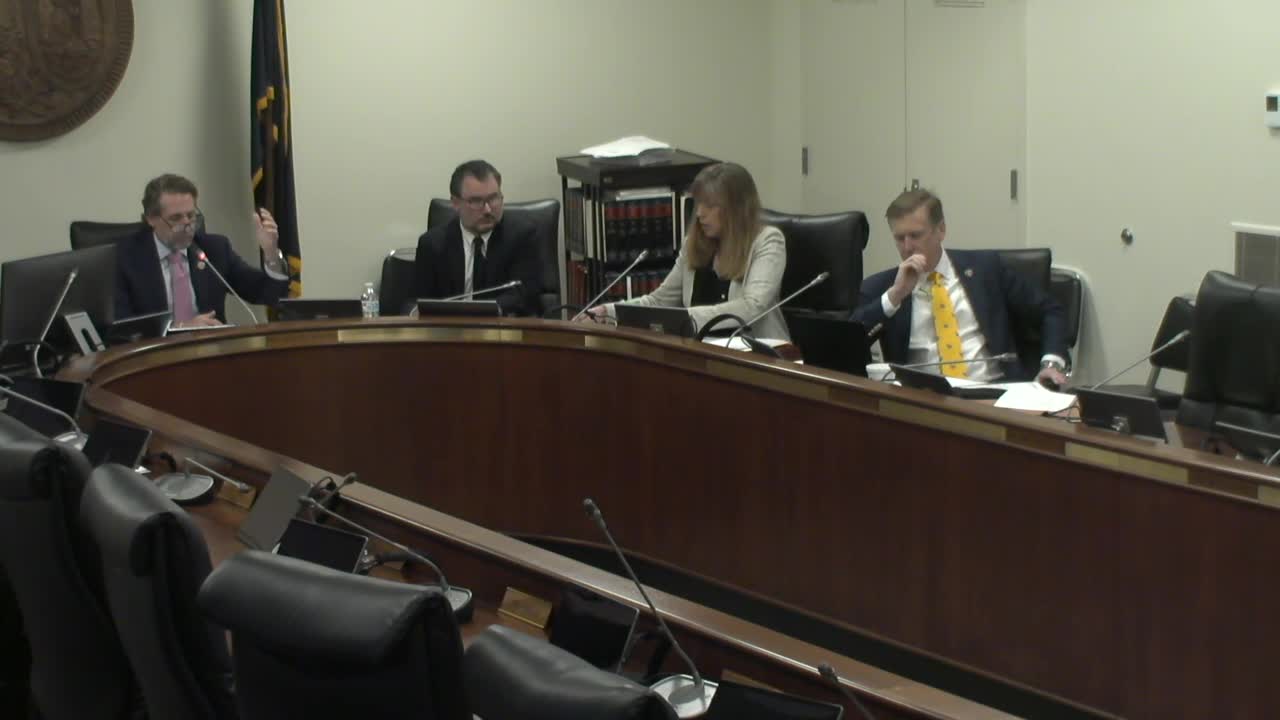
A state Judiciary Committee meeting on April 3 heard testimony and debate on Senate Bill 136, a measure that would require the dismissal of pending charges for unlawful possession of a firearm or handgun if the alleged offense occurred before enactment of the state's Constitutional Carry law. Committee members voted to adjourn debate on the bill to next week.
The bill, sponsored in the Senate by Senator Tedder, would direct the state to dismiss pending unlawful-carrying charges tied to conduct that was decriminalized after the Constitutional Carry (Second Amendment Preservation) Act took effect. Senator Tedder told the committee the bill was intended to extend the same expungement and relief that the legislature gave to people with convictions when the law changed, but which did not cover people whose cases remained pending at the time the governor signed the act.
The measure and an amendment were designed to limit the relief to simple possession cases and to preserve prosecutions for other offenses that arose alongside an unlawful-carry charge. Senator Tedder said the amendment clarifies that the bill does not require dismissal of other charges brought in conjunction with an unlawful-carrying count, and it specifies that dismissal under this section "does not support a basis for a civil action."
Law-enforcement witnesses urged caution. JJ Jones, who said he represents chiefs of police and the South Carolina Law Enforcement Officers Association, opposed the bill in its present form and warned that "political capital" should not outweigh victims' interests. Jones said he feared a "carte blanche" dismissal could let people who pose public-safety risks avoid consequences and predicted "victims that get victimized again." Sally Foster, director of the South Carolina Sheriff's Association, said the provision diminishes prior law-enforcement work because the underlying conduct had been unlawful at the time of arrest, and said sheriffs remain concerned about unintended consequences.
Committee members pressed the sponsor and witnesses on several scenarios: whether dismissal of the unlawful-carrying charge could affect bail or bond decisions in cases with separate pending violent-offense charges; how judges would treat bond reconsideration motions; and whether people with lengthy prior records would be affected. Senator Tedder and witnesses repeatedly said prosecutors and judges retain discretion and that the bill was narrowed to avoid automatically invalidating other charged offenses.
Senator Tedder told the committee the bill had previously passed both chambers, had been vetoed by the governor, and the Senate had overridden that veto; the House did not take final action before adjournment last year. He and other speakers said state data showed more than 2,300 pending unlawful-carrying charges in various counties, which supporters say creates unfair disparities between people convicted before the governor's signature and those whose cases were still pending.
After roughly two hours of testimony and questioning, Representative Kathy Landing moved to adjourn debate on SB 136 until next week. The chair put the motion to a voice vote; "Ayes have it" was recorded and debate was adjourned.
The committee did not take a final vote on the bill. Sponsors and witnesses said they remain open to technical amendments to address prosecutorial and judicial concerns before the committee reconvenes.
The committee will consider SB 136 again when it resumes this matter next week.