Get Full Government Meeting Transcripts, Videos, & Alerts Forever!
Get email alerts on the Judiciary topic
No spam. Unsubscribe anytime.
Subcommittee adopts amendment to convert at-large circuit judgeships into resident seats
Summary
The Constitutional Law Subcommittee unanimously adopted an amendment to H.4160 that would convert 10 of the state’s 16 at-large circuit court judgeships into resident seats, a change requested by Chief Justice Kittridge to address population shifts and so-called "legal deserts."
The Constitutional Law Subcommittee voted unanimously to adopt an amendment to H.4160 that would convert multiple at-large circuit court judgeships into resident seats, committee members said. The amendment expands an earlier proposal and, if enacted, would reduce the number of at-large judgeships from 16 to six.
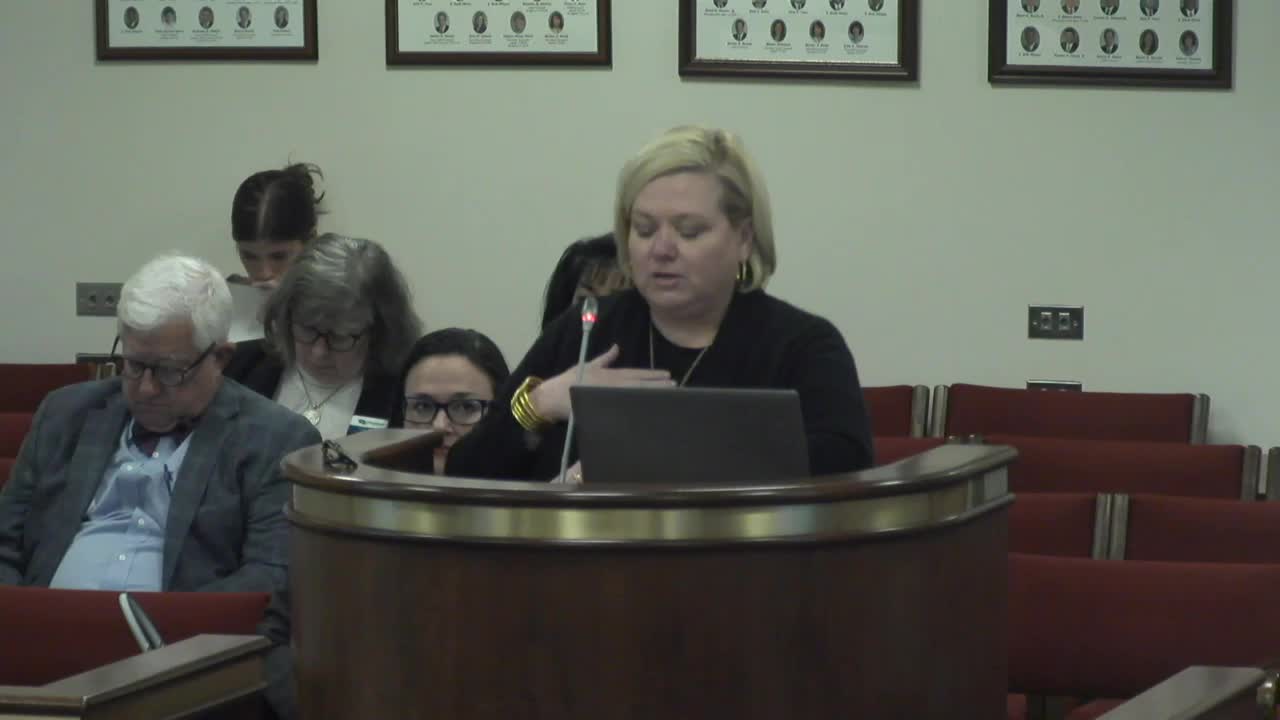
The change was requested by Chief Justice Kittridge and presented to the panel by Ms. Turner, who spoke on his behalf. Turner told the committee the chief’s recommendation uses a needs-based approach — including court filings and population growth — and aims to improve geographic diversity and address “legal deserts,” areas with very few practicing lawyers. “It is on a needs based criteria that the Chief Justice is proposing that these seats be converted into resident seats where the current judge lives,” Turner said.
The bill as introduced would have converted five at-large seats (the committee heard those originally listed as the 3rd, 7th, 9th, 11th and 12th circuits). Chairman Newton offered an amendment that the committee adopted to add five additional circuits, bringing the total conversions to 10 of the 16 at-large judgeships, leaving six at-large seats remaining. Chairman Newton told the committee the amendment reflects further information provided by the chief justice. The subcommittee recorded a roll-call vote on the bill with Representative Jordan, Representative Bamberg, Representative Mitchell, Representative Newton and Representative Wetmore all voting “Aye.”
Turner and others argued the conversion would make judicial races more local, increase the voice of local delegations and local bars in selecting trial-level judges, and reduce the likelihood that populous regions dominate contests for at-large seats. Turner summarized the chief justice’s view: “When races become more local and the local delegation and the local bar assumes a greater voice, [that] are desirable things for the local bar and the local delegation to have a greater voice.” She also warned that maintaining many at-large seats risks creating “judicial deserts” where less-populated counties have diminished access to lawyers and slow-moving dockets.
Representative Mitchell described the concern in practical terms for rural communities: when resident judges are not available in less-populated areas, he said, “cases get very old” and that situation strains victims, law enforcement and defendants.
Committee members asked whether the amendment would displace sitting judges; staff clarified the amendment and the bill would not remove or relocate current serving judges. After adopting the Newton amendment, the subcommittee voted to report the bill favorably. The panel’s report and the amended bill will go to the full Judiciary Committee next Tuesday after session, the chair said.
Background: The committee heard that at-large judgeships were created historically to resolve disputes about where to place newly created trial judgeships as the state added positions. Over time, however, the committee was told, populous areas tended to secure more at-large seats, prompting the chief justice’s request to restore more resident seats.