Get Full Government Meeting Transcripts, Videos, & Alerts Forever!
Get email alerts on the Behavioral Health Consolidation topic
No spam. Unsubscribe anytime.
Committee advances amendments to S.2 to consolidate behavioral health agencies; final vote delayed by time constraints
Summary
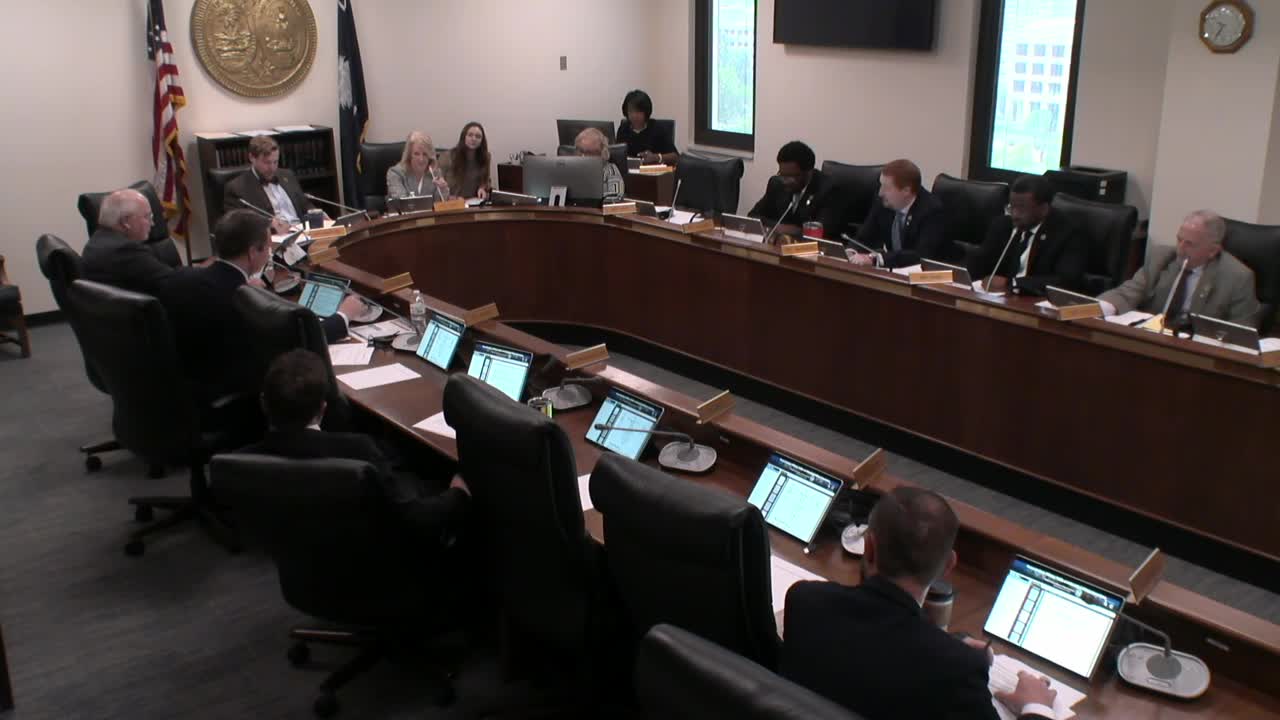
Committee debated S.2, which would create a Department of Behavioral Health and Developmental Disabilities by consolidating three agencies. Two committee amendments requiring annual accountability reporting and a mandated review of duplicative services through 2028 passed; the committee did not complete a final vote before a scheduled recess.
Members of the House Medical, Military, Public and Municipal Affairs Committee debated S.2, a Senate-sponsored bill to create a Department of Behavioral Health and Developmental Disabilities by consolidating three existing agencies: the Department of Disabilities and Special Needs (to be renamed the Office of Intellectual and Developmental Disabilities), the Department of Mental Health (to be renamed the Office of Mental Health), and the Department of Alcohol and Other Drug Abuse Services (to be renamed the Office of Substance Use Services).
Representative Heath Sessions, speaking for the bill's sponsors, described S.2 as a narrower follow-up to a larger reorganization proposal that did not pass last year. "This is this year's effort... to bring all of those folks all under 1 roof, in this new department of behavioral health and developmental disabilities," Sessions said. He said the change is intended to reduce administrative duplication over time while preserving services.
Committee members pressed for clarity about job impacts, savings and enforcement of efficiency objectives. Representative Magnuson asked whether the bill requires the agency to prioritize efficiency and eliminate duplication; Representative Sessions and other members said that an appointed director accountable to the governor would be part of the new structure, and that follow-up work would include oversight by Ways and Means and the Legislature. Representative Scott Montgomery and Representative Pace raised technical and procedural questions about fiscal notes and House rules.
The committee adopted two substantive amendments: - Amendment 1 (technical and reporting): Adds a requirement that the new agency provide an annual accountability report "containing the agency or department's mission, objectives to accomplish the mission and performance measures that show the degree to which objectives are being met." The committee voted in favor of Amendment 1. - Amendment 2 (efficiency review through 2028): Requires that through calendar year 2028, and to the extent permitted by state and federal law, the department's annual accountability report include a review of efforts to maximize efficiency and identify duplicative services; develop a plan to consolidate or coordinate identified duplicative programs; and eliminate redundancy while preserving or enhancing service quality, accessibility and specialization. Legal staff explained the phrase "applicable state and federal laws" was intended to preserve protections such as HIPAA.
Representative Trey Walpole, committee staff counsel, explained the legal caveats: "When you're dealing with healthcare based agencies, you want to make sure that those folks are still protected from certain [requirements]... preserve the protections within federal or state adopted law." That explanation came during discussion of Amendment 2.
Both amendments passed on roll calls recorded in the meeting. Committee members asked for more detailed fiscal analysis; Representative Pace highlighted that the fiscal impact statement attached to the bill listed some costs but described potential savings as "undetermined," a point several members said they wanted to revisit before a final floor vote.
Before the committee could complete a final vote on S.2 as amended, the chair proposed adjourning and reconvening the following morning because of a scheduled hard stop. The committee recessed with the bill "postponed" to the next session for final consideration.