Get Full Government Meeting Transcripts, Videos, & Alerts Forever!
Get email alerts on the Discovery Working Papers topic
No spam. Unsubscribe anytime.
Committee backs discovery-rule language to protect experts' "working papers," members raise definition concerns
Summary
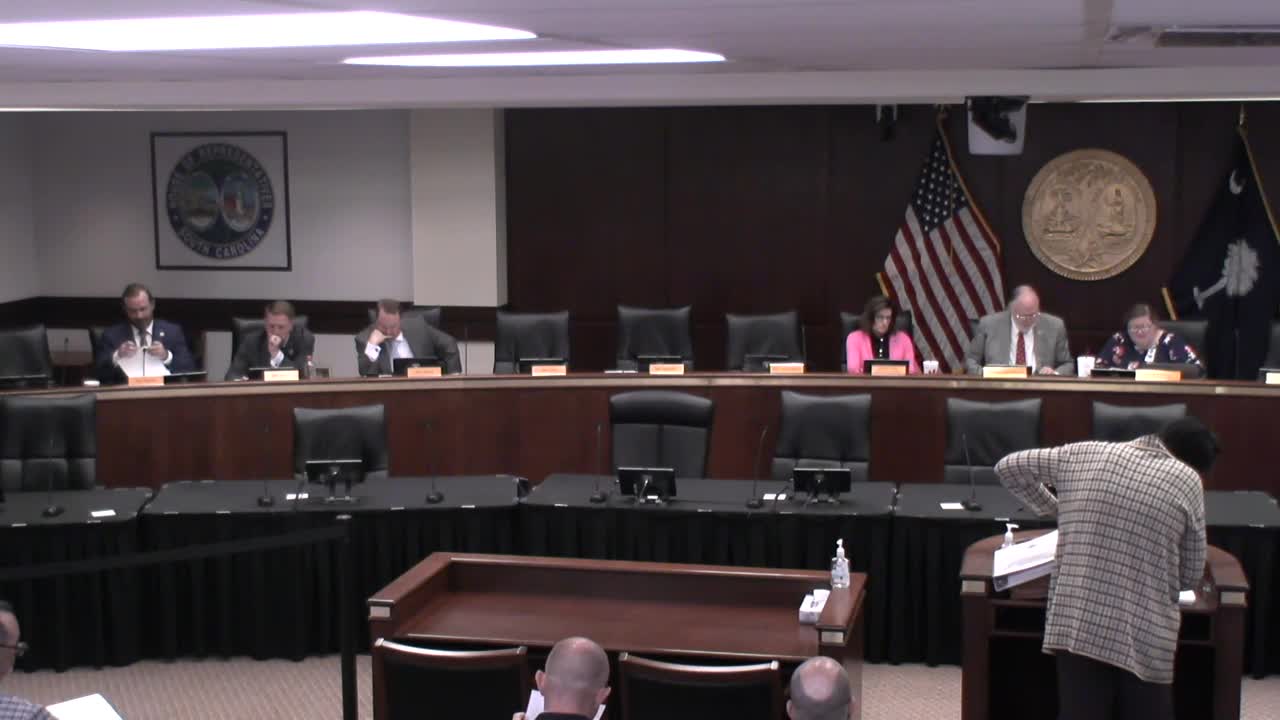
Document 52-75, which adds the phrase "working papers" to hearing-preparation protections, was approved 7-0 after committee members and industry representatives debated whether the term is sufficiently defined.
The committee approved Document 52-75, amending discovery rules to insert the phrase "working papers" alongside attorney work product in hearing-preparation protections. The roll-call approval was 7-0.
Representative Martin questioned the change, asking whether "working papers" is a defined legal term and warning that an undefined term could broaden discoverability claims and delay proceedings. "My only concern is, if you use the term working paper without an actual definition of what working papers includes, can you just make that so broad that you don't have to turn over anything in discovery, and it actually prolongs the litigation process?" he asked.
Jocelyn Boyd and Balen Moore (representing the South Carolina Rural Telephone Companies) responded that the words "working papers" historically appeared in the commission's regulations and are broader than attorney work product. Moore told the committee the term covers materials "prepared in anticipation of a hearing, by or for any party or by or for that party's representative, including the attorney, including consultants," and cited South Carolina procedure 26(b)(3) as context for the distinction. Moore said the language had been inadvertently omitted in a prior revision and that the industry litigators view the phrase as long-established practice.
Committee members asked whether a definition should be added now; staff explained that adding a definition would require additional drafting and another public notice and hearing because stakeholders had already participated in the current process. Several members asked staff to return with clarifying language in the future; one committee member said they could proceed with the current intent and clarify the record if needed.
Votes at a glance: Document 52-75 approved by roll call: Mister Anderson — yes; Mister Guffey — yes; Mister Hartz — yes; Mister Martin — yes; Mister Neece — yes; Mister Tipple — yes; Mister Bradley — yes.