Get Full Government Meeting Transcripts, Videos, & Alerts Forever!
Get email alerts on the Neurological Hospital Proposal topic
No spam. Unsubscribe anytime.
University of South Carolina proposes $350 million neurological hospital and rehab center; seeks $150 million in one‑time state capital
Summary
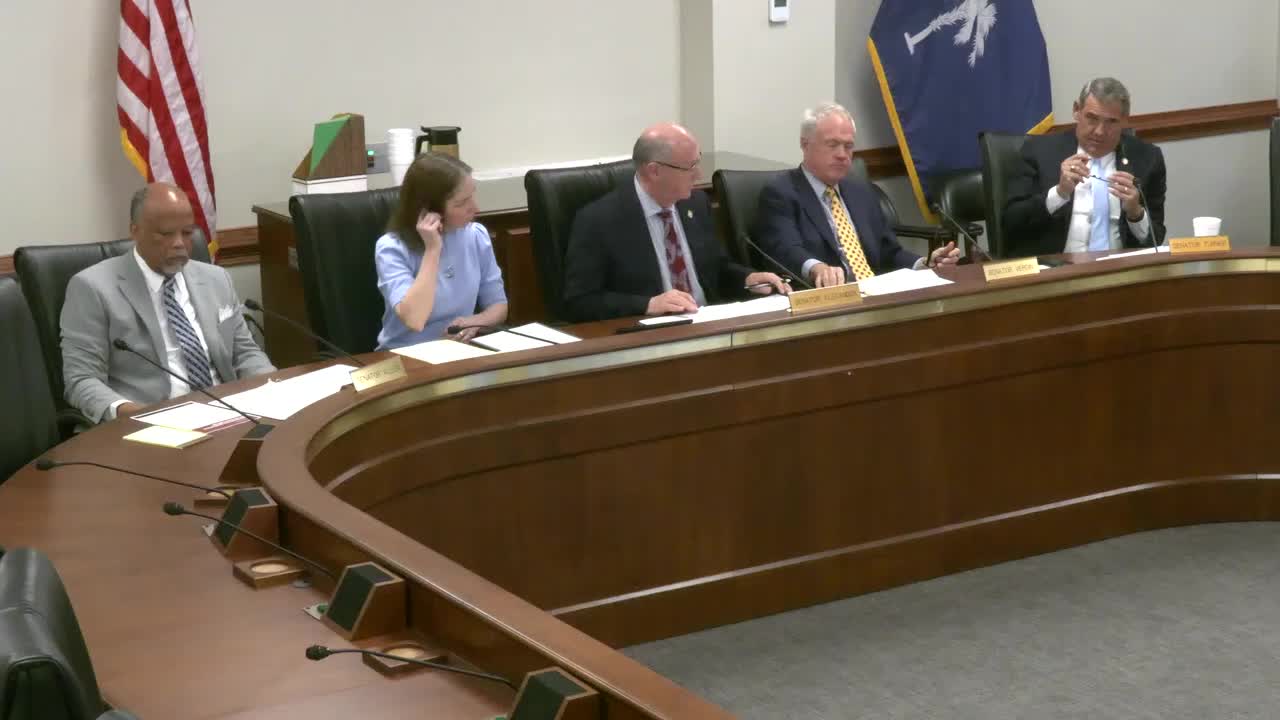
University of South Carolina officials presented a plan for a standalone neurological hospital and attached rehabilitation center and requested $150 million in one‑time state capital during a Senate committee meeting.
University of South Carolina officials presented plans for an integrated neurological hospital and rehabilitation center during a state Senate committee meeting and asked lawmakers for $150 million in one‑time state capital to help build the facility.
The university presentation, delivered by the University of South Carolina president (name not specified in the transcript), described a standalone quaternary referral center for complex neurological conditions and brain injuries that would combine a hospital with on‑site, world‑class rehabilitation services. The presenter said the total project cost is expected to be €350,000,000 (transcript currency notation), that the university has secured €10,000,000 in federal funds for initial project design, and that it is seeking €150,000,000 in one‑time state capital; the presenter said a remaining €200,000,000 from the Department of Health and Human Services is contingent on legislative approval of the state appropriation.
The proposed facility would include advanced neurosurgery and neurology services, on‑site rehabilitation modeled after the Shirley Ryan AbilityLab in Chicago, and advanced imaging such as a 7 Tesla MRI instrument the presenter said federal funding has already helped secure. The presentation listed reasons for the project: an aging population, limited access to specialized neurological care in parts of the state, improved patient outcomes through integrated hospital‑to‑rehab care, workforce attraction and retention, technology and research advancement, and economic development.
The presenter outlined preliminary sizing and timeline: roughly 20 intensive‑care unit beds, about 40 step‑down beds, and a 30–40‑bed inpatient rehabilitation unit — a total near 100 beds “give or take,” with variability during planning. The university projected a three‑year construction timeline if state approval occurs this year and said it hopes to begin operation in 2028. The president also said the university seeks $30,000,000 in recurring state funds to support early operations, recruitment of leadership and staff, and research activities during start‑up. The presenter described a governance model under discussion that would likely put oversight with a new board including university and state representatives.
Committee members asked about regional competition, operational finances, patient mix and access. The University of South Carolina president said the center would not seek to compete with hospitals that manage routine stroke cases, but would accept referrals for complex cases other hospitals cannot treat. The presenter said roughly 70 percent of South Carolinians aged 65 and older live within a two‑hour drive of Columbia and that the project aims to prioritize state residents while acknowledging some capacity could serve out‑of‑state patients if beds are available.
On financing, the presenter said initial federal design funding is in hand, that philanthropic donors would be pursued for capital and equipment as is common with similar centers, and that the proposed $200 million Department of Health and Human Services contribution depends on legislative approval of the state appropriation. The presenter characterized the project as a priority in the governor’s executive budget and quoted the governor’s characterization of the plan as a “once in a generation opportunity.”
Lawmakers pressed for details on governance and cautioned that a clear plan for oversight should be in place before major capital commitments. Committee members also asked about Medicaid participation; the presenter said the facility would accept Medicaid patients and that the hospital would be structured as a state‑affiliated facility. Several senators emphasized the need for continued collaboration with existing state hospitals and research institutions, and the presenter described ongoing outreach to Prisma, Lexington Medical Center and the Medical University of South Carolina.
No formal vote on the funding requests occurred during this meeting; the presentation was followed by committee questions and discussion. The transcript records specific cost figures and bed counts as planning numbers rather than final, binding commitments.