Get Full Government Meeting Transcripts, Videos, & Alerts Forever!
Get email alerts on the Addiction Services Funding topic
No spam. Unsubscribe anytime.
State addiction agency warns federal block grant was terminated early; urges state funding to avoid service cuts
Summary
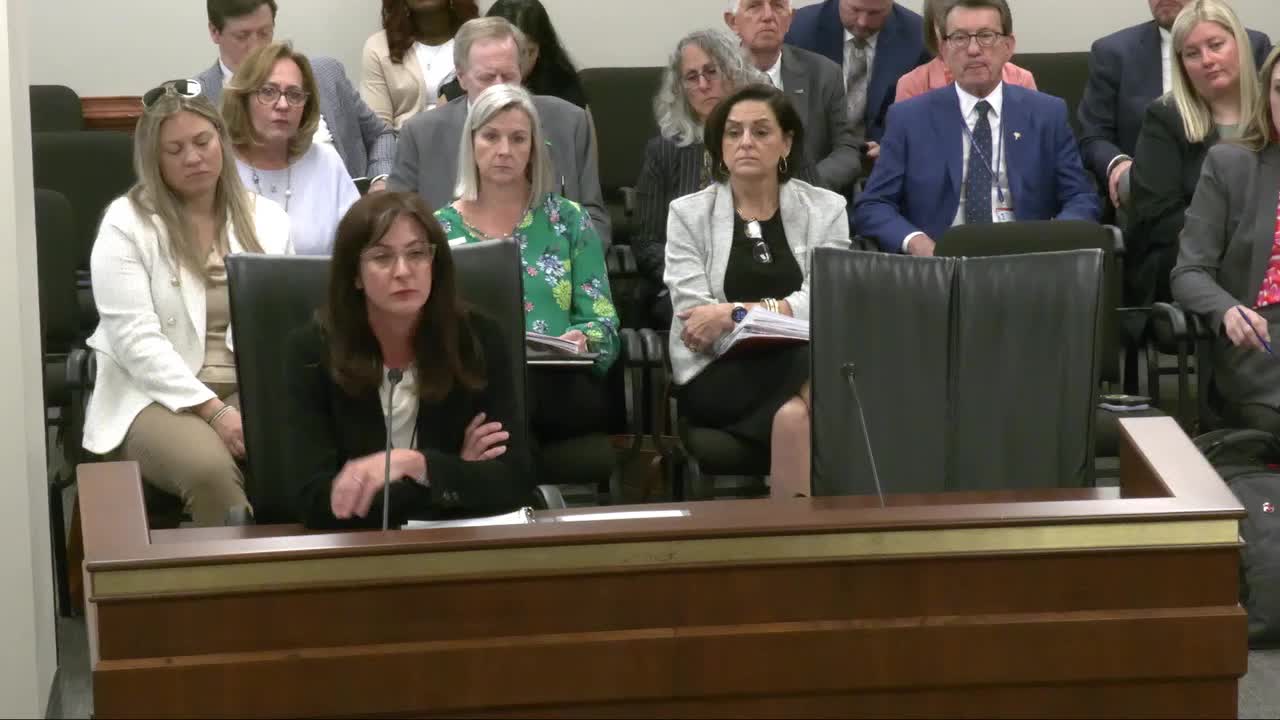
Miss Sarah Goldsby, a representative of the Department of Alcohol and Other Drug Abuse Services, told the Senate Finance Health and Human Services Subcommittee on March 27 that federal grant funding supporting county addiction providers was “terminated early and immediately,” leaving roughly $5.2 million in operating and obligated funds unavailable.
Miss Sarah Goldsby, a representative of the Department of Alcohol and Other Drug Abuse Services, told the Senate Finance Committee Health and Human Services Subcommittee on March 27 that federal grant funding the agency used to support county providers was abruptly terminated this week.
Goldsby said the agency learned Monday that “the funds that we had received, these grants had been terminated early and immediately.” She told senators the department had about $600,000 in operating funds tied to the grants and about $4,600,000 obligated to addiction service providers through the fiscal year that now appear unavailable.
The department’s presentation noted that the federal Substance Use Prevention, Treatment and Recovery Services block grant is the foundation of the public addiction system and that congressional appropriations between fiscal 2021 and fiscal 2024 added more than $42,000,000 in one-time federal supplements. Goldsby said those one-time federal dollars had been used mainly to supplement existing programs and to raise fee-for-service reimbursement to match HHS Medicaid rates for uninsured and indigent patients.
Goldsby said the department attempted to draw down federal reimbursement for services already paid to providers for January and February but the requests were denied. “We attempted this week to draw down federal reimbursement for the funds that we've already spent... and our reimbursement requests to the federal government were denied,” she said.
Because the funds were intended to shore up the safety-net system, Goldsby told the panel the abrupt termination threatens operations across the public addiction service network. She said the 31 county alcohol and drug authorities that make services accessible statewide may have to cut back hours or delay intake and assessments, and inpatient withdrawal-management units could lack staff to take admissions. She raised particular concern for pregnant and parenting women programs and family recovery services.
Goldsby outlined the agency’s priorities in its state budget request, saying the request now feels more urgent. Key points she described (figures and program counts from the agency presentation): • Formula grants and direct treatment services: the department funds counties with a hybrid model of formula grants for operations and fee-for-service reimbursement for treatment. The agency matches state Medicaid rates in its payment for indigent treatment; maintaining those rates was a stated priority. • Transportation gap: Goldsby said DODAS paid $400,000 in patient transportation costs last year and is requesting $200,000 to cover the shortfall left by the federal fund loss, a need she called “particularly important in the rural areas.” • Residential treatment and withdrawal management: seven county alcohol-and-drug authorities offer inpatient services; the presentation said about 2,750 South Carolinians received treatment in those programs last year and more than half of those patients were unfunded. The agency said all such programs are running deficits. • Recovery community organizations: many small nonprofit peer-recovery organizations operate on year-to-year grants; the department requested recurring multi-year grants (three-year timeline) to stabilize funding. • Prevention services: the department proposed funding equivalent to nine additional prevention specialists so each county would have a full-time prevention specialist, plus expanded county grants for school-based curricula and materials.
Senators asked about escalation of the issue to the governor’s office and congressional delegation; Goldsby said the agency had communicated with both the governor’s office and federal officials and that other states and territories are experiencing the same early terminations. One committee member noted the agency’s national role: Goldsby said she serves as president of the National Association of State Alcohol and Drug Agency Directors and was working with colleagues across states facing similar impacts.
The subcommittee did not take formal action at the March 27 meeting. Goldsby said the department is continuing to assess provider-level impacts and working with providers as contracts are terminated or reduced in response to the federal action.
Funding requests and program priorities were presented in the agency’s packet; the department said the full budget request and more detailed line items are in the materials provided to legislators.