Get Full Government Meeting Transcripts, Videos, & Alerts Forever!
Get email alerts on the Stormwater Infrastructure topic
No spam. Unsubscribe anytime.
State resilience office says ARPA-funded stormwater program managing 17 projects, seeks recurring funds
Summary
The Office of Resilience told a legislative oversight subcommittee it is managing 17 ARPA-funded stormwater projects, seven in construction, and is seeking new recurring state funding after one-time federal sources end.
The Office of Resilience told the Legislative Oversight Subcommittee on Oct. 12 that it is using federal American Rescue Plan Act money for stormwater infrastructure and is managing 17 projects, seven of which are in construction.
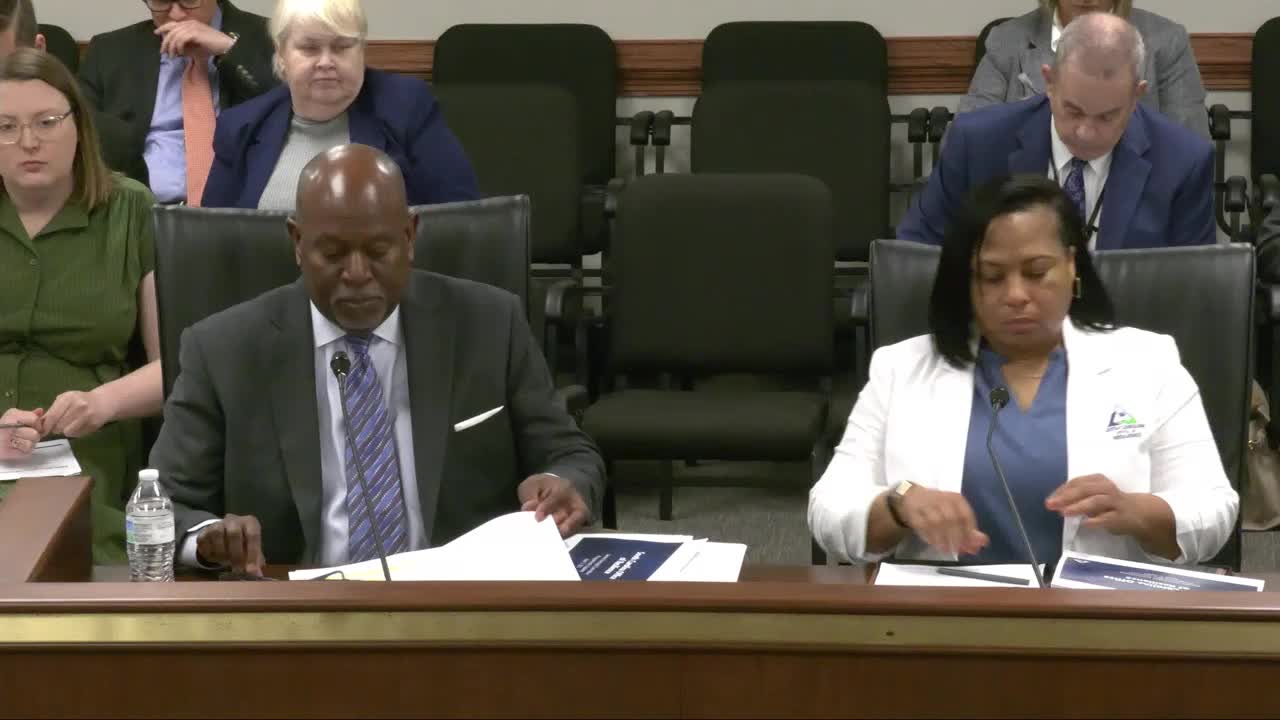
"So the ARPA funding, again, it is all federal, funding, and we are using it for stormwater infrastructure projects," Felicia Lewis, mitigation director, said. "We have a total number, of 17 projects that we're managing in that fund. Seven of the projects are currently in construction. We have two that are out for bid and three projects are also in a procurement process."
Lewis described the projects as largely green infrastructure and said applications were accepted statewide through a competitive process. She said awards considered feasibility, benefit-cost analysis, community impact and reductions in flood risk and noted a Treasury deadline requires that ARPA obligations be made by the agency’s established deadline and that project spending must be completed by the end of 2026.
Lewis told the panel the ARPA pool originally discussed in documents was roughly $55 million and later increased to over $60 million; she said requests for that funding far exceeded available dollars. "For example, the ARPA funding, we had dollars 55,000,000 originally allocated. We've since ... increased that to 6, over 60, but we received $200,000,000 of project request for that funding source," she said. She also said the agency received $162 million under HUD's Community Development Block Grant for mitigation in phase one and received requests totaling about $113 million against that funding.
Committee members pressed whether any of the federal funding streams are recurring. Lewis said none are recurring and that there is no expectation of another round of ARPA funds. She said there is an approximate $20 million allocation tied to Hurricane Helene recovery that will go toward mitigation in affected areas but characterized that as one-time disaster-related dollars.
The resilience office asked the committee for state support to create a recurring funding source to continue mitigation work after one-time federal grants expire. Lewis said the agency submitted a request for $30 million in state funding to replace reserve money the agency used and to support statewide infrastructure planning and future awards.
Why it matters: The office said demand for flood mitigation far outstrips available funds and that recurring state funding would allow more predictable planning so local governments can begin projects and planning in advance rather than waiting for ad hoc dollars.
The agency provided a dashboard on the state transparency website, Lewis said, that shows spending, obligations and project status. She offered to provide committee staff with project-level details and leverage data showing other funding partners for individual land and infrastructure projects.
Next steps noted in the meeting: the office will continue to manage the ARPA- and HUD-funded projects with the stated end-of-2026 completion target and asked the legislature to consider recurring appropriations to sustain mitigation beyond one-time federal grants.