Get Full Government Meeting Transcripts, Videos, & Alerts Forever!
Get email alerts on the Auto Insurance topic
No spam. Unsubscribe anytime.
Insurance Department defends actuarial review process as senators press for more tools to lower auto premiums
Summary
Department of Insurance officials told the Senate Insurance Committee they review hundreds of filings annually and rely on actuarial standards to judge rate requests, while senators and consumer advocates said Louisiana's high auto premiums merit additional regulatory tools and non-rate interventions such as road-safety improvements.
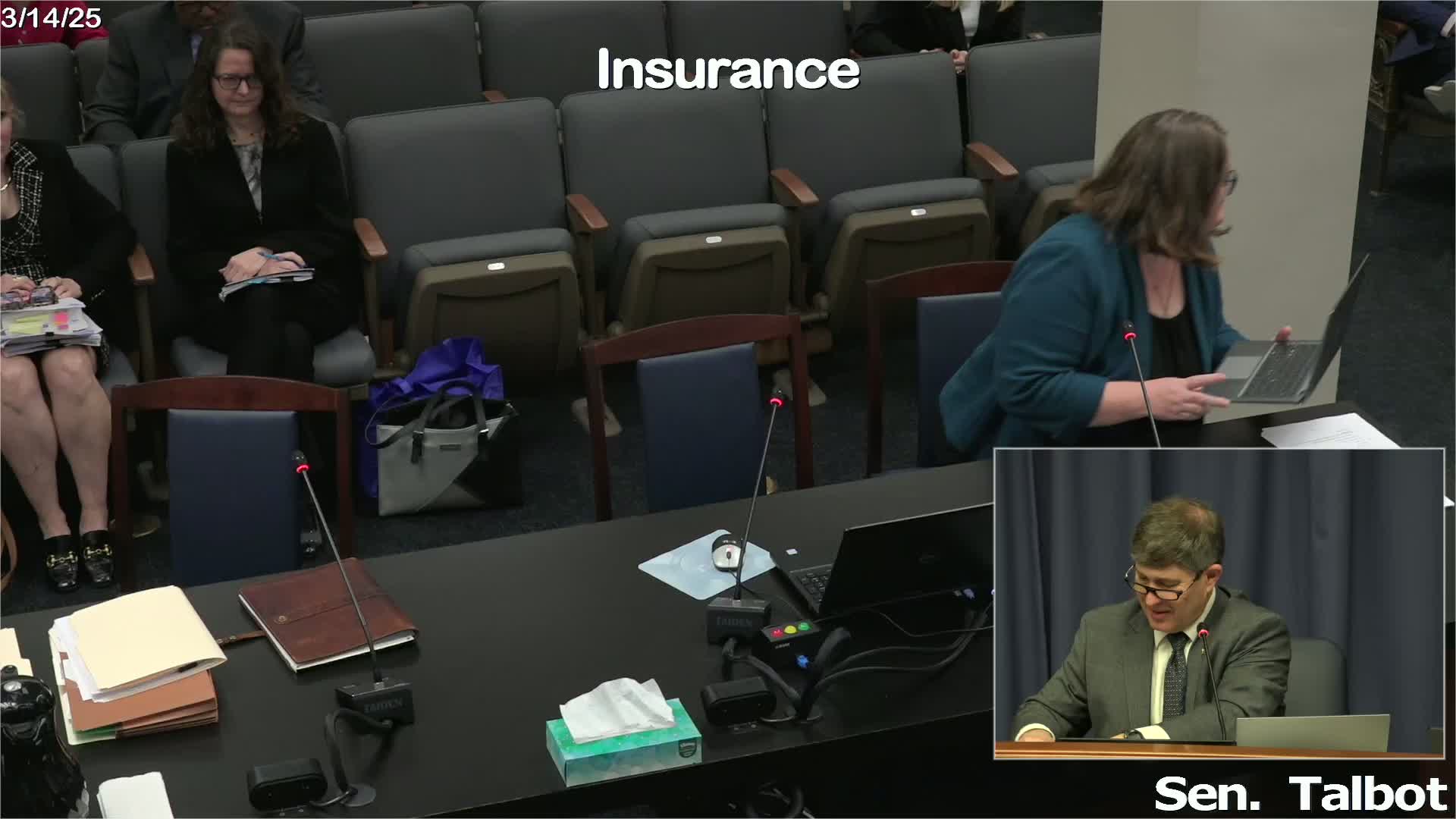
Louisiana Department of Insurance officials described the state's rate-review process to the Senate Insurance Committee, saying actuaries at the department use nationally accepted standards to evaluate insurer filings and that outright disapprovals for actuarial reasons are rare. At the same hearing, senators and consumer advocates pushed for broader approaches to reduce Louisiana's expensive auto premiums, including legal reforms, greater transparency and non-insurance interventions such as improved street design.
"The commissioner does have the legal authority to deny rates in a competitive market when they're unfairly discriminatory," said Claire Lemoine, deputy general counsel to the insurance commissioner, responding directly to testimony given earlier in a related committee hearing. Lemoine told the committee that the department can and does review profit provisions and other actuarial assumptions under Title 22 when determining whether a filed rate is "actuarially justified."
Nicole Torblett, the department's chief actuary, walked the committee through the rate-filing process and the actuarial review. Torblett said the department reviews more than 800 rate filings a year and that the majority of filings are approved or amended after the insurer provides additional documentation. "We rarely outright disapprove a filing for actuarial reasons," she said, describing how company actuaries and LDI examiners often resolve questions through written objections or conversations and amended filings.
Torblett explained that the actuarial review draws on credentialing from the Casualty Actuarial Society and the Society of Actuaries and on the Actuarial Standards of Practice, which guide assumptions about loss development, trend, catastrophe modeling and profit provisions. She told senators the department's role is to ensure rates are "not excessive, inadequate, or unfairly discriminatory" consistent with statutory language and actuarial standards.
Senators repeatedly asked whether the department has authority to declare a rate "excessive" under state law and whether the department could use a bright-line approach to cap projected profit provisions. Several senators said they were concerned that Louisiana's premiums are among the highest in the nation and wanted stronger guardrails; staff and the commissioner said the law intentionally uses actuarial criteria rather than a subjective "excessive" standard in competitive markets and warned that imposing arbitrary profit caps by regulation could reduce insurer participation.
Commissioner Tim Temple said the department has a toolbox beyond rate review, including market-conduct exams, regulatory reviews and public records authority to request filings and documentation. He also described industry-wide dynamics senators have cited as cost drivers, such as litigation frequency, medical costs, and vehicle-repair inflation, and said the department will continue seeking market entrants and evaluating policy options to improve competition. "We want fortified roofs... but I don't want the government coming in and dictating," Temple said when asked about an across-the-board discount floor tied to Fortify grants; he argued for cautious, data-driven policy choices.
The committee also heard public-comment testimony linking high auto insurance costs to road safety. Eli Levinson, a student and Baton Rouge driver, highlighted Louisiana—data on pedestrian and cyclist fatalities and recounted that his father was struck while crossing a street in Baton Rouge. Levinson and researchers from Louisiana Progress recommended non-insurance interventions that could reduce injury severity and claims exposure: better street lighting, more roundabouts, and "road diets" that slow traffic in mixed-use areas.
Louisiana Progress presented ZIP-code analysis showing higher population and walkability measures correlate with higher state-minimum policy cost in denser ZIP codes, and recommended a local infrastructure focus as one component of a broader strategy to reduce claims and, over time, premiums.
No formal rates or statutory changes were voted on in the hearing. Department staff invited lawmakers to follow up with targeted requests and said the department will continue to investigate consumer complaints, transparency issues and specific filings. Lemoine said the department will use public-records and regulatory review authorities where appropriate to get access to required materials; Torblett said the department can provide more detail to legislators on specific actuarial assumptions if asked.
The committee's discussion underscored political tension: many senators sought regulatory or statutory fixes to lower premiums, while the department urged careful, actuarially grounded evaluation to preserve market capacity and solvency.
The committee adjourned after public comment and brief questions about next steps.