Get Full Government Meeting Transcripts, Videos, & Alerts Forever!
Get email alerts on the Transportation topic
No spam. Unsubscribe anytime.
DOTD warns of long backlog, project delivery gaps; lawmakers press for transparency and equipment funding
Summary
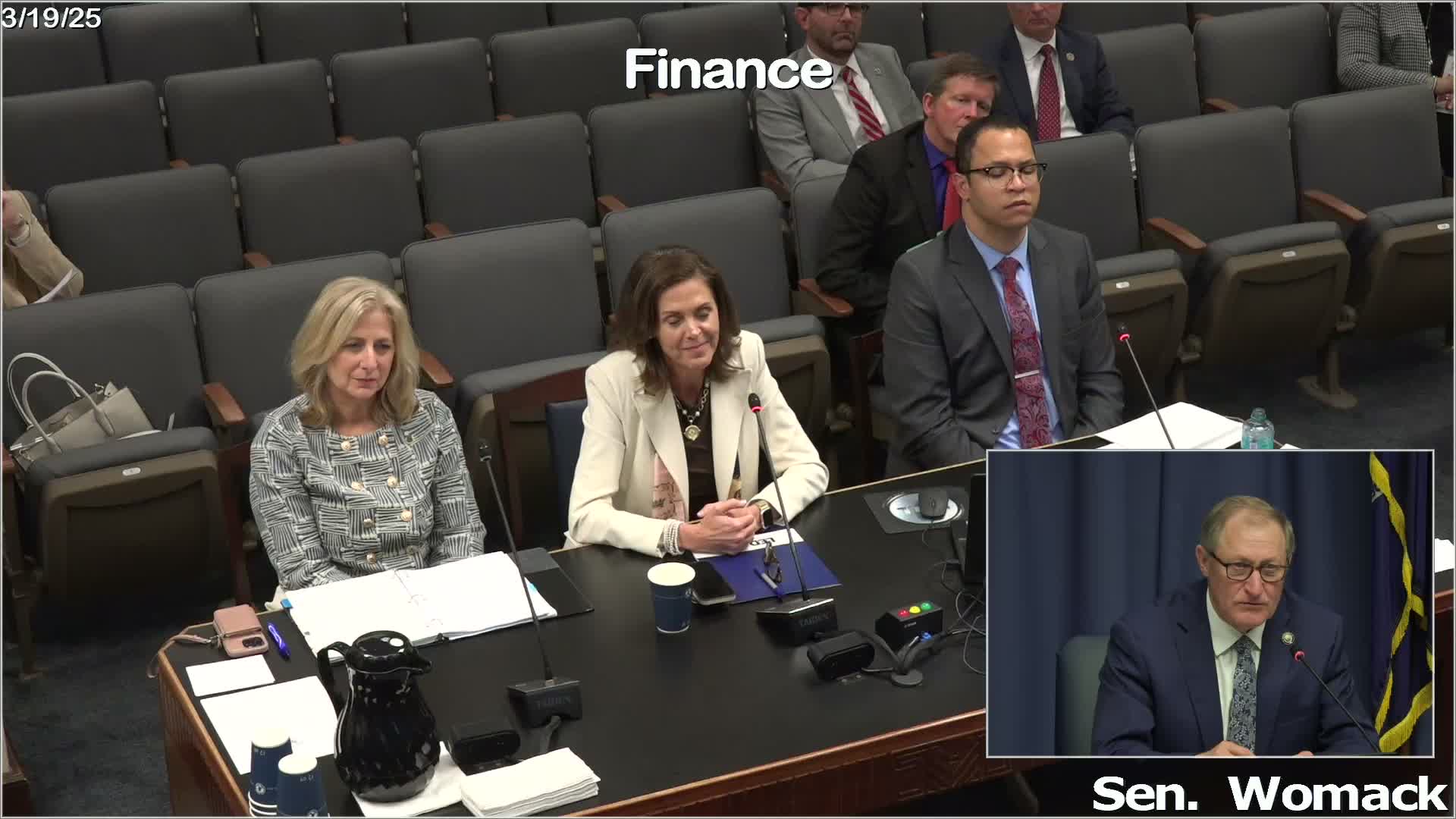
BATON ROUGE — Department of Transportation and Development (DOTD) leaders told the Senate Finance Committee the agency faces an $18.9 billion road‑and‑bridge backlog, a multi‑year set of debt and trust‑fund changes from recent sessions, and the need for continued capital and equipment investments to deliver projects and preserve the state system.
BATON ROUGE — Department of Transportation and Development (DOTD) leaders told the Senate Finance Committee the agency faces an $18.9 billion road‑and‑bridge backlog, a multi‑year set of debt and trust‑fund changes from recent sessions, and the need for continued capital and equipment investments to deliver projects and preserve the state system.
Carrie Couvillion of the Senate Fiscal Division presented DOTD’s FY26 recommended budget and explained the Transportation Trust Fund (TTF) means of finance, statutory dedications and a recommended decline in FY26 compared with the current existing operating budget driven largely by nonrecurring carryforwards and capital outlay timing. She highlighted that roughly 79% of DOTD funds in the recommendation come from statutory and constitutional dedications tied to motor fuels and other fees; state general fund is a much smaller share of DOTD’s operating budget.
Couvillion and DOTD leadership walked senators through three timely items: the GARVEE program (bonded projects), a constitutional amendment and statutory changes affecting the motor vehicle license and vehicle sales taxes (Amendment 2 and related Act language flagged on the department slides), and the effect of earlier legislative and special‑session changes that moved vehicle sales tax avails into construction and megaproject accounts in the short term.
DOTD officials said the department has commissioned or received external reviews — including a Boston Consulting Group study — that estimated optimal funding needs and identified delivery weaknesses. The Boston Consulting Group work, the DOTD secretary said, estimated the department is underfunded by roughly $1.3 billion annually to preserve and expand the system, a figure that rose after special‑session reallocations and transfers.
On project delivery: senators pressed DOTD about a shortfall between projects listed as “ready to let” in highway priority program documents and the smaller percentage actually let for construction in prior years. Committee members called for more transparency; DOTD deputy secretary Barry Keeling said the agency is building a public project viewer showing status, and the department has a separate data‑governance effort to ensure the information is accurate before widespread publication. Keeling told the committee DOTD aimed to roll out a limited project viewer and phased data disclosure before the legislative session.
I‑10/Calcasieu and Baton Rouge projects: DOTD officials said scope and cost changes, federal permitting and earlier design decisions led to much larger cost estimates than the original preliminary numbers for the I‑10 corridor work. The department described a CMAR (construction manager at risk) approach that moved design and contractor input forward, but also warned that a design option that preserved certain local interchange access was rejected by the Federal Highway Administration and required redesign, contributing to cost increases. DOTD said it expects an updated opinion of probable cost after 60% design and asked the committee for time to reconcile funding with scope while trying to avoid a pause in construction.
Equipment and maintenance funding: senators asked whether DOTD had sufficient heavy equipment for emergency response and routine maintenance. DOTD confirmed a continuing equipment recapitalization after a period with little equipment funding; the department said it has ordered equipment and plans to request roughly $112 million in acquisitions this fiscal cycle to reduce a backlog and move into a steady‑state replacement plan, and that vehicles and heavy equipment will be prioritized by district needs and condition.
Highway trust fund mechanics and tax context: the presentation traced the TTF revenue streams — the state 16¢ and 4¢ fuel components and the federal per‑gallon equivalents — and noted that recent and pending ballot and statutory changes shift some motor vehicle sales and use tax avails into construction and mega‑project accounts for near‑term years, with a return to prior allocation language after several years as drafted in the special‑session measures. DOTD also reminded the committee that Louisiana’s state gas tax is below the national average (about 20¢ versus an average near 33¢ per the presentation) and that construction‑price indexes have risen sharply since 2020.
Why it matters: DOTD officials said long deferred preservation and capacity needs, rising construction costs and the timing of multi‑year funding lead to difficult tradeoffs between maintenance, preservation and large signature megaprojects. Committee members pressed for clearer public project status, more granular OTS fee reporting on interagency transfer lines, and written deliverables on the I‑10 update and GARVEE cost estimates.
What’s next: DOTD said it will provide the committee a project‑viewer rollout, a vehicle/equipment fleet inventory on request, and updated cost estimates for the major corridor projects once 60% design and new cost opinions are complete.