Get Full Government Meeting Transcripts, Videos, & Alerts Forever!
Get email alerts on the State Fiscal Operations topic
No spam. Unsubscribe anytime.
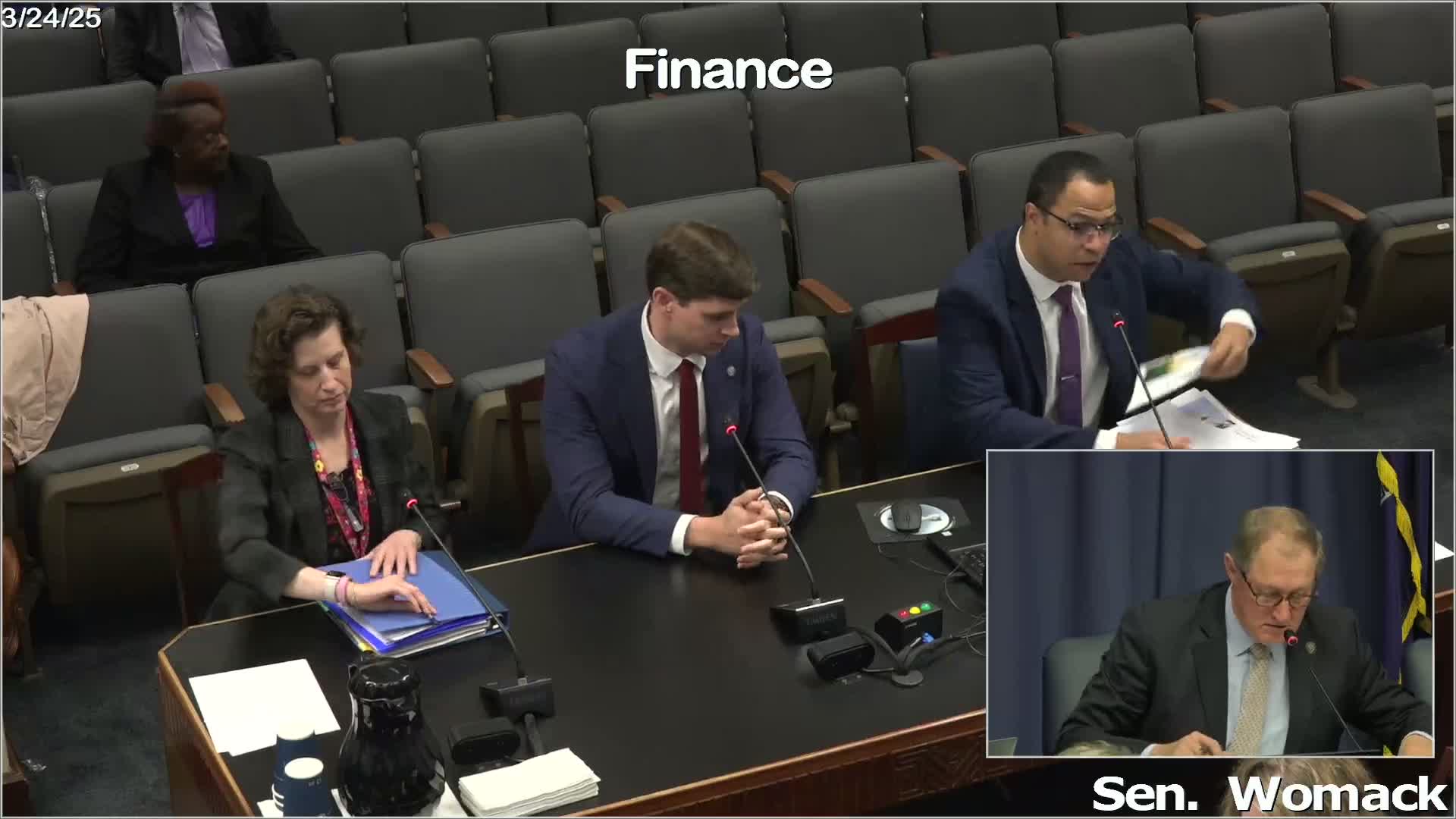
Senate hears Department of Revenue budget; senators press OTS charges and staffing at Alcohol and Tobacco Control
Summary
The Senate Finance Committee reviewed the Department of Revenue's FY26 budget, questioned large OTS/HOST charges for its tax software and hosting, and discussed Alcohol and Tobacco Control staffing and call‑center arrangements.
Senate Fiscal Services presented the Department of Revenue’s FY26 budget to the Senate Finance Committee and senators used the hearing to press the department on high interagency charges for technology and on staffing levels at the state Alcohol and Tobacco Control unit.
Chaz Nicholson of Senate Fiscal Services outlined the department’s structure, budget history and the funding model adopted after 2020. He said the department retains a flat 1% fee on several tax bases that now accounts for a sizable share of its fee revenue and noted provisions in House Bill 1 that allow the department to carry forward a $50 million fund balance for operating cash. Nicholson said the department’s FY26 recommended budget is about $134.8 million with roughly 723 authorized positions and noted an increase driven in part by payments to the Office of Technology Services (OTS).
Secretary of Revenue (name not specified in the transcript) told senators the department’s two primary objectives are saving taxpayer dollars and reducing taxpayer burden. The secretary said a major portion of the OTS interagency charge is for a vendor‑provided tax administration platform operated by a commercial contractor and hosted under OTS, and said the department is exploring options to reduce those costs. “That runs like the whole backbone. When you go and you file your tax, they manage the backbone,” the secretary said of the contractor used to process returns and payments.
Nicholson and the secretary explained that the largest OTS‑related expense is a contracted tax software suite (a vendor implementation maintained under OTS hosting) and that the department is reviewing whether shifting hosting or contract components can reduce annual costs. The department also described savings efforts related to equipment and phone “drops” managed through OTS.
Senators pressed the department’s Alcohol and Tobacco Control (ATC) commissioner, Ernest LeBlanc (Ernest Lege/Ernest Leger in transcript), about enforcement staffing. LeBlanc said ATC operates with about 30 field agents across the state (seven in the New Orleans region) plus roughly 65 total TO positions in the agency. He and senators noted high event and festival demands in New Orleans and Lafayette and urged the executive branch and the Legislature to review whether resources match the agency’s expanded workload—including vapes, hemp, CBD and other regulated products.
The committee also discussed the department’s call center and customer‑service improvements. The secretary said the department has a call center in Shreveport, has redesigned its website to improve self‑service, and has implemented an AI‑driven chatbot to answer routine taxpayer questions. He said the department has also negotiated lower credit‑card processing fees for taxpayers and continues to test average wait times with routine “secret shopper” checks.
Why it matters: The Department of Revenue runs the state’s tax administration infrastructure and its contract/hosting decisions affect the state’s recurring operating budget. The ATC staffing conversation highlights an operational mismatch the committee says merits follow‑up, given Louisiana’s high volume of regulated activity and special events.
Looking ahead: Senators asked the Revenue Department to provide additional detail on the OTS/contract cost drivers, on appointment scheduling outside Baton Rouge, and on call‑center staffing and seasonal hires that support tax filing peaks. ATC said it will continue to present staffing needs to the Legislature.