Get Full Government Meeting Transcripts, Videos, & Alerts Forever!
Get email alerts on the Energy And Natural Resources topic
No spam. Unsubscribe anytime.
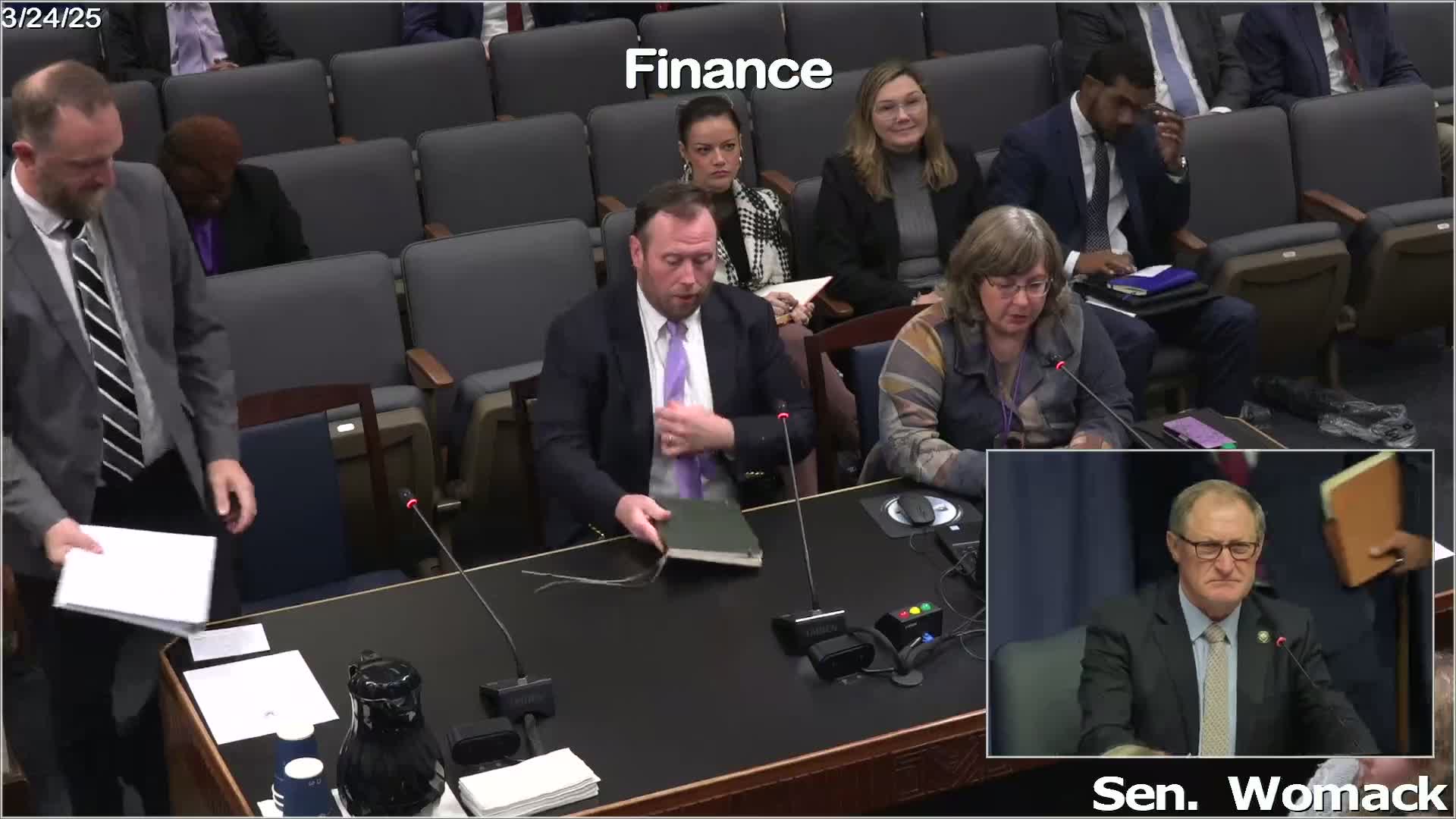
Senate committee reviews DENR budget, proposed consolidation and surge in federal energy funds
Summary
The Senate Finance Committee heard a briefing on a proposed FY26 reorganization of the Department of Energy and Natural Resources that would fold the Office of Conservation into the Office of the Secretary, and on a large rise in federal funds tied to new rebate and grant programs.
The Senate Finance Committee heard a briefing on the Department of Energy and Natural Resources budget and organization, including a proposal to consolidate the Office of Conservation into the Office of the Secretary and a sharp increase in federal funding tied to new energy programs.
Carrie Couvillion, fiscal analyst with the Senate Fiscal Services Division, told the committee the department’s FY26 recommended budget would be centered under “1 agency, the office of the secretary” if the consolidation is adopted, and highlighted a large rise in federal budget authority beginning in FY23 tied to grants and rebate programs. “What will immediately jump out at you is the increased federal budget authority since about FY '23,” she said, and identified several federal grants and rebate programs as the principal drivers.
Couvillion said roughly 53% of the department’s recommended budget is federal funding, with statutory dedications at about 22% and fees at 10%. She identified four federal- or grant-funded rebate programs that account for most of the new federal authority: the HERO (Hub for Energy Resilience Operations) pilots, home efficiency rebates, home electrification and appliance rebates, and the Solar for All grant. Couvillion told senators that HERO was awarded federal funding in October 2024 and that 13 initial pilot projects have been selected and are in implementation. She said the combined multi‑year totals under current projections could be large: approximately $249 million for HERO across FY25–FY32, about $106 million for one home rebate program, about $105 million for another home rebate program, and roughly $156 million associated with Solar for All.
Tyler Gray, Secretary of Energy and Natural Resources, told the committee the consolidation and other internal efficiencies arise from an executive order directing the department to review organizational structures and possible consolidation with other energy and natural‑resources entities. Gray said his office will present a legislative reorganization package in the coming session to “build more vertical integration and efficient use of the resources.” He described the principle guiding the effort as “administrative flexibility with transparent oversight.”
Committee members pressed department staff on several topics: proposed changes to state and advisory boards, the department’s plans to oversee groundwater resources and the Capital Area Groundwater Conservation District, and how the state will handle orphaned or improperly plugged wells.
Gray said the department will evaluate each board and commission on a case‑by‑case basis and that some authorities’ responsibilities would be vested in the State Mineral and Energy Board while other boards might be converted to advisory roles. He said the oilfield site restoration commission’s power has already been transferred to the State Mineral and Energy Board.
On orphan wells and carbon sequestration, Deputy Secretary Dustin Davidson and Gray described efforts to identify and remediate abandonment and legacy plugging problems that can create leak paths important to public‑safety and carbon‑storage evaluations. Gray said the state has increased fees at a tiered rate and created a Natural Resources Trust Authority to aggregate funding from fees, leases, carbon‑capture agreements and federal grants to accelerate well plugging. “We plan to take the funding in addition to existing revenue that we already have through our state mineral and energy fund,” Gray said.
Senators also asked about the timing of rebate rollouts. Department staff said proposals for home efficiency and electrification rebates received conditional awards in January 2025 and anticipated rollouts this summer pending final federal approvals. The Solar for All planning year is awaiting EPA approval.
Why it matters: The department’s FY26 proposal shifts internal structure and brings sizable federal grant authority into the department. That increase changes how budget projections behave (monthly spending looks different when large federal awards are present), shifts what staff and systems the department must manage, and elevates questions about long‑term oversight of rebate programs and large, multi‑year federal grants.
Looking ahead: Gray said the department will bring a legislative reorganization package to the session and continue public outreach on major permitting and carbon‑sequestration proposals. Senators asked staff for more details on the HERO pilot projects and a more complete timeline for rebate program rollouts.
Ending: Committee staff said they will follow up with written answers on pilot locations, program timelines, and the department’s proposed legislative package.