Get Full Government Meeting Transcripts, Videos, & Alerts Forever!
Get email alerts on the Natural Resources And Infrastructure topic
No spam. Unsubscribe anytime.
Agriculture department details wildfire recovery, aging forestry fleet and seafood testing program
Summary
The Department of Agriculture and Forestry told the Senate committee its FY26 budget includes carryforward funds for 2023 wildfire response, requests to replace aging dozers and transports, concerns about NRCS funding pauses and new antibiotic testing for shrimp and crawfish.
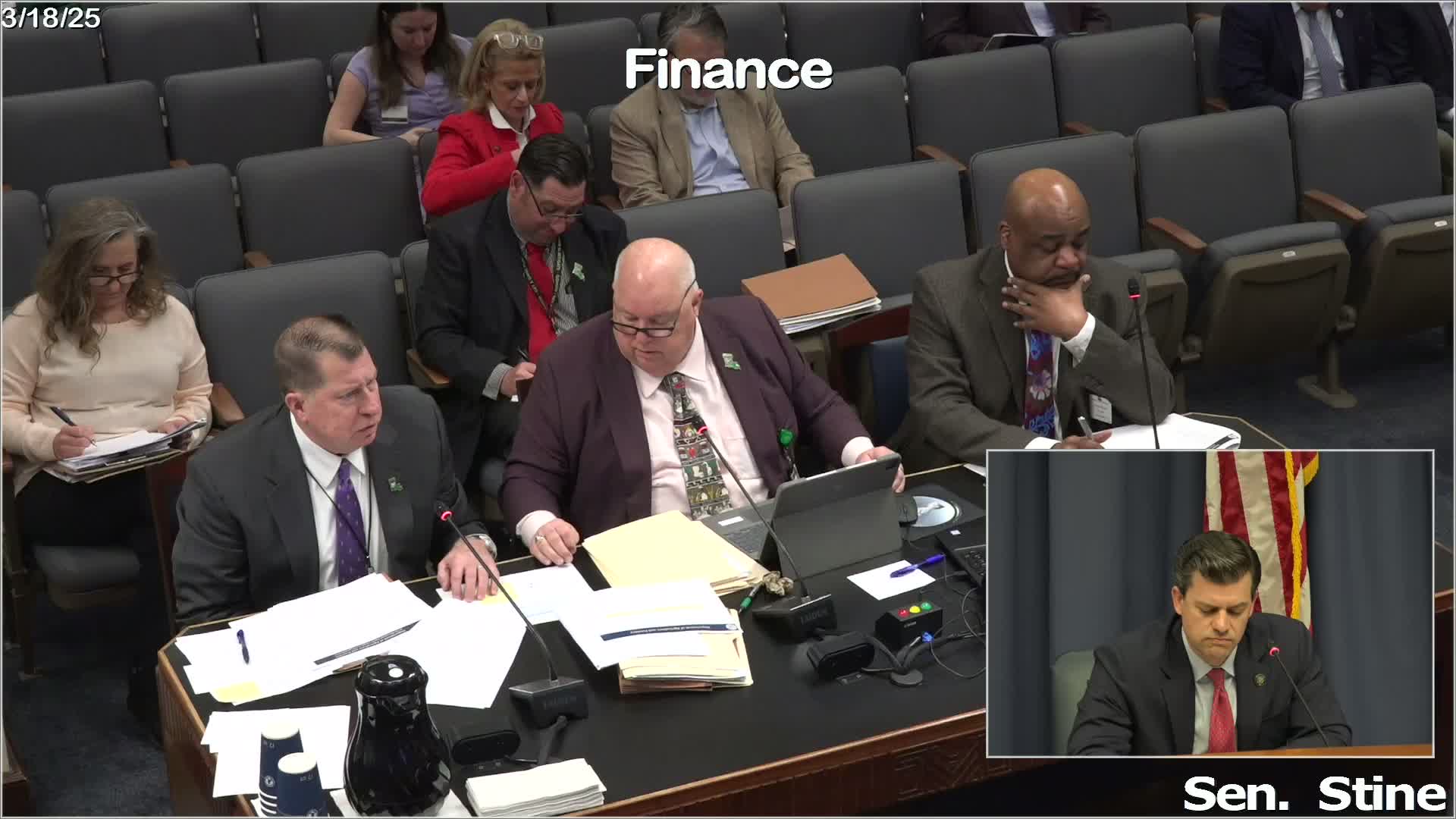
The Senate Budget Committee heard a detailed budget briefing for the Department of Agriculture and Forestry on March 18; the briefing covered wildfire recovery carryforwards, an aging forestry fleet and a pause in some USDA conservation programs that could affect Salt and Water Conservation District staffing.
Why it matters: The department supervises forest firefighting capacity, conservation district programs and state food‑system grants. Committees heard that wildfire response and federal grant pauses have immediate operational consequences for districts and local conservation technicians.
Wildfire recovery and federal grants: Mark Bournes of Senate Fiscal Services said the department's FY25 budget included a $15.7 million carryforward to cover bona fide obligations from the August 2023 wildfires and noted $8.4 million in federal funds for firefighting equipment through the U.S. Forest Service. The commissioner's team said some FEMA and GOSEP transfer funds were in the FY25 carrying forward into FY26 for wildfire response work.
Forestry fleet and heavy equipment: Commissioner Tommy Strain and staff told senators the office manages hundreds of vehicles and a large heavy‑equipment fleet of dozers and transports. The department reported a total fleet that includes roughly 635 road‑service vehicles and 125 heavy units; the forestry transports and 650 dozers deployed after a single state purchase in 2008 are aging in unison and need replacement. The department said it requested $5 million this year for new dozers but that the executive budget did not include that request; staff said parts for pre‑2007 models are difficult to obtain and maintenance is increasing. The department also asked for additional TO positions for fleet mechanics to keep equipment operational.
NRCS pause and soil & water concerns: The commissioner and staff said NRCS has paused new EQIP and CSP application signups and that the federal government is currently two months in arrears on reimbursements to conservation districts; staff said technicians in the field are funded in part by federal dollars and that a prolonged pause would force staffing changes at district offices.
Seafood testing and lab work: The department described a seafood safety program that has tested dozens of shrimp and crawfish samples for chloramphenicol and related antibiotics with no positives so far, and said the shrimp task force has voted to expand testing to additional antibiotic classes. The department also said it has ordered label inspections and issued stop orders where product labeling did not comply with new rules.
Local food grants and federal pauses: Agriculture officials said several federal food and local procurement grants are on pause (including Resilient Food Systems Infrastructure and local food purchase programs) and that recipients have been notified to stop spending pending federal decisions; the department said prior expenditures will be reviewed for possible reimbursement.
Ending: Senators asked for itemized equipment lists, fleet inventories, and updates on federal reimbursements to conservation districts; the department agreed to provide detailed vehicle inventories and additional documentation of federal grant status.