Get Full Government Meeting Transcripts, Videos, & Alerts Forever!
Get email alerts on the Agriculture Forestry topic
No spam. Unsubscribe anytime.
Appropriations committee hears department request for wildfire equipment, mechanics and seafood testing funding
Summary
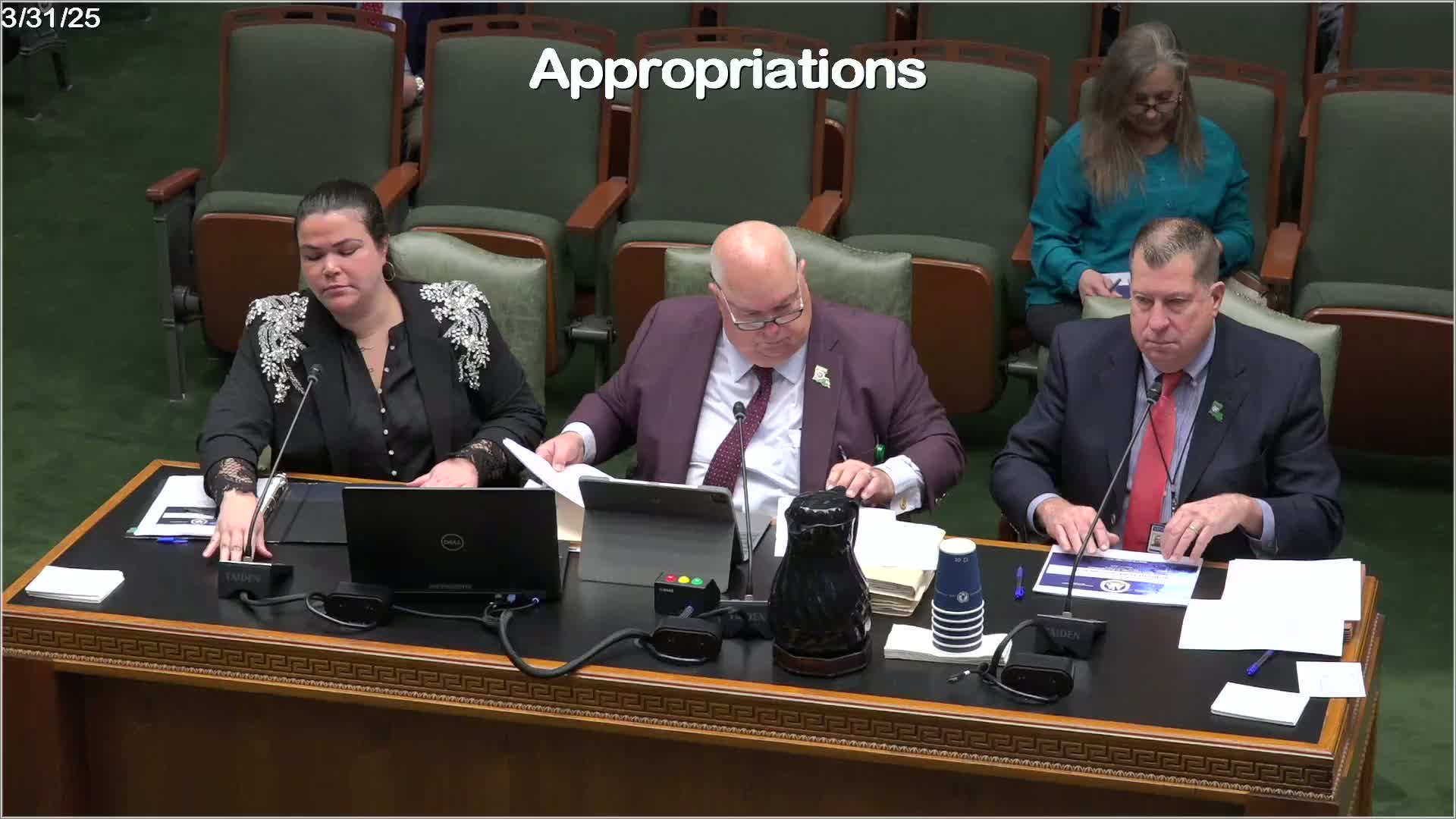
The House Appropriations Committee heard from the Louisiana Department of Agriculture and Forestry on March 31 as department officials reviewed the FY26 executive budget and identified priorities including wildfire equipment, additional mechanics and seafood testing.
The House Appropriations Committee heard from the Louisiana Department of Agriculture and Forestry on March 31 as department officials reviewed the FY26 executive budget and identified priorities including wildfire equipment, additional mechanics and seafood testing.
The department said its FY26 recommended budget is about $95.9 million, financed largely by statutory dedications and state general fund. Paige Filia of House Fiscal presented the review and Commissioner Mike Strang, Louisiana commissioner of agriculture and forestry, answered members’ questions about wildfire response, fleet maintenance, salt-and-water conservation reimbursements and seafood monitoring.
Why it matters: Department leaders said aging heavy equipment and limited mechanic capacity increase operational risk during intense wildfire seasons. The commissioner also flagged a three‑month federal reimbursement delay for soil and water conservation work that, he said, threatens operations in local conservation districts.
Commissioner Mike Strang described a recurring request for capital to maintain readiness: "In the budget we will be asking for an additional $5,000,000 for fire suppression equipment and the goal is to continue to buy more units to replace the other ones as they are aging out." He said some units take one to two years from order to delivery and many current machines are at a point when parts are hard to obtain.
The department told the committee it has 586 authorized positions, 19 vacancies as of Dec. 30, 2024, and that forestry contains 181 TO positions. Strang said the department is asking to convert four job appointments for fleet mechanics into TO status; he told members that additional mechanics are needed because in other agencies the ratio is higher (for example, DOTD has about 51 pieces of equipment per mechanic) and the Agriculture and Forestry fleet averages roughly 29 pieces per mechanic.
Salt-and-water conservation: Strang told legislators the department was three months in arrears on reimbursements it advances for local soil and water conservation districts. He said the department advances about $145,000 per month to the districts and then submits claims to NRCS for federal reimbursement, which had not arrived at the time of the hearing. "We have sent formal congressional inquiries and through our congressional delegation asking if this is going to be funded," he said, adding that the shortfall could affect roughly 80 soil and water conservation personnel.
Seafood testing and labeling enforcement: Members asked about seafood testing after recent concerns about antibiotics and imported product labeling. Strang said the department is testing for chloramphenicol and related compounds and has completed 59 of 79 samples; he said the samples so far have been negative. He described annual testing capacity on the current funding of roughly 5–600 samples per year and said adding three additional antibiotic classes would roughly double the cost per sample. He also said the department had issued 12 stop orders and removed or corrected 554 packages in labeling inspections; he pointed members to coordination with the Department of Health and Hospitals for public‑health enforcement.
Representative DeWitt raised a constituent complaint about a $500 fine for failing to post required labeling; Strang said the department had sent a letter to businesses packaging or marketing crawfish and shrimp on Aug. 30 and that enforcement began after rules went into effect in January. The transcript references a state citation for labeling enforcement (identified in the hearing record as RS 45:5.4), which the commissioner noted in discussion of enforcement timelines.
Committee direction and outstanding risks: Members pressed on pay and retention for forestry crews. Chairman Romero asked what it would take to bring forester and firefighter pay to regional averages; Strang said an estimated $3.5–4 million would be required to narrow that gap. Multiple legislators emphasized the operational need for recurring equipment procurement and for converting mechanic positions into TO authority. Strang also flagged broader federal grant uncertainty affecting programs that require the department to advance funds and then await reimbursement.
Context: The department’s FY26 request reflects reductions in one‑time federal and other carried‑forward funds from FY25, and reallocations across expenditure categories. The department stressed wildfire readiness and fleet sustainment as near-term priorities, plus continued seafood surveillance and labeling enforcement.
What’s next: Committee members suggested amending the budget to include additional heavy‑equipment funding and discussed staff conversions for mechanics; staff follow‑up on the soil and water reimbursement status and on the labeling/fine complaint were requested.