Get Full Government Meeting Transcripts, Videos, & Alerts Forever!
Get email alerts on the Emergency Management topic
No spam. Unsubscribe anytime.
Governor moves GOSEP under Louisiana National Guard; generals tell committee transition will preserve emergency response
Summary
The governor announced a reorganization placing the Office of Homeland Security and Emergency Preparedness under the Louisiana National Guard. The Adjutant General and GOSEP and Guard officials told lawmakers the move aims to find administrative efficiencies without degrading frontline emergency capabilities.
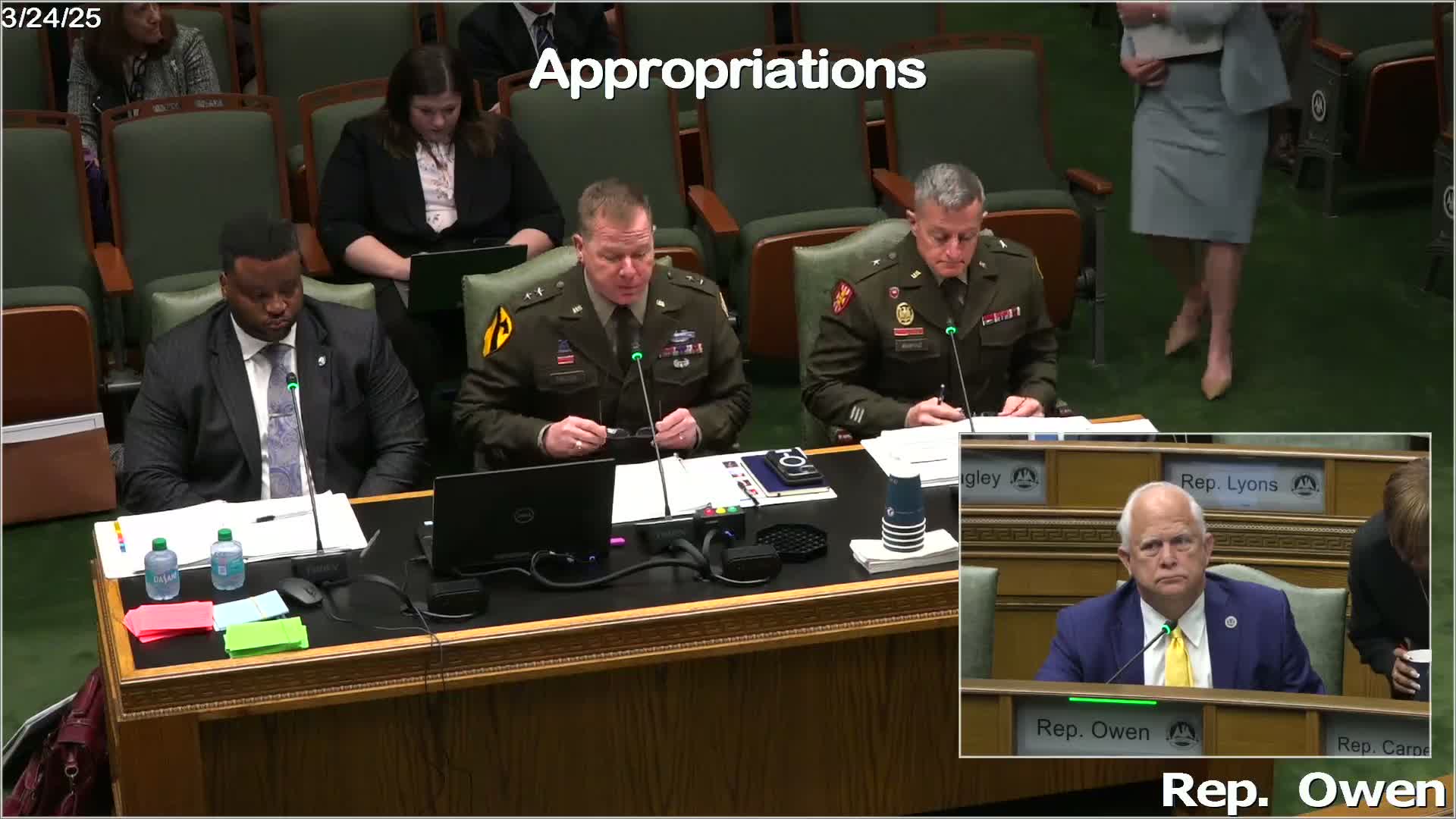
The governor has directed a restructuring that places the state Office of Homeland Security and Emergency Preparedness (GOSEP) under the Louisiana National Guard and assigned oversight to the Adjutant General, Major General Tommy Freelyu.
Major General Freelyu told the Joint Budget Committee he has begun a 90‑day planning process to identify savings, eliminate redundancies and preserve GOSEP’s core capabilities. “We expect to have … a deliberate planning process to identify cost savings, efficiencies, and eliminate redundancies between the military Louisiana military department and GOSEP,” he said.
Freelyu and Brig. Gen. Jason Mahfouz, the interim GOSEP director, said the change will not alter the operational model used by local governments to request state emergency support. “100% no change in what's going on right now, sir,” Freelyu said, adding that “the only positions we'll lose … would be support functions, not the core critical functions of Homeland Security and Emergency Preparedness.” Committee members repeatedly sought assurances that chain‑of‑command issues that impeded rapid response in past disasters would not recur; Freelyu said lessons from Katrina, Ida and other events informed current practice and that “no change to every all the lessons learned we sent we've learned since Katrina.”
Why it matters: GOSEP manages federal disaster grants, hazard mitigation, public assistance reimbursements and the state’s emergency response infrastructure. Committee members pressed for clarity on how consolidation would affect staffing, contracts and the 120 TO positions at GOSEP. Freelyu said many TOs will remain for core mission work but that some overhead roles (human resources, legal, budgeting, contracting) may be consolidated. He did not provide a final personnel count, saying the evaluation would produce a vetted plan for the legislature.
The committee also questioned how the change will be perceived by local officials who request assistance during disasters. Members heard repeated assurances that the field‑level chain of command and dual‑status command arrangements used in emergency response will remain intact. Freelyu noted the Guard’s role in recent high‑visibility events — from New Year’s Day security to Super Bowl and Mardi Gras operations — and said the reorganization aims to preserve readiness while capturing administrative savings.
Ending: Freelyu and military leaders said they would produce a transition plan with estimated savings and staffing impacts for follow up; the committee asked for specifics on any proposed reductions to GOSEP headcount and for assurances about uninterrupted response operations during the transition.