Get Full Government Meeting Transcripts, Videos, & Alerts Forever!
Get email alerts on the Tourism State Parks topic
No spam. Unsubscribe anytime.
Lieutenant Governor, Department of Culture, Recreation and Tourism outline FY26 budget priorities; parks, litter and Volunteer Louisiana highlighted
Summary
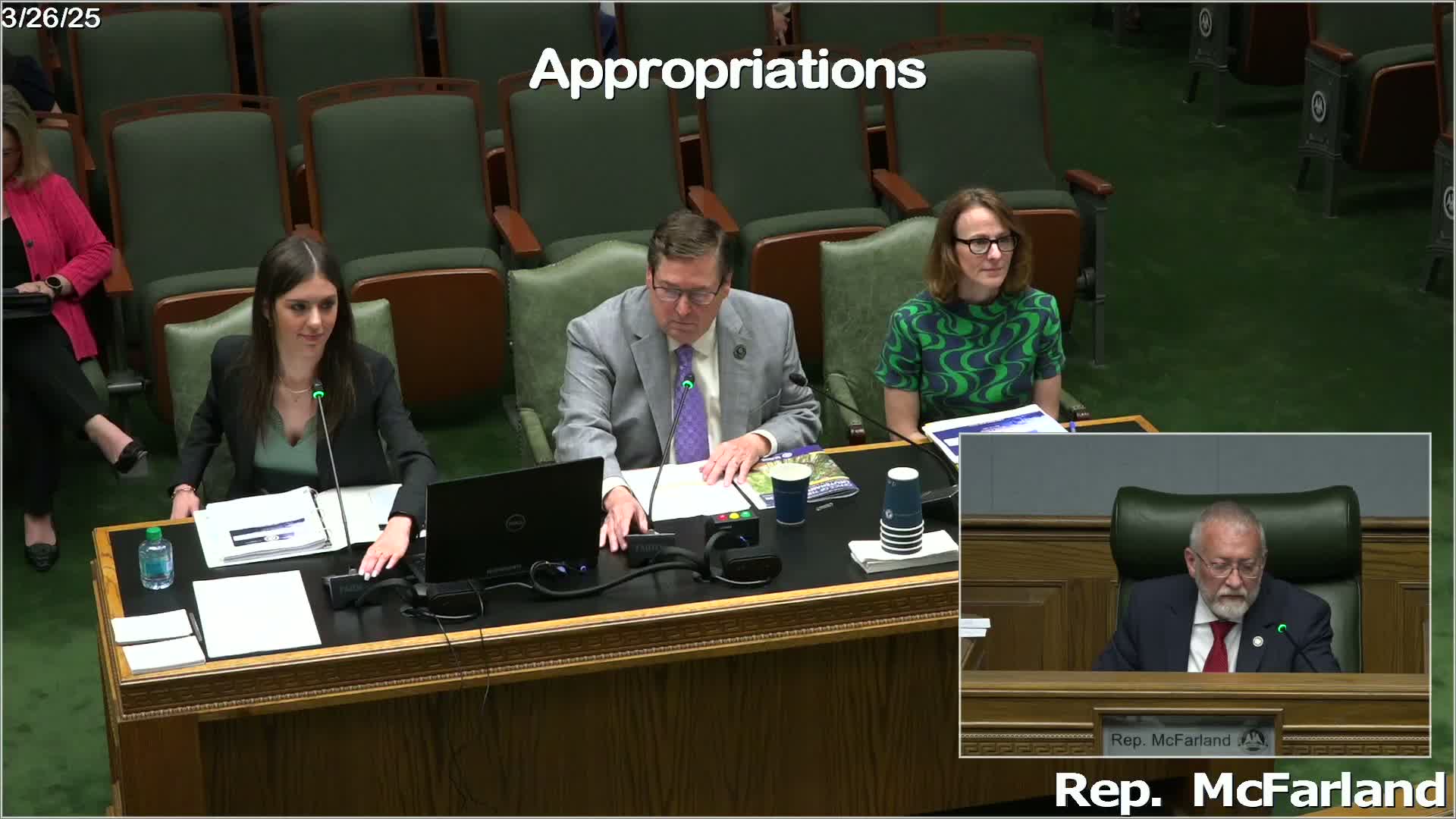
The Office of the Lieutenant Governor and the Department of Culture, Recreation and Tourism told the House Appropriations Committee their FY26 budgets emphasize tourism promotion, state parks repairs and litter‑abatement programs while continuing reliance on federal grants for Volunteer Louisiana.
The Office of the Lieutenant Governor and the Department of Culture, Recreation and Tourism told the House Appropriations Committee their FY26 budgets emphasize tourism promotion, state parks repairs and litter‑abatement programs while continuing reliance on federal grants for Volunteer Louisiana.
Abigail Chasen of the House Fiscal Division opened the session with an overview of the Office of the Lieutenant Governor’s FY26 recommendation, saying the office’s requested budget is about $10.6 million, with roughly $8.1 million (about 77 percent) expected in federal funds and about $2.2 million for administration. She said roughly 80 percent of the office’s funding is devoted to grant programs.
Why it matters: The presentations tie state budget choices to visitor economy priorities — marketing, border‑to‑border park upkeep, and volunteer and litter‑abatement work that officials said drives tourism and local business revenue. Commitments to repair and public‑private partnerships aim to reduce future state subsidy needs while shifting some recurring costs to local partners or private investors.
Key budget and program details
- Departmentwide totals: The Department of Culture, Recreation and Tourism’s FY26 recommendation was presented as roughly $135.2 million. Chasen reported about 43 percent of that total is budgeted from the state general fund and about 41 percent from self‑generated revenues.
- Funding sources called out: $55.8 million in self‑generated revenues (driven by tourism district receipts and park fees), $13.5 million in the State Parks Improvement and Repair Dedicated Fund account, $6.7 million in interagency transfers, and smaller federal grants (National Park Service, Library Grants to States, National Endowment for the Arts, U.S. Department of Commerce).
- Major expenditure shifts: The department reported a net reduction in self‑generated revenue primarily because of a $9.9 million reduction in the State Parks Improvement and Repair Dedicated Fund account (partly a $2.9 million REC balance adjustment and $7.0 million the presentation called the removal of last year's fund‑bill deposit authority). The department also showed a $4.7 million increase in professional services for the Year of the Outdoors marketing campaign and a $2.0 million net increase for acquisitions and major repairs (including $10.6 million budgeted for park acquisitions and repairs).
Parks, personnel and operations
- State Parks staffing: The Department reported 591 recommended authorized T.O. positions and 60 vacancies as of Dec. 30; many vacancies are in State Parks and are concentrated in remote locations. Officials said the Department’s average salaries historically trailed statewide averages and turnover in FY24 rose to about 19.8 percent, with most separations in State Parks.
- Park operations and capital strategy: The Lieutenant Governor said state parks have rebounded in visitation and revenue since the COVID era, approaching 2,000,000 visitors this year. He described cost savings from in‑house “travel maintenance” crews that perform carpentry, electrical and HVAC repairs across parks and credited public‑private partnerships for avoiding closures and improving profitability at several parks. Officials discussed demand‑based pricing (like hotel dynamic pricing), glamping and cabin investments, and a proposal to authorize parks to bid and manage certain projects directly.
Volunteer Louisiana, litter abatement and community outreach
- Volunteer Louisiana: Officials said the department’s Volunteer Louisiana program receives federal pass‑through funding (Abigail Chasen said $8.1M in federal funds goes to the Volunteer Louisiana Program). Judge Johnson, executive director of Volunteer Louisiana, and Lieutenant Governor described year‑round volunteer training, disaster response, and partnerships with AmeriCorps and local groups.
- Keep Louisiana Beautiful and enforcement: Susan Russell, executive director of Keep Louisiana Beautiful, described a litter surveillance camera grant program and a May training workshop for local officials and law‑enforcement partners to improve enforcement of litter and illegal dumping laws. The Lieutenant Governor described expanding hidden‑camera enforcement at chronic dumping sites and encouraging local governments to seek funding for roadside cleanup partnerships with DOTD and sheriffs’ offices.
Museums, libraries and Main Street
- Museums and libraries: The Lieutenant Governor noted efforts to market 211 museums at a newly acquired louisianamuseums.com domain and to produce a statewide video directory of museum exhibits. State librarians and museum officials promoted programs that tie library cards to state‑park trail information, equipment lending, and Homework Louisiana educational resources.
- Louisiana Main Street: The department requested increased funding for the Main Street program (the presentation described an increase to $225,000 requested for FY26 and the department reported past one‑time supplemental funding of $450,000 used for 11 grants). Officials said funding supports downtown revitalization that drives local tourism and small business traffic.
Questions and concerns from lawmakers
- Personnel reductions and vacancies: Representatives pressed officials about a $295,000 decrease tied to three eliminated positions in State Parks; officials said the Office of Planning and Budget removed positions that had been vacant for more than a year, and department leaders said they are pursuing a park‑technician career progression series and higher starting wages to address recruitment and retention in remote parks.
- Revenue volatility: Lawmakers asked about the drop in self‑generated revenues linked to the Parks Improvement and Repair fund and whether reductions reflect over‑appropriation or lower collections; department staff said prior over‑appropriation, fund‑balance adjustments and REC forecast revisions account for much of the change.
What officials want next
The department requested additional targeted state general fund support for parks capital projects, a permanent increase for the Main Street program (the department sought $500,000 to restore previous levels), and statutory or administrative changes to allow more direct project procurement and to expand successful public‑private partnerships.
Ending note
Committee members broadly praised the presentations and asked follow‑up questions on park staffing, litter grants for parishes, volunteer program funding and museum marketing. Officials said the FY26 proposal focuses on preserving visitor gains while directing limited state funds to repairs and programs that boost local economies and tourism.
Sources: Presentation by Abigail Chasen, House Fiscal Division; remarks attributed to the Lieutenant Governor; testimony and responses from Doug Bourgeois (Office of Tourism), Nancy Watkins (Undersecretary, Department of Culture, Recreation and Tourism), Meg Plackey (State Librarian), Judge Johnson (Volunteer Louisiana), Susan Russell (Keep Louisiana Beautiful), Brandon Burris (Office of State Parks), and Carrie Broussard (Office of Cultural Development).