Get Full Government Meeting Transcripts, Videos, & Alerts Forever!
Get email alerts on the Veterans Affairs Budget topic
No spam. Unsubscribe anytime.
Veterans Affairs presents $102.2 million FY‑26 budget; officials highlight staffing, vacancies and federal funding
Summary
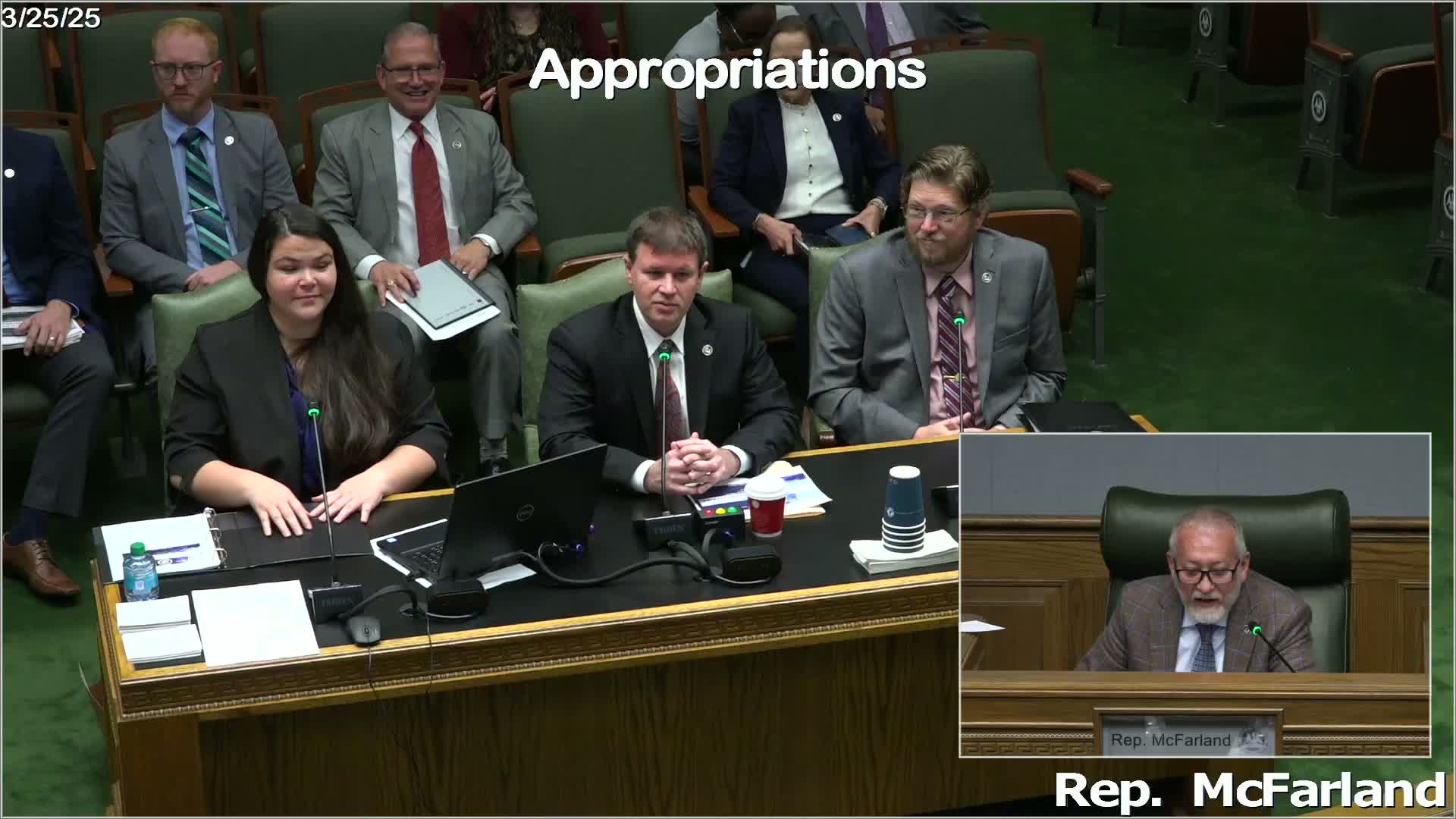
The Louisiana Department of Veterans Affairs presented its $102.2 million fiscal year 2026 budget to the House Appropriations Committee on March 20, saying about 65.9% of the department’s funding is federal and 16.7% comes from the state general fund.
The Louisiana Department of Veterans Affairs presented its $102.2 million fiscal year 2026 budget to the House Appropriations Committee on March 20, saying about 65.9% of the department’s funding is federal and 16.7% comes from the state general fund.
"My name is Paige Filho, and today, I will be sharing with y'all the executive budget review for the Department of Veterans Affairs," said Paige Filho as she opened the department presentation.
Committee members and department officials focused questioning on staffing at the state’s five veterans homes, pay and turnover among nursing assistants, and a backlog in the state’s Louisiana Air National Guard (LANG) assistance program.
Filho gave an overview of the FY‑26 recommendation and historical spending, saying the department’s FY‑26 budget totals about $102,200,000. She said the largest source of funding is federal dollars from the U.S. Department of Veterans Affairs for patient care and noted the budget’s largest expenditure is salaries and related benefits.
Secretary Charlotte McGinley, who identified herself as representing the department’s roughly 850 employees, told the committee the department has reduced vacancies over the last year but still faces recruitment and retention challenges. "A year ago, we had, I think it was approximately 175 open positions," McGinley said. She added the department is now "right at 80" vacancies and credited staff efforts for the reduction.
Committee members pressed on pay and turnover. Chief of Staff Dustin Guy said entry pay for nursing assistants starts at about $30,000, with premium pay, shift differentials and overtime; he said after about a year some CNAs reach about $40,000. McGinley said the department’s average salaries remain below the statewide average and turnover remains higher than the statewide average; she said nursing assistant positions accounted for many separations, with the presentation noting 72 separations for the nursing assistant 2 classification over a year.
Several lawmakers asked about the LANG assistance program, a state program that can provide up to $100,000 (and in rare instances up to $250,000) to Louisiana National Guard members rated 100% for certain contingency‑operation disabilities. McGinley and staff said prior administrations had small teams handling LANG claims and had returned appropriations because they could not process the backlog in time. The department said it has expanded the LANG claims team and expects to substantially increase claim processing. "We have gone now from one person working these 400 claims to three full time and seven part time," McGinley said, adding the department hopes to reduce the backlog and use more of the annual appropriation.
Members also asked about home occupancy and capital work. Department staff said most veterans homes are operating around 80–90% occupancy, with Jennings and Reserve reporting higher census, and that some capital projects, including an ADA shower project at the Jennings home, are moving forward with funding and planning.
On education and the economic impact of veterans, McGinley noted the GI Bill’s effect on higher education funding in the state, including a cited figure of about $30 million to Louisiana State University and roughly $196 million statewide tied to GI Bill support. She also described outreach and workforce programs intended to keep veterans in the state and place them in jobs.
Why it matters: committee members said the department’s staffing shortfalls at veterans homes affect day‑to‑day care and that the LANG backlog represents a time‑sensitive benefit for veterans. Lawmakers pressed for speedy processing where appropriations were intended for direct veteran assistance.
The department did not present any formal motions or votes during the hearing segment. Members directed questions and the department committed to follow‑up actions on LANG claim processing and vacancy tracking.
Looking ahead, department leaders said they will continue recruiting and working with civil service to adjust classifications and pay where possible to retain CNAs and other critical positions. The committee moved on to subsequent agency presentations after the discussion.