
Residents and officials press for housing funding; short-term rental taxes and accessory units part of broader talks
Get AI-powered insights, summaries, and transcripts
Subscribe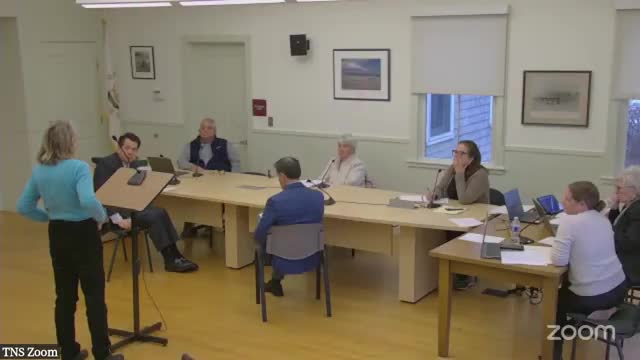
Summary
Council heard updates and community comments on affordable and attainable housing, a rejected $6.5 million funding request for a 16‑unit project, possible state-level changes to short-term rental taxation, and local ideas such as accessory units and impact fees to raise housing funds.
Council members, housing advocates and residents discussed the town’s ongoing affordable- and attainable-housing challenges, recent unsuccessful state funding applications and possible tax- and ordinance-based options.
Cindy (identified at the meeting as affiliated with the town’s housing board) said a proposed 16-unit housing project sought roughly $6.5 million from state funding sources but was refused in competitive rounds. "We were refused twice," she said, and she added that project size and cost worked against the application in statewide competitive programs that prioritize very-low-income housing.
Speakers and residents discussed multiple avenues for increasing housing supply and revenue. At the state level, the May 4 Group described past legislative work that adjusted some income/median-income definitions used in affordable-housing calculations to better reflect the island’s conditions, and the team noted the town may need additional statutory or regulatory changes to address the state’s 10% affordable housing benchmark for municipalities.
Locally, several participants proposed strategies to expand year‑round housing stock or raise dedicated revenue: easing rules for accessory dwelling units (referred to in the meeting as “5‑13” units) to encourage year‑round rentals; considering local impact fees tied to building permits for large houses to fund housing programs; and exploring tax-classification adjustments the state authorized that allow municipalities additional flexibility in setting property tax categories. The Block Island Tourism Council’s Jessica Willie described ongoing statewide conversations about whether to apply the existing hotel tax to whole-house short-term rentals; currently whole-house rentals pay state sales tax and a 1% local/affordable-housing assessment but not the 5% hotel tax applied to traditional hotels.
Panelists also raised a practical data problem: speakers said U.S. Census counts understate some local demographic measures used to qualify for programs and advocated engaging the congressional delegation to seek a review or appeal of local census data.
Ending: No policy changes or votes were taken. Council members and housing advocates asked the May 4 Group and town staff to continue exploring state funding channels, local ordinance changes and revenue options; staff agreed to coordinate follow-up meetings with stakeholders and to pursue contacts that could improve census reporting if feasible.